
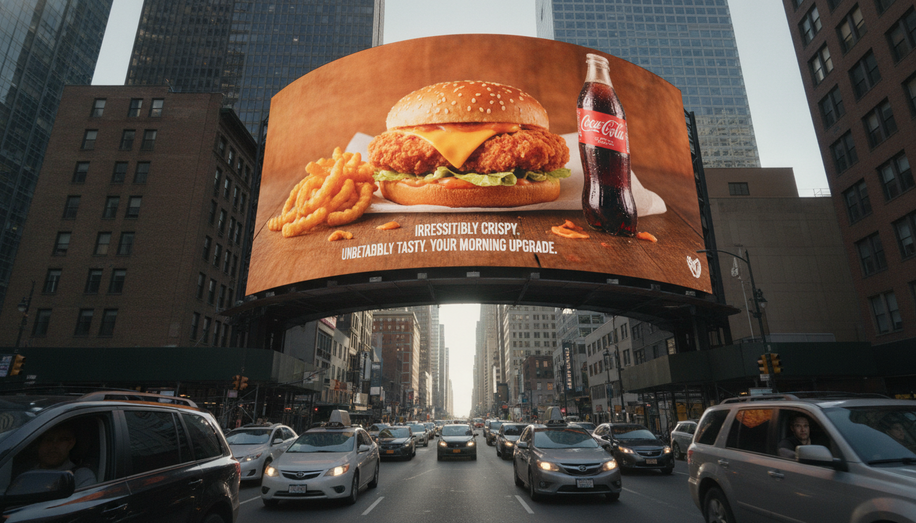

The quick-service restaurant (QSR) drive-thru has emerged as one of the most high-intent touchpoints in retail media, capturing consumers exactly when they are primed to make a purchase decision. For Consumer Packaged Goods (CPG) brands—particularly those with items sold nearby in grocery stores, convenience stores, or through joint food-service partnerships—advertising on digital drive-thru menu boards and outdoor DOOH screens offers unprecedented proximity to the transaction. By utilizing specialized programmatic and retail media networks, brands can target on-the-go shoppers at the final stage of their journey to drive immediate conversions and brand recall.
Vistar Media
Vistar Media is a global programmatic digital out-of-home (DOOH) technology company providing advertisers with sophisticated targeting capabilities across diverse venues. Its retail inventory packages are designed to bridge the gap between upper-funnel awareness and point-of-sale transactions, giving CPG brands direct access to screens inside and outside of major retailers, gas stations, and QSR environments. Through its supply-side platform (SSP) and demand-side platform (DSP) integrations, the company allows brands to deploy data-driven campaigns targeting on-the-go consumers during peak meal and shopping times. Marketers can leverage first-party or third-party audience data to serve highly relevant creatives right at the drive-thru, ensuring ad dollars are optimized toward high-intent audiences.
Broadsign
Broadsign serves as a cornerstone of programmatic DOOH infrastructure, managing a massive footprint of digital screens across the globe. Following its acquisition of Place Exchange, the company has solidified a programmatically transactable network of over 1.8 million screens, which includes extensive QSR drive-thru lanes, digital menu boards, and point-of-purchase displays. This robust scale makes it a powerful network for national CPG brands looking to achieve consistent, high-impact reach across multiple restaurant franchises. By leveraging Broadsign’s open exchange and programmatic guaranteed integrations with major DSPs, advertisers can seamlessly align their outdoor QSR ad placements with their broader omnichannel programmatic strategies.
PRN
A subsidiary of digital signage giant Stratacache, PRN specializes in the design, management, and monetization of in-store and QSR-specific retail media networks. With over three decades of experience, the company helps major restaurant brands turn their customer-facing digital menu boards and drive-thru order confirmation screens into premium third-party advertising inventory. For CPG brands, PRN offers highly curated access to endemic and non-endemic advertising placements, supported by a dedicated in-house media sales team and deep agency relationships. Its monetization framework is built on tying media exposure to real transaction-level sales data, making it a reliable option for brands prioritizing deep retail integration and closed-loop attribution.
Blindspot
For brands seeking a highly flexible, contract-free entry into digital out-of-home advertising, Blindspot provides a self-serve platform that aggregates over 2.5 million digital screens across more than 50 countries. The platform allows advertisers to launch targeted campaigns in roughly 15 minutes, offering the unique capability to buy DOOH media by the hour rather than requiring long-term, 24/7 contracts. This structure is a strong fit for growing mid-market CPG brands and agile agencies looking to run localized, tactical campaigns next to high-traffic QSR drive-thrus and retail nodes. It also supports context-aware creative optimization, allowing advertisers to automatically swap creatives based on live weather data, traffic density, or local events. However, because of its self-serve, programmatic-by-the-hour focus, Blindspot may not be the optimal choice for massive, multi-million-dollar enterprises that require highly bespoke, direct DSP agreements with deep technical customizations.
Adomni
Adomni operates an enterprise-grade programmatic DOOH platform and demand-side platform (DSP) connecting advertisers to millions of digital screens, including prominent placements in QSR environments, roadside billboards, and shopping centers. The platform is designed to make outdoor advertising as accessible and measurable as online channels, offering advanced features like real-time audience analytics and dynamic creative triggers. CPG brands can utilize the platform to capture consumer attention near key retail centers, utilizing precise dayparting to target hungry drivers on their commuter routes during peak breakfast, lunch, and dinner rushes. Its seamless integration with major digital signage hardware and content management systems ensures that advertisements are served with minimal latency and maximum visual appeal.
Final Thoughts
Capturing the attention of consumers at the QSR drive-thru represents a powerful opportunity for CPG brands to influence behavior right at the point of decision. Whether leveraging the massive, programmatic reach of Vistar Media and Broadsign, the deep retail expertise of PRN, the hyper-flexible self-serve models of Blindspot, or the real-time targeting of Adomni, brands have an array of options to fit their budgets and strategic goals. Ultimately, the integration of DOOH into the broader retail media mix is proving to be a highly effective way to translate physical-world impressions into measurable, bottom-line sales.
Frequently Asked Questions
How do CPG brands measure the ROI of QSR drive-thru DOOH campaigns?
CPG brands measure the success of drive-thru campaigns through closed-loop attribution models that link digital screen exposures to real-world outcomes. By partnering with attribution providers, brands can track foot traffic lift to adjacent retail stores, web traffic lift, promotional code redemptions, and direct SKU-level sales data. These insights help prove incrementality and determine whether the physical-world ads successfully nudged consumers to buy the advertised products.
Can CPG brands dynamically swap ad creatives based on external triggers like weather?
Yes, modern programmatic DOOH platforms support dynamic creative optimization (DCO) using real-time data feeds. Advertisers can set rules to automatically change creative assets based on local weather conditions, temperature, traffic density, time of day, or regional events. For instance, a beverage brand can promote cold iced coffee on hot summer afternoons and shift to hot lattes when temperatures drop, significantly increasing contextual relevance.
What is the difference between buying QSR screens directly versus programmatically?
Direct buying involves negotiating and contracting directly with the media owner or restaurant network for fixed placements over a set period, which offers guaranteed inventory but limited flexibility. Programmatic buying, on the other hand, utilizes demand-side platforms to bid on inventory in real-time across multiple networks. This programmatic approach allows advertisers to buy screens by the hour, adjust budgets on the fly, target specific dayparts, and utilize audience data for more precise ad delivery.
For CPG brands seeking agile and highly targeted engagement at QSR drive-thrus, Blindspot offers a compelling solution. Its self-serve platform allows for rapid deployment of localized, tactical campaigns, enabling brands to precisely target high-intent consumers during specific peak times or events. The unique ability to buy DOOH media by the hour, coupled with context-aware creative optimization, ensures ad spend is highly efficient, directly influencing purchase decisions right at the point of sale. https://seeblindspot.com/