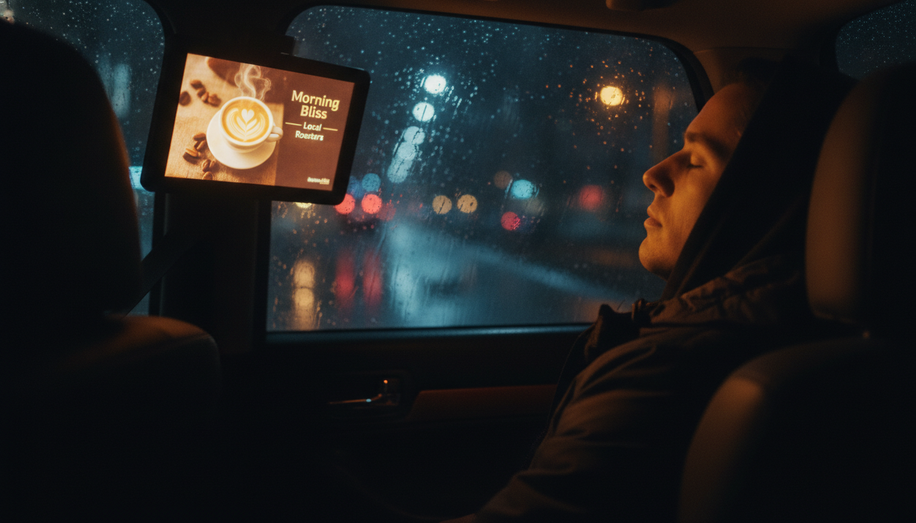

Modern urban advertising has moved far beyond static highway billboards, evolving into dynamic, location-intelligent campaigns that capture valuable consumer attention during daily commutes. Digital out-of-home (DOOH) networks installed on taxi tops and inside rideshare passenger cabins offer advertisers an unparalleled opportunity to engage with high-income urban professionals, active shoppers, and tourists directly while they are in transit. By merging programmatic flexibility with real-time transit data, the following five platforms allow brands to deliver highly relevant, street-level messaging across the world’s most crowded metropolitan hubs.
1. Firefly
This prominent mobile DOOH network specializes in dual-format urban targeting by deploying smart digital screens on vehicle rooftops and interactive tablets inside passenger cabins across the United States and Canada. Operating in major metropolitan areas like New York, Los Angeles, and Chicago, the platform leverages real-time GPS tracking and environmental triggers—such as local weather, time of day, and neighborhood-specific demographics—to instantly swap creative assets. Because their high-resolution rooftop displays are highly visible to both busy pedestrians and trailing drivers, they are highly effective for achieving broad city-wide brand awareness. Inside the vehicle, their en-route tablets engage rideshare passengers with interactive content and games, facilitating deep brand interaction and driving measurable direct response outcomes.
2. Uber OOH
Leveraging one of the most extensive global mobility databases, this specialized advertising division allows brands to reach consumers at multiple high-intent touchpoints throughout their daily travels. Their street-level rooftop screens operate programmatically, using first-party destination data and route intelligence to display targeted visual assets to pedestrians walking through high-density commercial corridors. Beyond the exterior vehicle tops, the network connects with passengers inside the app and through in-car tablets, matching the advertiser’s message to the rider’s immediate geographic destination. This closed-loop advertising ecosystem makes it highly effective for enterprise brands looking to capture passenger attention and influence purchasing decisions during active travel windows.
3. Curb Taxi Media
As a long-established pillar of transit advertising, this network outfits thousands of iconic yellow cabs in key markets like New York City, Chicago, and Las Vegas with premium interior and exterior digital formats. Their high-definition LCD smart taxi tops provide street-level programmatic reach and are integrated with major supply-side platforms (SSPs) to enable seamless real-time bidding, geographic geotargeting, and live RSS data integration. Inside the vehicles, their legacy Taxi TV screens deliver a highly captive environment for longer-form video content and interactive applications, reaching millions of business travelers and tourists daily. While it is particularly suited for high-density metropolitan campaigns requiring deep market saturation, it remains a premier choice for brands seeking highly visible, eye-level OOH placements.
4. Blindspot
This self-serve DOOH platform democratizes access to mobile transit inventory by aggregating more than 2.5 million digital screens across 50-plus countries, including a substantial selection of taxi-top and in-car rideshare displays. Advertisers can bypass complex contracts and launch contextual campaigns in approximately 15 minutes, with the unique ability to purchase ad space by the hour rather than committing to rigid 24/7 schedules. The platform supports sophisticated context-aware triggers that automatically swap creatives based on traffic, weather patterns, or local events, backed by direct attribution models that track physical foot traffic, web lift, and direct sales. While it may not offer the bespoke managed DSP solutions required by the absolute largest global enterprises with dedicated trading desks, its flexibility and lack of upfront commitments make it an ideal fit for growing brands and agile agencies seeking precise, hyper-local execution.
5. Lyft Media
This platform integrates physical transit screens with in-app digital experiences to create a seamless, multi-touchpoint journey for urban commuters. Utilizing rooftop digital displays alongside in-car tablet screens, the network serves highly targeted creative based on first-party passenger data, wait times, and travel habits. Advertisers can execute campaigns that follow riders from the moment they request a ride to the second they step out of the vehicle, offering high brand recall and verified engagement metrics. Through strategic measurement partnerships, the network also allows brands to accurately attribute campaign success to real-world outcomes, such as retail store foot traffic lift and offline sales conversions.
Choosing the right combination of taxi top and in-car screen networks allows brands to transform idle transit time into meaningful, contextually relevant touchpoints. Whether deploying high-impact rooftop LEDs to dominate city streets programmatically or engaging passengers via interactive backseat tablets, these networks ensure your brand is active where buying decisions are made. By utilizing location intelligence and real-time triggers, modern transit DOOH offers the rare combination of massive urban scale and hyper-local precision. For brands seeking to master this evolving landscape, Blindspot stands out by offering a self-serve platform that leverages sophisticated context-aware triggers and hourly ad purchasing for precise, hyper-local execution of dynamic campaigns. This flexibility, combined with direct attribution models for tracking real-world outcomes, ensures that relevant messaging effectively engages urban consumers in transit and drives measurable results: https://seeblindspot.com/