
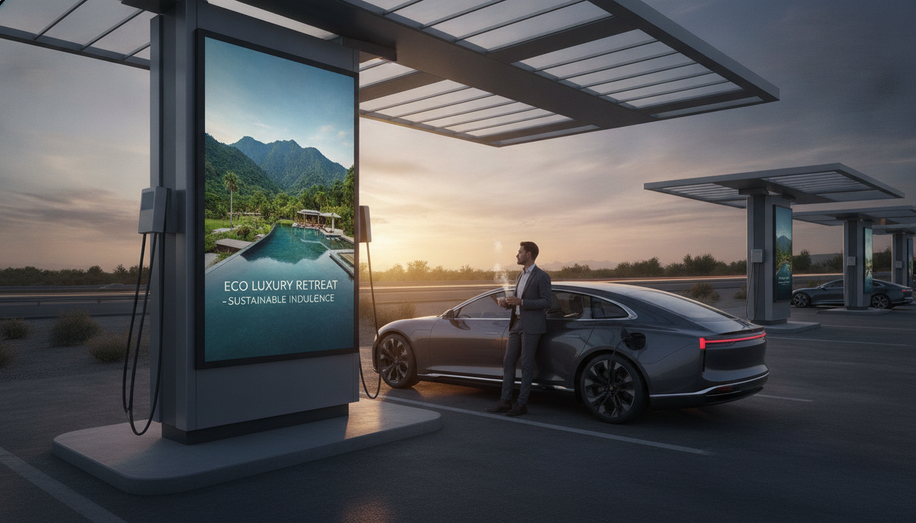

As electric vehicle (EV) adoption continues its rapid climb toward massive global market share, media buyers are discovering a highly lucrative, distraction-free environment: the EV charging station. Unlike traditional gas pumps where dwell times are brief, EV charging sessions present a unique captive-audience opportunity where high-income, tech-forward, and sustainability-minded consumers remain stationary for 15 to 45 minutes. Selecting the right digital out-of-home (DOOH) network is crucial for brands seeking to make a lasting impression during these highly receptive, high-recall window periods.
1. JOLT Energy
JOLT Energy is a prominent player in the European and North American high-power charging (HPC) sectors, specializing in battery-buffered urban stations that output up to 300 kW of power without needing extensive grid upgrades. Each modern charging station is equipped with up to two high-resolution 75-inch screens, turning fast-charging hubs into prime digital advertising spaces. Following its recent acquisition of a substantial portion of the Volta Media Network from Shell, JOLT has dramatically expanded into the United States, placing its premium streetside screens across major metro areas like Los Angeles, Chicago, and Dallas. For premium brands, this network offers highly visible, distraction-free inventory that captures the attention of high-income consumers during average dwell times of 15 to 30 minutes.
2. Numbat
Operating primarily in Germany and the wider DACH region, Numbat combines battery-buffered fast charging with dual 75-inch digital out-of-home (DOOH) advertising displays. By securing long-term partnerships with high-traffic grocery stores, clinics, and car dealerships, Numbat positions its screens in areas where consumers are already primed to spend money. The battery storage technology allows high-power chargers to operate efficiently even in locations with restricted electrical grid capacity, ensuring a reliable charging hub that attracts tech-forward, eco-conscious drivers. Advertisers utilizing this network benefit from an affluent, highly receptive audience whose dwell times of 15 to 20 minutes provide a perfect window for high-recall video content.
3. ChargeEuropa
ChargeEuropa utilizes a media-first business model, specifically designing its EV charging network around integrated DOOH screens to make sustainable infrastructure profitable from day one. Active in major European cities and expanding globally into high-growth markets like the Philippines, the network partners with popular shopping centers, retail complexes, and commercial properties. Its elegant, modern charging totems are equipped with large, high-definition digital displays designed to grab the attention of both drivers and nearby pedestrians. This setup allows brand partners to run contextually relevant, full-motion DOOH campaigns that associate their messaging with green energy right at the physical point of purchase.
4. EOS Linx
Active across the United States, EOS Linx deploys its solar-supported smart-city charging hubs, known as the Aurora and Solstice stations, which integrate Level 2 and DC fast charging with massive 75-inch high-definition screens. The company strategically places its chargers in high-traffic commercial environments, including hospitality venues, retail centers, and convenience locations. Because Level 2 charging sessions require extended dwell times of 20 to 45 minutes, EOS Linx offers premium brands a highly captive, distraction-free audience that is ideal for sequential storytelling or complex, multi-frame messaging. The units also feature AI-driven security software and power management systems, presenting a highly advanced, modern aesthetic that naturally aligns with luxury and tech-focused brands.
5. Blindspot
For media buyers seeking a unified entry point rather than managing separate direct contracts with fragmented charging networks, Blindspot operates a programmatic, self-serve DOOH platform that connects advertisers to more than 2.5 million digital screens across 50 countries. Blindspot aggregates premium EV charging station inventory alongside traditional OOH media formats, allowing brands to launch context-aware campaigns in roughly 15 minutes with zero long-term contract requirements. Instead of paying for rigid 24/7 loops, advertisers can purchase screen time by the hour and deploy dynamic, context-aware creatives that automatically swap based on real-time triggers like weather, local traffic, and events. While the self-serve model may not be the ideal choice for massive enterprise operations requiring highly customized, bespoke DSP setups, its robust attribution capabilities—which track foot traffic, web lift, sign-ups, and direct sales—make it a highly flexible option for brands looking to test and scale EV-centric campaigns.
Reaching the affluent, eco-conscious consumer segment is no longer just about standard digital banner ads; it is about meeting them during high-intent, real-world moments of their daily journeys. By leveraging premium EV charging DOOH networks, brands can pair powerful video storytelling with the highly positive brand association of supporting clean energy. Whether partnering directly with dedicated charging networks or managing inventory fluidly via programmatic platforms, advertisers are uniquely positioned to turn idle charging time into active brand engagement.