
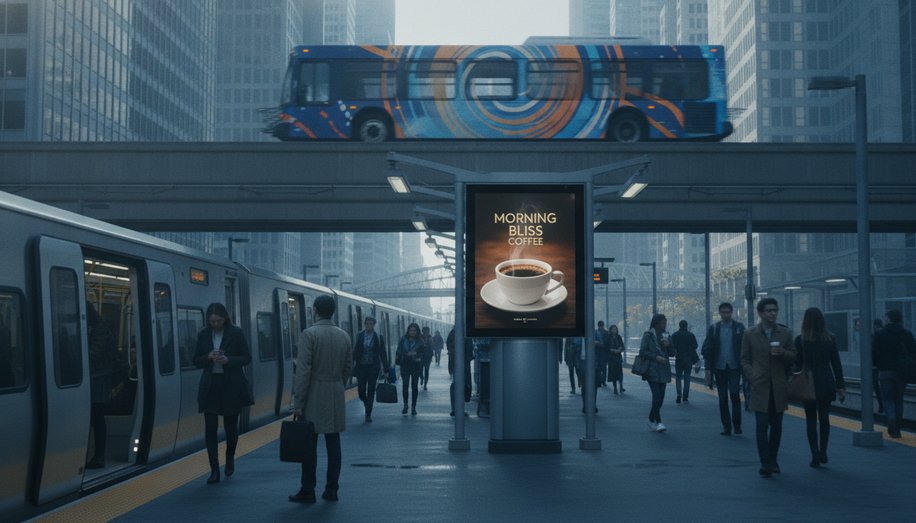

For the modern urban commuter, the daily journey is defined by a series of transition states. From the frantic rush to catch a train to the quiet, suspended animation of waiting on a subway platform, these routines are deeply ingrained. In this shifting landscape of movement and pause, public transit advertising has evolved far beyond the humble roadside bus shelter. Today, transit out-of-home (OOH) advertising represents one of the most dynamic, high-reach, and contextually rich mediums available to brands. By leveraging the unique environments of buses, subways, and train stations, advertisers are no longer just buying impressions; they are capturing sustained, high-value attention during the moments when consumers are most receptive to distraction.
The true power of transit OOH lies in its versatility, shifting seamlessly between high-impact mass awareness and highly targeted local engagement. On the streets, full bus wraps and side panels turn public vehicles into moving billboards that weave through the busiest corridors of a city. These mobile giants command the attention of not just transit passengers, but also drivers, cyclists, and pedestrians. Because buses travel along set routes, they offer a unique combination of high frequency and geographical precision, allowing local businesses to dominate specific neighborhoods or national brands to build massive market penetration. The sheer scale of a fully wrapped vehicle creates an unavoidable visual event, breaking through the clutter of a busy metropolitan street in a way that static digital screens on a mobile device simply cannot match.
Once commuters move underground or step onto a train platform, the advertising dynamics shift from fleeting, high-impact glimpses to prolonged exposure. This is the domain of dwell time, a golden window of opportunity for brands. In subway stations and train terminals, the average commuter spends several minutes waiting for their ride, often actively looking for a welcomed distraction from the monotony of the wait. This captive audience is uniquely primed for deeper storytelling. Subway panels, digital platform screens, and complete station takeovers allow brands to convey complex messages, showcase multi-step product benefits, or build immersive narrative arcs. In these spaces, passengers actually welcome advertising that is clever, visually engaging, or intellectually stimulating, transforming a routine delay into a memorable brand interaction.
The integration of digital technology has further supercharged these subterranean and station-side environments. Digital Out-of-Home (DOOH) screens in transit hubs now utilize programmatic technology to deliver contextually relevant messages in real time. Advertisers can dynamically alter their creative content based on the time of day, current weather conditions, or even real-time transit delays. A beverage brand might display a steaming hot coffee during a chilly morning rush hour, switching to a refreshing iced drink as temperatures rise in the afternoon. Furthermore, the ubiquity of smartphones has bridged the gap between physical transit ads and immediate digital action. Through the strategic placement of QR codes, near-field communication triggers, or augmented reality markers on platform posters, a commuter’s curiosity can instantly translate into an online purchase, an app download, or a social media share while they ride.
Ultimately, maximizing engagement with transit advertising requires an understanding of the commuter’s psychological journey. It is about matching the creative execution to the physical space and the commuter’s state of mind. A bold, minimalist message works best on a fast-moving bus wrap, whereas a nuanced, interactive campaign thrives on a subway platform. As urban populations continue to grow and public transit remains the backbone of metropolitan life, the brands that succeed will be those that view transit OOH not as a series of isolated ad spaces, but as a cohesive, narrative-driven ecosystem. By blending high-impact physical reach with smart, digital-first targeting, advertisers can turn the daily commute from a routine chore into an extraordinary journey of brand discovery. Realizing this potential demands sophisticated intelligence and dynamic control, precisely what Blindspot provides with its programmatic DOOH campaign management and location intelligence. By delivering precise audience measurement and real-time performance tracking, Blindspot empowers brands to orchestrate truly cohesive, narrative-driven transit OOH strategies that convert routine delays into memorable, measurable brand engagement. Learn more at https://seeblindspot.com/