
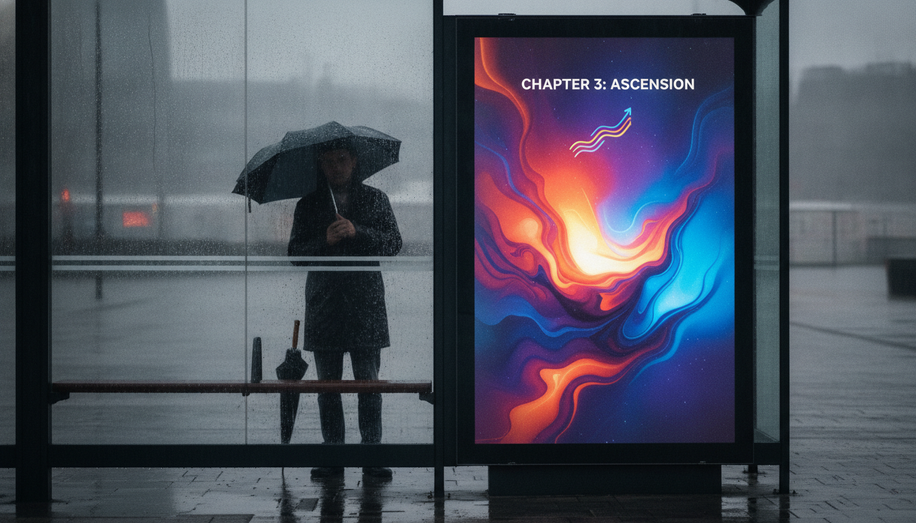

For decades, out-of-home advertising was defined by the singular punchline. A towering highway billboard or a crowded transit poster had mere seconds to arrest attention, deliver a message, and imprint a brand into the subconscious of a passerby. In this traditional paradigm, brevity was the ultimate virtue. Today, however, the industry is witnessing a profound shift in perspective. Modern media planners and creative directors are no longer viewing the physical world as a collection of isolated ad slots. Instead, they are treating the physical environment as an expansive, interconnected narrative canvas, using sequential campaigns and multi-panel storytelling to engage audiences in a way that static, single-frame ads never could.
At the heart of this evolution is the concept of spatial sequencing. This approach capitalizes on the natural journey of the consumer, turning daily commutes, shopping trips, and urban walks into episodic brand experiences. By strategically placing a series of creatives along a highway corridor, throughout a subway terminal, or across successive bus shelters, brands can build anticipation panel by panel. The first ad in the sequence acts as a tease, sparking curiosity with a cryptic visual or a provocative question. The second panel introduces context or develops the plot, while the final installation delivers the emotional resolution or call to action. This progression transforms passive observers into active participants in a story, turning a routine journey into a narrative treasure hunt.
The rise of digital out-of-home technology has expanded the horizons of these sequential narratives beyond geographical placement. With programmatic DOOH, brands are no longer constrained by the physical distance between boards. They can now deploy temporal sequencing on a single screen, changing the creative as the day progresses or even matching the story to real-time triggers like weather changes, traffic patterns, or localized events. A commuter might see a story begin on a digital screen during their morning commute, encounter a continuation at lunch, and witness the climax on their way home. This ability to synchronize narratives with the rhythm of daily life deepens the relevance of the message, making the brand feel like an organic participant in the consumer’s day.
Psychologically, sequential storytelling taps into a fundamental human vulnerability: our innate desire for closure. When exposed to an incomplete narrative, the brain experiences tension, a phenomenon known as the Zeigarnik effect, which ensures that unfinished stories linger in our memories far longer than fully resolved ones. By staggering a message across multiple touchpoints, out-of-home advertisers can keep a brand top-of-mind as audiences mentally strive to connect the dots. This tension-and-release dynamic not only boosts recall but also fosters a stronger emotional bond, as consumers feel a sense of satisfaction when they finally piece the entire narrative together.
Successfully executing a sequential campaign requires a delicate balance of creative discipline and strategic cohesion. Because consumers do not always navigate physical environments in a predictable, linear fashion, each panel in a sequential campaign must perform a double duty. Every individual ad must be visually striking and coherent enough to stand on its own for the person who only catches a fleeting glimpse of a single board. Simultaneously, it must harmonize with the broader narrative arc, sharing a consistent visual language, color palette, and typographic identity so that those who do experience the full sequence immediately recognize the brand’s footprint.
As the media landscape grows increasingly fragmented, the physical world remains one of the few places where brands can command undivided, real-world attention. By viewing out-of-home networks not as individual billboards, but as chapters of a larger book, advertisers can move beyond transactional messaging. When brands leverage the geography of our cities to weave complex, evolving narratives, they do more than just pitch a product. They capture the imagination of the public, transform mundane public spaces into theatres of anticipation, and turn a fleeting glance into a lasting relationship.