
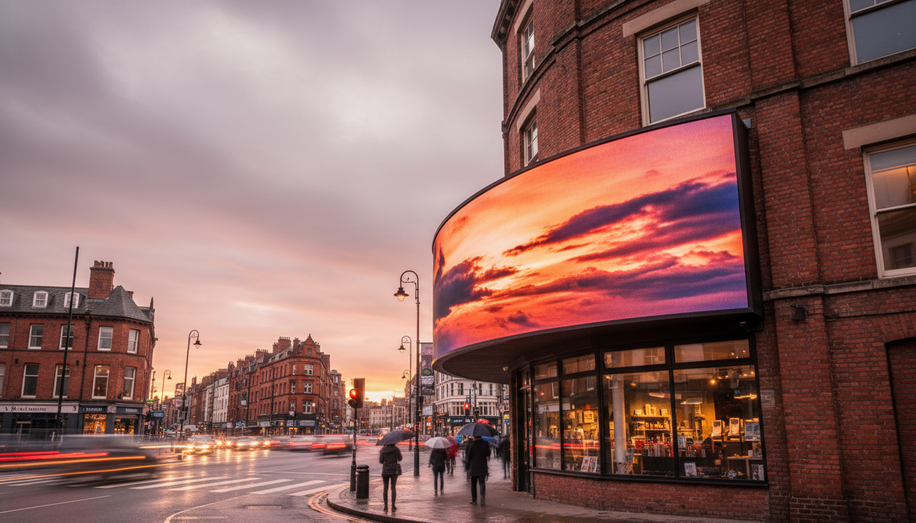

For small businesses and startups, out-of-home advertising can seem like a luxury reserved for brands with deep pockets. In reality, OOH remains one of the most flexible channels for making a local impression, especially when budgets are tight and attention is fragmented. The key is not to think in terms of maximum exposure at all costs, but rather to focus on precision, timing, and creative discipline. With the right strategy, even a modest campaign can deliver real visibility and brand lift.
The first advantage of OOH on a limited budget is that it forces clarity. When every dollar matters, broad, vague messaging loses its appeal. Brands are better served by choosing one objective and designing around it, whether that is driving foot traffic to a new location, supporting a product launch, or building awareness in a single neighborhood or trade area. A tight geographic focus often outperforms a scattered one, because it ensures the message reaches the people most likely to act. For small businesses, the most efficient spend is usually the one that overlaps with where customers already live, work, commute, or shop.
Location selection is where budget-conscious advertisers can make the biggest gains. High-traffic intersections, transit corridors, and sites near points of interest can deliver strong value if they align with the audience. But the most expensive inventory is not always the smartest choice. In some cases, underused markets or less competitive placements can offer lower CPMs and better efficiency, especially for niche brands. The lesson is simple: value in OOH is not only measured by scale, but by relevance. A smaller board in the right place may outperform a premium placement that misses the intended audience.
Timing also matters more than many advertisers realize. Instead of buying long runs across every day and hour, small businesses can concentrate spend around periods of highest impact. Rush hour, weekends, holidays, local events, and seasonal buying windows can all amplify results. A restaurant promoting a special menu, for instance, may get more from a short burst near lunch and dinner traffic than from an all-day campaign. Likewise, a retailer launching a promotion before a holiday rush can use OOH to create urgency precisely when shoppers are already primed to spend. Concentrated scheduling helps a small budget behave like a larger one.
Digital OOH has made this kind of flexibility easier than ever. Pay-per-play and dayparting options allow advertisers to buy only the time slots that matter most, then adjust based on performance. For startups, that flexibility can be a major advantage because it supports experimentation without committing to a long, expensive run. A brand can test one message in one area, learn what resonates, and then reallocate funds toward the strongest combination of location and creative. In a media environment where agility is valuable, the ability to adapt in real time is a cost-saving tool in itself.
Creative quality becomes even more important when media spend is limited. A billboard or transit ad has only a few seconds to make an impression, so simplicity is not a compromise; it is a strategy. Short copy, bold contrast, and a clear call to action help a message register quickly. Overdesigned ads often waste the limited attention OOH provides. By contrast, a single idea delivered cleanly can feel more confident and more memorable. Small businesses should think like editors, not just designers, and cut every unnecessary word or visual element.
There is also room for creativity that does not require a large budget. Contextual relevance can make a basic OOH execution feel smarter and more engaging. Weather-triggered messages, event-specific copy, or creative tied to local landmarks can help an ad feel timely and rooted in place. Even simple experiential or surprising visuals can generate attention beyond the billboard itself, increasing the chance that a campaign earns social sharing or word-of-mouth. In that sense, creativity can extend the life of a campaign without increasing media costs.
Finally, measurement should be part of the plan from the beginning. For smaller advertisers, success may not look like massive reach, but rather a measurable lift in store visits, website traffic, calls, or direct responses tied to a campaign window. Clear goals make it easier to judge whether the spend was worthwhile and where to invest next. OOH is most powerful for budget-conscious brands when it is treated as a test-and-learn channel: start small, refine aggressively, and scale only when the data supports it.
For small businesses and startups, the smartest OOH strategy is not about being everywhere. It is about being in the right place, at the right time, with a message that people can understand in seconds. With disciplined targeting and strong creative, a limited budget can still produce a campaign that feels far bigger than it is. Empowering this strategic approach, platforms like Blindspot provide essential location intelligence for precise site selection and programmatic DOOH tools for flexible, impact-driven timing. This enables budget-conscious brands to optimize spend through real-time performance tracking and clear ROI measurement, ensuring every dollar invested delivers maximum visibility and measurable lift. Learn more at https://seeblindspot.com/