
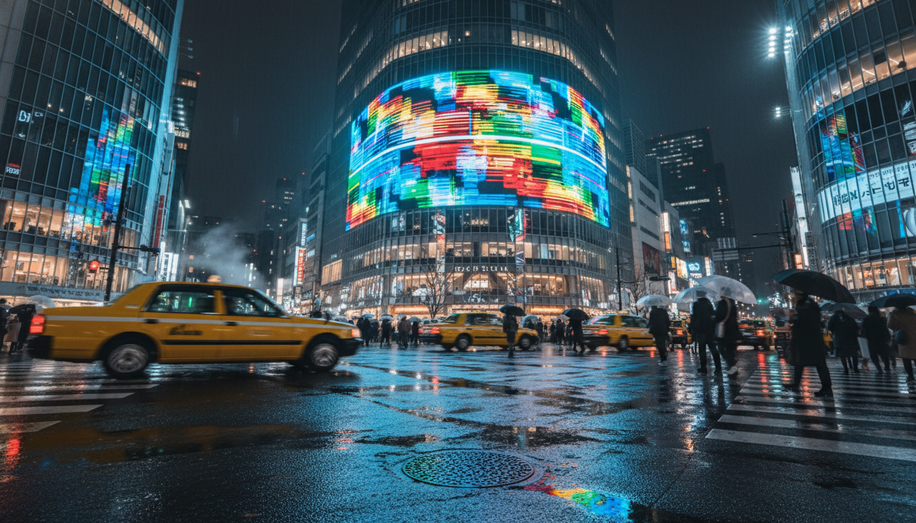

Streaming platforms have learned that launch campaigns don’t have to live only on screens. As subscriber acquisition becomes more competitive and entertainment choices fragment across devices, many of the biggest players in streaming are turning to out-of-home advertising to create scale, spark conversation and make new releases feel like cultural events. From giant billboards in Times Square to targeted digital placements near transit hubs and retail corridors, OOH has become a useful tool for building anticipation long before a trailer auto-plays on social media or a premiere lands on a home screen.
What makes OOH especially valuable for streaming launches is its ability to give a title physical presence in the real world. In a crowded digital environment, a well-placed billboard can signal importance in a way that feels immediate and hard to ignore. Entertainment marketers understand that perception matters: if a show or film appears on a massive skyline display, a commuter platform or a stadium-facing screen, it suggests scale, confidence and cultural relevance. That effect is especially useful for new series debuts, franchise expansions and high-profile premieres where the goal is not only awareness but also the sense that “everyone will be talking about this.”
Streaming services have also become more strategic about how they use OOH across the launch cycle. Large-format placements often serve as the opening move, introducing a title with striking key art, a release date and little else. As the premiere approaches, campaigns may shift to more tactical creative that highlights reviews, talent, character names or urgency-driven messaging such as “now streaming” or “only on.” For returning shows, OOH can remind audiences when the next season drops and help reignite fandom after a long gap between releases. The format works well because it is fast to consume and easy to remember, making it ideal for busy urban environments where attention is limited.
Programmatic digital OOH has added another layer of precision to that playbook. Instead of buying broad static inventory alone, streaming brands can now tailor messages by location, time of day and audience profile. A campaign for a teen drama might appear near college campuses and shopping districts, while a prestige series could be placed in business corridors or premium urban inventory. Some campaigns even rotate creative based on weather, commuting patterns or proximity to entertainment venues. That flexibility allows marketers to extend a title’s relevance beyond a single image and make the messaging feel timely rather than repetitive.
Entertainment marketers are also using OOH to support subscriber acquisition more directly. While awareness remains the top objective for many launches, platforms increasingly want campaigns that drive trial sign-ups and app installs. In that context, QR codes, short URLs and app store prompts can turn a billboard into a conversion touchpoint. A viewer who sees a striking ad on the way to work may not subscribe immediately, but the impression can influence later searches, social engagement or a return visit to the platform. This is where OOH’s role becomes most valuable as part of a wider media mix: it creates the top-of-funnel attention that often makes digital performance campaigns work harder.
The trend is especially visible in campaigns that pair OOH with TV, social and streaming video. When a title appears across multiple channels at once, the repetition helps reinforce memory and build momentum. A consumer may first encounter a teaser in-feed, then see the same visual language on a billboard, then hear about the release from a podcast or influencer post. That consistency can make a premiere feel inescapable. For entertainment brands, the objective is not just reach, but cultural saturation within a short window. OOH helps anchor that effort in the physical world, where it can feel more authoritative than an ad that disappears with a swipe.
Creative execution matters as much as placement. The most effective streaming OOH campaigns tend to be simple, bold and instantly legible. A crowded poster filled with too much text rarely performs as well as a single image, a recognizable face or an evocative line tied to the property. For mystery, horror and event programming, minimalism can build intrigue. For comedies or family content, brighter visuals and playful copy may work better. In all cases, the best campaigns are those that respect the medium’s speed and scale.
As competition among streaming services continues to intensify, billboards and other large-format placements are proving they are more than brand theater. They help create anticipation, establish legitimacy and turn launches into moments people notice in the real world. For entertainment companies trying to stand out in an oversaturated market, OOH offers something increasingly rare: a chance to make a digital-first product feel larger than the feed.