
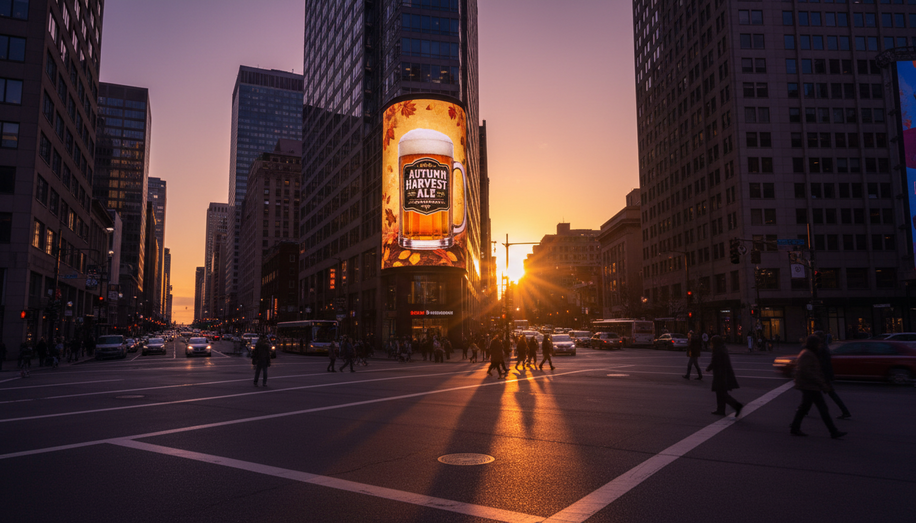

In an era where digital ads flicker across screens in endless scrolls, out-of-home (OOH) advertising is reclaiming its throne as the unskippable force propelling local businesses forward. For small and medium-sized enterprises (SMEs) hungry for tangible growth, OOH offers a hyper-local lifeline, transforming billboards, bus shelters, and digital street furniture into powerful engines for foot traffic and brand loyalty. Unlike the fleeting nature of online banners, OOH plants your message firmly in the physical world, where commuters, shoppers, and passersby can’t help but engage.
Consider the plight of a neighborhood coffee shop or boutique retailer battling e-commerce giants. Traditional digital marketing often drowns in algorithmic noise, but OOH cuts through with immediacy. A well-placed billboard along a high-traffic artery doesn’t just inform; it compels action. Data from industry leaders like Outfront Media underscores this: local OOH campaigns consistently deliver measurable lifts in store visits, with studies showing up to 40% increases in foot traffic for targeted placements. The secret lies in precision—leveraging traffic pattern analytics to position ads where your audience already lingers, whether it’s a bustling downtown corner or a suburban thoroughfare lined with daily commuters.
Hyper-local billboards exemplify this strategy’s potency. Far from the monolithic interstate giants, these smaller formats zero in on neighborhoods, capturing residents during their routines. A family-owned restaurant might secure a digital billboard near a local school or park, timing bursts of messaging around lunch rushes or weekend events. Platforms like Blip Billboards enable SMEs to dip in affordably, starting with daily budgets as low as $20 to $50, testing creatives and locations before scaling. This flexibility democratizes OOH, allowing even bootstrapped ventures to rival bigger players. The result? Impressions that convert: one small business owner reported a 25% sales spike after a two-week hyper-local campaign, as drivers en route to errands spotted the ad and detoured for a purchase.
Digital street furniture takes this intimacy further, embedding ads into the urban fabric. Bus shelters, transit wraps, and interactive DOOH panels in high-footfall zones like train stations offer prolonged exposure—think a pedestrian glancing at a dynamic screen while waiting for the bus, their eyes drawn to a QR code promising 20% off at the nearby deli. These formats shine for their interactivity; real-time updates can tie into weather, events, or promotions, fostering urgency. Taxi ads and truck-side billboards extend the reach, turning vehicles into roving ambassadors that blanket communities without the static limitations of print. For SMEs, the cost per thousand impressions (CPM) often undercuts digital rivals, especially locally, making it a savvy investment for building “mind share” that translates to market share.
Yet success demands more than placement; it hinges on crafting messages that resonate locally. Tailor content to community quirks—reference landmarks, dialects, or traditions to evoke pride and relevance. A hardware store in a rainy coastal town might tout “Gear up for the next squall” with imagery of familiar piers, driving locals to stock up. Integrate seamlessly with digital channels for amplification: slap a custom hashtag or shortened URL on every ad, funneling OOH sightings into social shares and app downloads. This omnichannel synergy multiplies impact; viewers encountering your billboard then see reinforcing posts online, cementing recall.
Strategic planning elevates OOH from gamble to science. Research foot and vehicle flows using tools from providers like Bauer Media Outdoor, pinpointing spots aligned with customer habits—near grocery runs for a bakery or office parks for a lunch spot. Time campaigns around peaks: lunch hours for eateries, evenings for gyms. For medium-sized businesses eyeing expansion, mix formats—pair a bold billboard with granular street-level ads—to layer awareness atop conversion.
The proof is in the pudding. Movia Media cites cases where SMEs with modest budgets achieved broad awareness through mobile OOH like truck ads, forging community ties that digital can’t replicate. Bluevine highlights how these enduring visuals outperform fading print or ad-blocked online efforts, repeatedly hammering home your brand to thousands daily. As SMEs navigate economic headwinds, OOH stands as a resilient booster, not just visible but visceral, turning local glances into loyal patrons.
In communities craving authentic connection, OOH empowers businesses to own the streets. By harnessing hyper-local precision, dynamic formats, and integrated tactics, SMEs don’t just advertise—they ignite commerce, one unmissable impression at a time.