
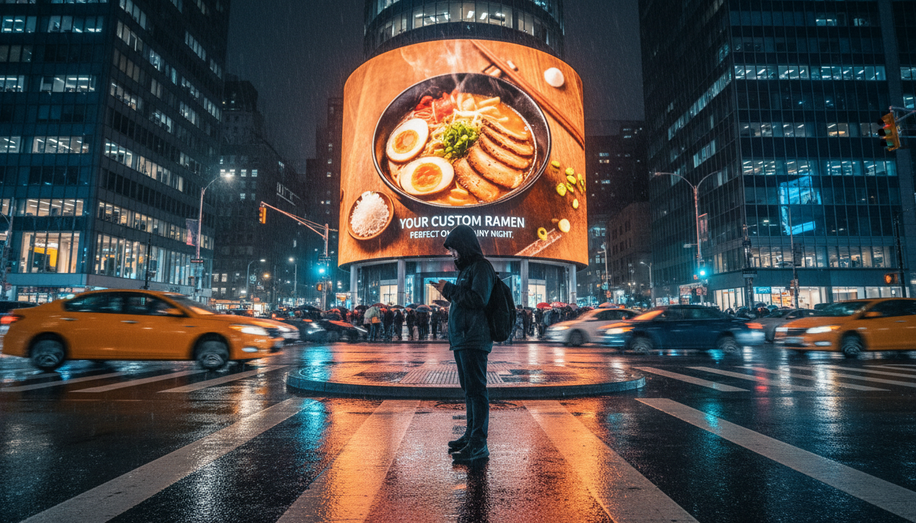

In the bustling digital billboards of Times Square or the sleek screens lining subway platforms, programmatic digital out-of-home (DOOH) advertising has long promised precision over the scattershot approach of traditional out-of-home media. But as consumer paths grow more unpredictable—zigzagging between apps, devices, and physical spaces—advertisers are turning to predictive analytics powered by artificial intelligence and machine learning to not just react, but anticipate. This fusion is reshaping programmatic DOOH, transforming static displays into dynamic portals that forecast audience journeys and deliver hyper-targeted messages with surgical accuracy.
At its core, predictive analytics in programmatic DOOH sifts through vast datasets—historical campaign performance, real-time location signals, weather patterns, traffic flows, and anonymized mobility data—to model future behaviors. Machine learning algorithms, trained on these inputs, identify patterns invisible to the human eye: a commuter’s likelihood of lingering near a retail hub after a rainy morning commute, or a festival-goer’s path from food stalls to merchandise tents. As outlined by industry leaders like Confirm Media, these models enable advertisers to predict not only where audiences will be, but when they’ll be receptive. A coffee chain, for instance, might trigger steaming latte visuals on nearby screens precisely as office workers’ phones signal end-of-shift fatigue, boosting impulse buys by aligning with micro-moments of need.
This foresight extends beyond mere location. In programmatic DOOH platforms, AI-driven systems like those from StackAdapt and AI Digital process cross-channel data to map holistic consumer journeys. Imagine a shopper browsing sneakers online at noon; by evening, as their phone pings proximity to a mall, screens ahead dynamically swap generic footwear ads for the exact model viewed earlier—tailored by predictive models forecasting purchase intent. StreetMetrics highlights how such innovations shift OOH from broad-reach broadcasting to hyper-targeting, analyzing geolocation from mobile devices and social media to refine audiences in real time. Early adopters report 10-25% lifts in media efficiency, as campaigns self-adjust to emerging trends like sudden traffic surges or event-driven crowds.
Real-time adaptability is where the magic truly unfolds. Unlike static buys, programmatic DOOH leverages edge computing and continuous learning to evolve on the fly. If a heatwave spikes cold drink demand, AI can reallocate budgets from underperforming screens to high-traffic hydration zones, as seen in retail brands dynamically promoting workwear in the morning and evening attire by afternoon near shopping centers. Experian notes that machine learning enhances bidding strategies, prioritizing “incrementality-aware” impressions—those likely to sway undecided consumers rather than high-intent baselines. This marginal optimization prevents waste, ensuring every dollar chases true causal impact amid fragmented journeys.
Yet, the revolution goes deeper with emerging capabilities. Hyper-personalization, once a digital-only dream, now infiltrates physical spaces through privacy-compliant modeling. BrandMotech predicts AI will craft ads reflecting individual moods via contextual cues—swapping upbeat promos for calming ones during rush hour stress peaks. Cross-channel attribution ties it all together: a mobile ad’s spark ignites a DOOH follow-up, with predictive tools forecasting handoffs across platforms. RishabhSoft emphasizes how these systems process massive data clusters to decode purchase journeys, spotting key events like payday cycles that jolt spending habits.
Challenges persist, of course. Data privacy regulations demand anonymized signals, pushing innovation toward “privacy-first” predictions that infer behavior without personal identifiers. Noisy datasets from urban chaos require robust ML to filter signal from static. Still, as The Neuron observes, the payoff is profound: programmatic DOOH ditches guesswork for evidence-based precision, revolutionizing outdoor advertising’s ROI.
Looking ahead, 2026 marks a tipping point. With AI evolving toward natural language processing for sentiment analysis and predictive creative optimization—auto-generating visuals based on forecasted preferences—the medium’s potential feels boundless. Brands like those partnering with StreetMetrics are already forecasting campaign performance from historical patterns, preempting flops before launch. For OOH publishers and advertisers, embracing predictive analytics isn’t optional; it’s the edge in a world where consumers move faster than ever. By anticipating journeys, programmatic DOOH doesn’t just reach audiences—it meets them where their next decision brews, forging connections that feel prescient, not pushy. In this data-orchestrated landscape, the future of advertising isn’t written; it’s algorithmically scripted.