
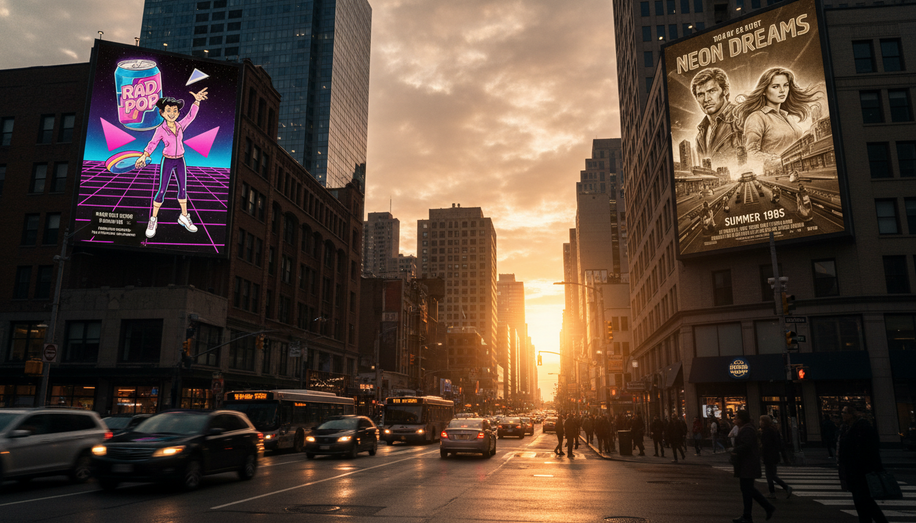

In the bustling urban landscapes where out-of-home (OOH) advertising competes for fleeting glances, brands are turning to a timeless tactic: nostalgia. By resurrecting classic aesthetics, vintage imagery, and throwback themes, advertisers craft billboards and transit wraps that don’t just sell products—they stir deep emotional currents, forging connections with modern audiences amid the chaos of digital overload.
At its core, nostalgia taps into the human psyche’s craving for continuity. Psychological research reveals it enhances well-being by boosting social connectedness and a sense of existential meaning, offering respite from today’s uncertainties. For Gen Z, digital natives navigating fragmented cultural worlds, nostalgic cues provide “emotional deceleration”—a psychological anchor in fast-paced lives. Studies confirm these past-centric appeals generate stronger emotional responses than neutral ads, heightening brand recall, trust, and impulsive buying. In OOH, where exposure is brief and environmental, this emotional shortcut proves potent: a retro design can evoke warmth and familiarity faster than any sleek digital render.
Brands wield nostalgia masterfully in OOH by blending heritage with innovation. Coca-Cola’s iconic script font and bottle silhouette, splashed across cityscapes, signal authenticity rooted in decades of shared memory—far more genuine than a newcomer aping vintage styles. Nike has similarly leveraged its swoosh heritage in massive murals mimicking 1980s posters, aligning retro messaging with historical identity to sidestep accusations of “aesthetic exploitation.” These campaigns thrive on perceived authenticity; consumers reject forced nostalgia but embrace it when it feels like a natural extension of the brand’s story. Recent OOH executions amplify this: Pepsi’s bus shelters revived 1990s neon signage paired with modern QR codes, drawing double takes from millennials reminiscing childhood crushes on the logo.
The mechanics extend to sensory details that OOH exploits uniquely. Vintage typography—think bold serifs or hand-lettered scripts—mimics faded posters from bygone eras, while throwback color palettes of mustard yellows and faded pastels contrast today’s minimalist trends. Imagery pulls from pop culture vaults: Polaroid frames enclosing smartphone selfies, or cassette tapes unraveling into streaming playlists on subway ads. Soundless yet evocative, these elements trigger “narrative coherence,” where passersby mentally relive cultural moments, building parasocial bonds even without personal history. For Gen Z, lacking direct experience with the 80s or 90s, such cues foster symbolic continuity, turning billboards into communal touchstones.
Data underscores the payoff. Nostalgic ads boast 1.8 times higher recall rates, boosting brand preference and loyalty. Consumers report 10-15% higher willingness to pay for products tied to positive memories, a boon for OOH where proximity to purchase points like stores amplifies impulse. Emotional engagement mediates this: nostalgia sparks feelings that enhance trust, particularly when intensity matches cultural familiarity. Intergenerationally, it unites millennials pining for childhood with Gen Z discovering “the good old days” via TikTok, broadening reach. A Portland State University analysis found nostalgic cues universally lift perceptions and purchase intent, regardless of product category.
Yet success demands nuance. Authenticity moderates impact—higher when retro elements align with brand legacy, as in Levi’s distressed denim billboards evoking 1950s rebels. Inauthentic ploys, like a tech startup slapping VHS glitches on unrelated ads, breed skepticism. OOH’s physical permanence heightens this: a poorly executed throwback lingers mockingly, while triumphs like Stranger Things-inspired campaigns for Netflix—replete with 80s synth vibes visualized in pixelated fonts—go viral, blending OOH with social sharing.
Urban environments supercharge nostalgia’s resonance. Amid skyscrapers and traffic, a vintage VW bus ad cuts through clutter, evoking simpler drives and family road trips. Transit hubs become nostalgia portals: retro arcade games on platform screens for a gaming brand, or 70s disco balls reflecting on train windows promoting a music festival. These immerse viewers passively, leveraging OOH’s ambient power to bypass ad fatigue. Nostalgia trumps typical decision factors here, overriding price or features with sheer emotional pull.
As OOH evolves with digital out-of-home (DOOH) screens, hybrid approaches emerge: LED billboards cycling 90s GIFs or AR filters unlocking virtual throwbacks via phone scans. Brands like Burger King revive flame-grilled 80s aesthetics on dynamic displays, merging motion with memory. This fusion keeps nostalgia fresh, countering digital saturation where consumers crave tactile echoes of the analog past.
Ultimately, nostalgia in OOH isn’t mere gimmickry—it’s a strategic bridge from past comforts to present desires. By evoking collective longing, brands don’t just capture attention; they cultivate loyalty in an era of fleeting trends. As urbanites scroll less and look up more, retro designs stand as bold reminders: some things never go out of style.