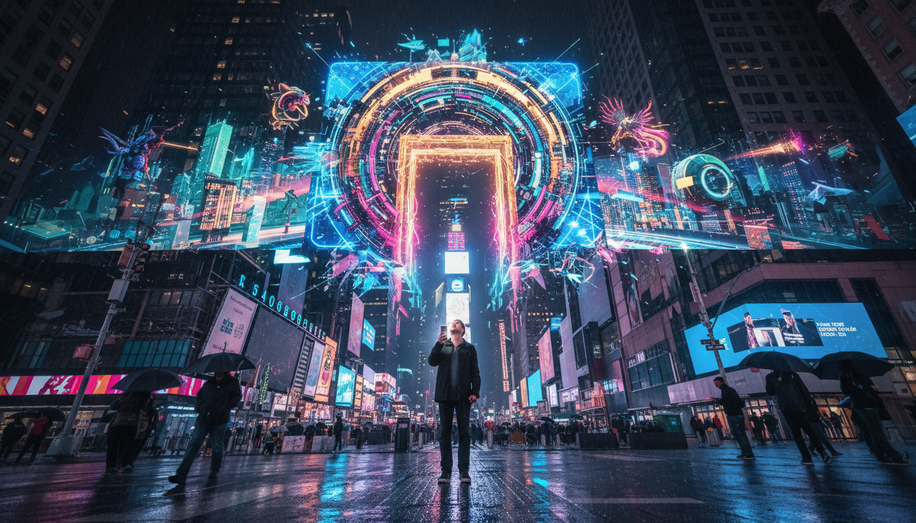
In the bustling streets of urban centers, where static billboards once competed for fleeting glances, augmented reality is rewriting the rules of out-of-home advertising. By transforming ordinary OOH displays into interactive portals, AR activations triggered by QR codes or image recognition allow consumers to unlock immersive 3D experiences right from their smartphones, blending physical ads with dynamic digital content. This fusion not only extends brand narratives beyond the billboard’s frame but also invites passersby to engage actively, turning passive viewers into participants in a brand’s story.\n\nThe mechanics are elegantly simple yet profoundly effective. A commuter scans a QR code on a bus shelter ad, and suddenly, animated 3D models burst forth from the static image—perhaps a virtual product exploding into life or characters leaping into the real world. Computer vision technology anchors these elements precisely to the ad’s surface, creating the illusion of depth and motion that captivates users for extended periods. Traditional billboards, often dismissed as relics in a digital age, evolve into interactive canvases; transit ads in subway stations or on buses gain layers of gamified content, special offers, or videos that reward waiting time with entertainment.\n\nBrands are reaping measurable gains from this bridge between worlds. AR campaigns have boosted engagement by up to 20%, with consumers lingering an average of 75 seconds per interaction—far surpassing the seconds typically afforded to conventional OOH. This dwell time translates to deeper brand recall, as personalized, playful experiences foster emotional connections. Moreover, AR’s shareability amplifies reach: users capture and post these “wow” moments on social media, extending the campaign’s life organically.\n\nReal-world examples illustrate the versatility. Burger King’s “Burn That Ad” campaign let users point their phones at rival McDonald’s billboards, igniting virtual flames that consumed the competition before offering a free Whopper coupon—a cheeky, memorable jab that drove foot traffic. In another stroke of genius, Burger King deployed AR on digital OOH screens, where scanning revealed plumes of smoke directing hungry customers to the nearest restaurant. Coca-Cola Zero Sugar’s “#TakeATaste Now” collaboration with Tesco used hand-tracking AR on digital out-of-home displays, enabling users to virtually “grab” a bottle for a giveaway, marking a commercial first in seamless physical-digital interaction.\n\nVodafone has pushed boundaries with AR murals and billboards that dominate public spaces, surprising audiences with immersive visuals tied to real-time engagement. Kinder tapped web-based AR for in-store OOH, creating an app-less African safari portal where 3D animals emerged with fun facts, delighting families and spiking product interaction. These activations respond to their environments—AR content might adapt to weather, location, or even nearby landmarks—heightening relevance and impact.\n\nThe appeal lies in AR’s ability to humanize advertising amid digital fatigue. Today’s audiences crave personalization; static OOH feels interruptive, but AR delivers surprise, entertainment, and utility, making brands feel alive and approachable. Projections underscore the momentum: the AR advertising market is on track to hit $8 billion by 2025, fueled by smartphone ubiquity and maturing tech like 8th Wall’s web-based solutions that eliminate app downloads. Even murals and non-digital formats benefit, overlaying graphics that guide to pop-up events or stores.\n\nChallenges remain, from ensuring broad accessibility to optimizing for varying lighting and device capabilities, but the upside is transformative. OOH’s strength has always been its unskippable presence in high-traffic zones; AR supercharges this with opt-in interactivity, measuring success through scans, shares, and conversions. As agencies integrate AR natively, expect more hybrid campaigns where physical creatives hook attention, and digital layers deliver the payoff—be it gamified challenges, virtual try-ons, or narrative extensions.\n\nUltimately, AR turns billboards into portals not just for immersion, but for genuine connection. In an era where consumers navigate ad-saturated lives, these experiences cut through, proving OOH’s enduring power when augmented with tomorrow’s tech. Brands that master this will not only capture eyes but command loyalty, redefining advertising as an adventure rather than an annoyance.
Augmented Reality Transforms Out-of-Home Advertising with Interactive Experiences