
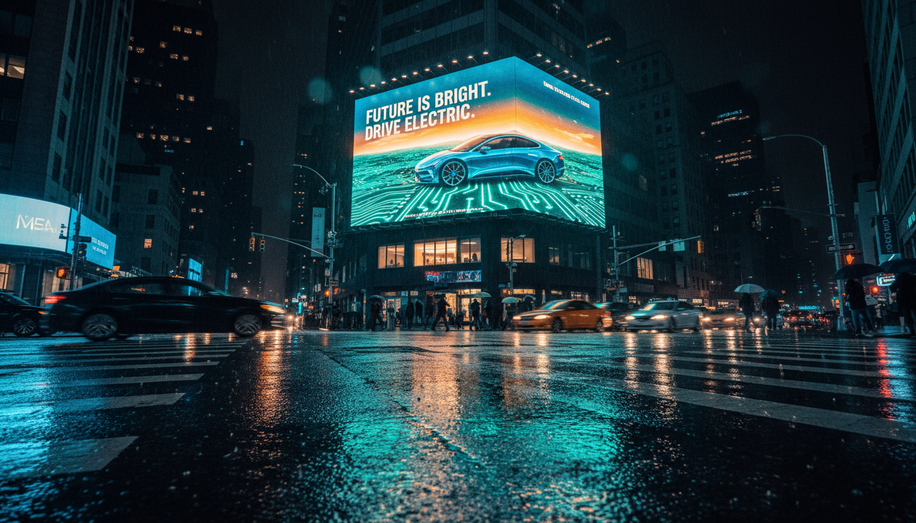

In the bustling world of out-of-home (OOH) advertising, where billboards flash by at highway speeds and transit posters catch eyes in fleeting moments, inclusivity is no longer a nice-to-have—it’s a necessity. Designing campaigns accessible to people with disabilities expands reach, fosters brand loyalty, and aligns with legal mandates like the Americans with Disabilities Act (ADA). By prioritizing visual clarity, simplified messaging, and universal design principles, OOH creators can ensure their messages resonate with everyone, from those with low vision to individuals relying on mobility aids.
Visual clarity forms the cornerstone of accessible OOH design. Large, high-contrast typefaces are essential, as they enhance legibility for people with limited vision while benefiting all viewers. The U.S. Access Board specifies minimum character heights based on viewing distance: for signs 40 to 70 inches high viewed from under six feet, characters must be at least 5/8 inch tall; this scales up to 3 inches or more for distant billboards viewed from 21 feet away. Non-glare finishes on symbols and backgrounds prevent reflections that obscure content, particularly important for outdoor displays under varying light conditions. Accessibility symbols, such as the International Symbol of Accessibility (ISA) for wheelchair access or icons for hearing assistance, must contrast sharply—light on dark or dark on light—without specified colors but always with a matte surface. These elements turn a standard billboard into a beacon visible from passing vehicles or pedestrian paths.
Simplified messaging complements this foundation by stripping away complexity to deliver impact swiftly. OOH demands brevity; for audiences with cognitive disabilities or those processing information rapidly, this means sans-serif fonts, ample white space, and hierarchies that guide the eye in seconds. Avoid intricate graphics or “busy” visuals that overwhelm; instead, opt for clean layouts with key phrases in bold, oversized text. Publicity materials for events, which often mirror OOH tactics, recommend easy-to-read formats that accommodate vision impairments universally. Universal design principles elevate this further: create once, serve all. A campaign readable by someone with low vision—through 18-point minimum fonts in print analogs or equivalent scaling for digital billboards—proves intuitive for neurotypical viewers too. Pictograms and icons should convey meaning without text dependency, adhering to international standards for recognition.
Beyond the creative canvas, physical installation matters profoundly. Post-mounted signs or billboards must not protrude more than 12 inches into circulation paths at heights between 27 and 80 inches, ensuring safe passage for wheelchair users. Overhead signs require 80 inches of headroom clearance. For campaigns tied to events or venues, accessible parking signage plays a starring role: the ISA must appear on vertical signs at least 60 inches high, visible over parked vehicles, with “van accessible” labels for wider spaces. Pedestrian routes to viewing areas demand 36-inch minimum widths, expanding to 60-by-60-inch passing spaces every 200 feet. These specs prevent barriers, allowing equal engagement.
Real-world applications illuminate these practices. Transit posters promoting festivals have incorporated large-print schedules and accessibility icons, signaling commitment upfront and drawing diverse crowds. Digital OOH, like LED billboards, avoids flashing elements that could trigger seizures or sensory overload, favoring steady, high-contrast animations. National Park Service guidelines for interpretive media emphasize reach ranges and viewing heights suited to wheelchair users, principles transferable to street-level ads. By listing accommodations—such as Braille options at interactive kiosks or audio descriptions via QR codes—campaigns build trust.
Challenges persist, particularly for temporary OOH like construction-site banners or pop-up displays, posted for seven days or less, which skirt some tactile requirements but must still meet visual standards. Budget constraints tempt shortcuts, yet data underscores the payoff: inclusive campaigns tap into a market of over 60 million Americans with disabilities, plus their networks. Agencies embracing universal design report broader engagement, as messaging that works for one impairment group often excels overall.
Looking ahead, OOH’s evolution toward interactivity—think NFC-enabled posters or AR experiences—demands proactive accessibility. Align with WCAG 2.2 Level AA for digital extensions, ensuring alt-text equivalents for visuals and descriptive hyperlinks. Collaborate early with disability advocates to test prototypes under real conditions: simulate low-vision viewing or mobility navigation.
Ultimately, inclusive OOH transcends compliance; it humanizes advertising. When a commuter with visual impairment deciphers a bus shelter ad effortlessly, or a family including a wheelchair user pauses at a vibrant billboard, the medium fulfills its promise. Best practices in visual clarity, messaging simplicity, and universal design don’t just open doors—they invite everyone through.