
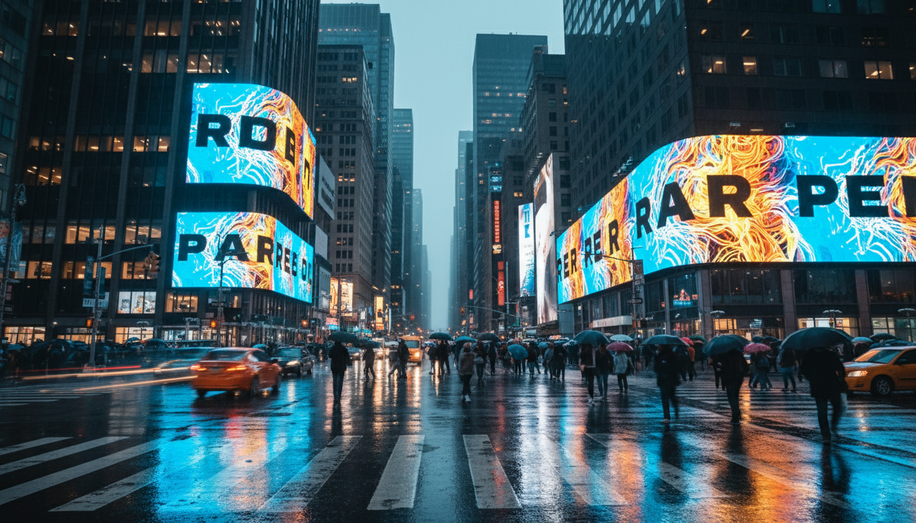

Out-of-home advertising has transformed from a purely awareness-building tool into a strategic launch vehicle for brands seeking to make an indelible mark on their target audiences. As digitally native and established companies alike recognize the power of bringing their messages into the physical world, OOH has emerged as a critical component of product introduction and brand revitalization campaigns that demand maximum visibility and measurable impact.
The evolution of OOH strategy reflects a fundamental shift in how brands approach new product launches. Where the medium once served primarily as a billboard for brand recognition, it now functions as a precision instrument for driving conversions and establishing market presence simultaneously. This transformation is particularly evident among direct-to-consumer brands that view OOH campaigns as pivotal moments to transition from digital-only existence into tangible market reality.
Strategic placement becomes paramount when launching new products or revitalizing established brands. Rather than casting a wide net, successful campaigns identify locations where target audiences naturally congregate during their daily routines. For instance, brands like Dagne Dover strategically positioned their Travel collection across high-commuter and traveler locations, including Moynihan Station, Long Island Rail Road trains, and JFK International Airport, where lifestyle needs align perfectly with messaging. Similarly, beverage brand Saint James coordinated OOH placements along routes to major festivals, ensuring brand visibility at the precise moment when target consumers were traveling to the event.
The timing of these campaigns requires deliberate coordination with broader business objectives. Successful product launches integrate OOH with retail expansion strategies, allowing brands to build awareness while simultaneously addressing supply-side considerations. Saint James exemplified this approach by running OOH placements near top-grossing Costco locations during their rollout to the retailer, creating a cohesive strategy that reaches both retail buyers and consumers. This integration ensures that visibility translates into actual market availability, eliminating the disconnect between advertising and purchase opportunity.
Data-driven targeting capabilities have revolutionized OOH’s effectiveness for product launches. Modern campaigns leverage programmatic technology, AI, and geofencing to reach specific audiences at optimal moments. Programmatic OOH enables hyper-targeted advertising based on real-world behaviors, allowing marketers to activate campaigns at perfect moments—whether promoting seasonal products on appropriate weather days or amplifying messaging within proximity of competitor locations. These technological advances transform OOH from a static medium into a dynamic, responsive channel capable of adjusting to market conditions and consumer movement patterns.
Measurement frameworks have similarly evolved to demonstrate concrete ROI for product launch campaigns. Brands now embed trackable elements like QR code coupons directly into outdoor placements, creating direct links between creative exposure and consumer action. This approach satisfies both brand awareness objectives and performance marketing requirements, as seen with legal technology companies achieving 329% ROI and 2.2x their social sharing goals through event-targeted OOH campaigns.
The integration of OOH with complementary channels amplifies launch impact across the customer journey. Initial awareness-building placements drive consideration through transport advertising and ambient OOH in offices and retail environments, while proximity-based placements near retail locations convert awareness into immediate purchase action. Cross-promotion across social media, email, and digital channels extends the reach of physical placements, creating reinforcing touchpoints that strengthen message retention and brand recall—which research indicates is 4x higher with OOH compared to online banners or television advertising.
For brands undertaking revitalization efforts, OOH serves as a declaration of renewal that commands attention in both physical and digital spaces. By announcing major corporate changes, product innovations, or strategic shifts through prominent placements, companies signal market strength and renewed commitment. The physicality of OOH—its tangible presence in everyday environments—carries weight that digital channels cannot replicate, making it particularly valuable when brands seek to reshape perceptions and establish fresh market positioning.
Success requires clear objective definition at the outset, whether targeting brand awareness, lead generation, or reputation building. When planning campaigns around product launches or brand revitalization, marketers must align placement strategy with audience behavior patterns, retail distribution timelines, and integrated marketing schedules. The brands achieving greatest impact treat OOH not as an isolated tactic but as a foundational element woven throughout the entire customer journey, reinforcing messages while leveraging the unique power of physical presence to drive real-world action and market transformation.
To precisely navigate this evolved OOH landscape for critical product launches and brand revitalization efforts, platforms like Blindspot offer essential capabilities. By leveraging advanced location intelligence, programmatic DOOH campaign management, and robust ROI measurement and attribution, marketers can ensure strategic placement, hyper-targeted audience engagement, and demonstrable impact. This empowers brands to transform OOH into a truly dynamic and accountable channel that drives both awareness and measurable conversions. Learn more at https://seeblindspot.com/