
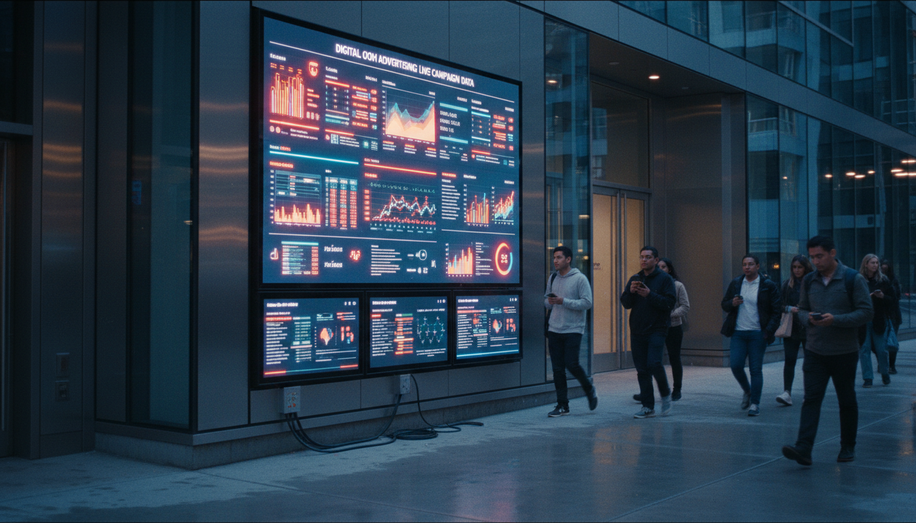

In the fast-paced world of digital out-of-home (DOOH) advertising, real-time responsiveness has emerged as the game-changer, transforming static billboards into living, breathing canvases that react instantly to the world around them. By harnessing live data feeds—ranging from weather patterns and traffic congestion to sports scores, inventory levels, and breaking news—brands can schedule and swap ad content dynamically, ensuring every impression lands with precision and relevance. This isn’t just technological wizardry; it’s a strategic imperative for advertisers seeking to cut through the noise of urban environments where consumers are bombarded by messages at every turn.
Consider a rainy afternoon in a bustling city. Traditional OOH might persist with sunny beach promotions, but dynamic DOOH flips the script: screens near transit hubs instantly pivot to ads for hot coffee or waterproof gear, pulling from weather APIs that update every few minutes. Food delivery services like foodora have mastered this, using live precipitation data to trigger promotions for pickup orders, resulting in measurable spikes in consumer action. Similarly, traffic feeds enable retailers to display “quick-stop” deals during gridlock, turning frustration into opportunity. Sports scores add another layer—imagine a stadium screen celebrating a home-team victory with tailored beer promotions or merchandise flashes, syncing victory laps with sales urgency.
Inventory levels take this further into retail precision. For chains with fluctuating stock, DOOH networks integrated with point-of-sale systems can showcase “In Stock Now” banners for hot items, vanishing them when shelves empty. This real-time inventory synchronization prevents overpromising and drives immediate foot traffic; studies indicate retailers see up to 72% more store visits from such data-driven campaigns compared to static ones. Trending news offers cultural currency: during a major election or viral event, ads can weave in topical hooks, like a financial app highlighting market reactions to headlines, making the content feel prescient rather than pre-planned.
The mechanics behind this responsiveness rely on robust content management systems (CMS) that ingest external data feeds seamlessly. These platforms support triggers like time of day, audience demographics detected via on-site sensors, or even the sequence of prior ads played on a screen to avoid repetition. Programmatic DOOH amplifies this, automating buys and content swaps through auctions that factor in live conditions, enabling global brands to geo-target zip codes or venue types with rule-based logic. For instance, morning commutes might trigger B2B pitches on office-building screens, while evening events shift to entertainment tie-ins. Modular creative assets—pre-built templates with swappable text, images, or HTML5 animations—ensure brand consistency without endless redesigns.
Yet mastering dynamic scheduling demands more than tech; it requires strategic orchestration. Data integration is paramount: reliable APIs for weather (e.g., from services like OpenWeather), traffic (Google or local DOT feeds), or sports (official league APIs) must be vetted for latency under 60 seconds to avoid glitches. Creative teams build libraries of conditional content, where a base video template auto-populates with scores or headlines, tested for emotional impact—full-motion DOOH, per neuro-insight studies, delivers 2.5 times the resonance of static displays. Measurement closes the loop: attribution tools track footfall via mobile geofencing, engagement through QR scans, and sales lifts, proving ROI that static campaigns can’t match, with ad recall jumping 70-80%.
Challenges persist, of course. Network owners must future-proof with programmatic support to attract buyers, as adoption surges for its flexibility and reach. Privacy concerns around audience data necessitate compliant sensors and anonymized feeds, while creative fatigue is mitigated by rotation algorithms. Forward-thinking media firms like those offering omnichannel sync—linking DOOH to mobile or social—gain the edge, turning screens into ecosystem hubs.
The payoff is undeniable: dynamic DOOH doesn’t just advertise; it converses with the moment. A beverage brand syncing promos to heatwaves sees engagement soar as ads morph from iced teas to chilled waters mid-day. Luxury retailers pulse inventory flashes near high-end venues, converting passersby into impulse buyers. In an era of banner blindness and device fatigue, this contextual intimacy—weather-aware, event-synced, data-fueled—reclaims attention, boosts recall, and maximizes spend. As DOOH investments top $3 billion annually, brands ignoring real-time responsiveness risk irrelevance, while pioneers redefine advertising as an adaptive force.
For OOH publishers, the message is clear: invest in platforms that enable these feeds, partner with data providers, and evangelize success stories. Dynamic scheduling isn’t a feature—it’s the future of captivating audiences where they live, move, and decide.