
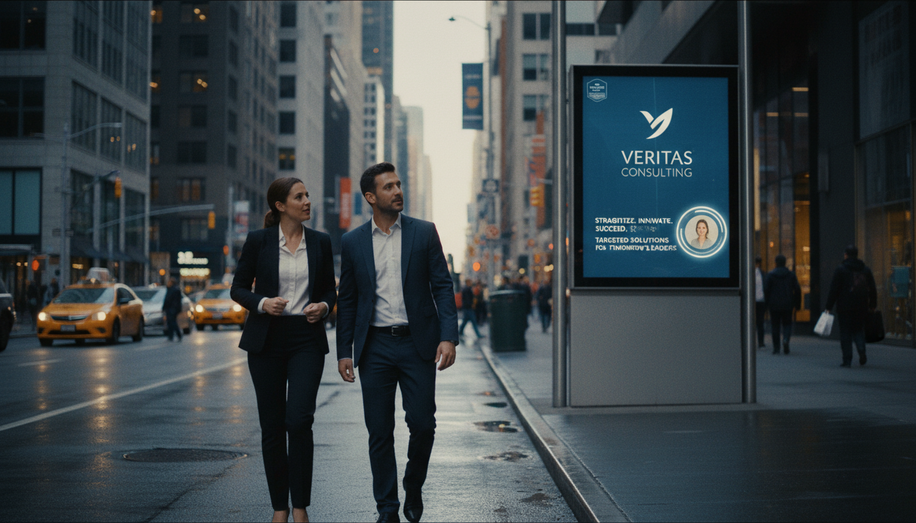

In the high-stakes world of B2B marketing, where decision-makers juggle endless meetings and digital noise, out-of-home (OOH) advertising is staging a powerful comeback. Far from the broad-brush awareness plays of consumer brands, targeted OOH campaigns are proving their worth in penetrating boardrooms, driving leads, and cementing industry presence among C-suite executives and procurement leaders. By leveraging location data, programmatic buying, and dynamic creative optimization (DCO), B2B companies can place unmissable messages exactly where influencers pause—near office towers, transit hubs, and financial districts—turning passive exposure into measurable action.
The secret lies in precision targeting, which transforms OOH from a vanity metric into a lead-generation engine. Consider a HR solutions provider targeting small-to-medium businesses: it activated an eight-week digital OOH (DOOH) campaign across billboards, bus shelters, and office buildings, zeroing in on business owners, HR influencers, and C-suite leaders at firms with 50-149 employees. Using data-driven audience segments, ads played only when venues hit sufficient foot traffic, ensuring high visibility without waste. The result? Lifted awareness, consideration, and purchase intent, proving DOOH’s ability to reach decision-makers in their daily commutes and breaks. Similarly, Genpact, a global professional services firm, blended OOH with print and digital for an AI-focused push in Sydney and Melbourne financial hubs. Lobby and lift placements in key buildings delivered targeted exposure, reaching thousands of procurement and tech influencers with messaging on AI-driven efficiencies.
Programmatic DOOH amplifies this precision, allowing real-time adjustments based on audience proximity, weather, or even flight data—tactics once reserved for B2C that now dominate B2B strategies. VIOOH case studies highlight HP’s Instant Ink campaign, which ran location-based ads near retail partners, timed for peak business hours and layered with audience data for C-suite affinity. Retail giant Albert Heijn used mobile location signals to target infrequent B2B buyers—think procurement managers—near stores, prompting visits with tailored offers. These approaches mirror Betterment’s urban professional campaign, where billboards in high-traffic corridors between transit and commercial zones spiked app engagement and new sign-ups, particularly in financial districts. For B2B, this means placing DOOH near corporate campuses or convention centers, using geofencing to trigger mobile retargeting when execs approach.
Dynamic content takes it further, syncing ads to context for relevance that sticks. Guinness’s weather-triggered billboards, while B2C, offer a blueprint: messages shifted with local temperatures, boosting foot traffic and sales by feeling personal. B2B adaptations abound, like BrewDog’s “hazy” sky activation for craft beer promotion, but imagine a SaaS firm triggering “Cloud Downtime? Switch Now” during storms near data centers. Luxury fragrance brands and Don Julio tequila have used flight activation data for programmatic DOOH at airports, targeting business travelers with deals tied to their itineraries—ideal for B2B services pitching travel management or premium gifting. Rice Business and Sun Life Hong Kong extended this to programmatic screens showing real-time metrics, such as live cricket scores for ECB or appointment availability for Schoonenberg, fostering trust through timeliness.
Case studies underscore ROI beyond impressions. Genpact’s integrated OOH not only amplified AI thought leadership but integrated seamlessly with digital for lead nurturing, reaching vast audiences in elite locations. An unnamed HR firm’s DOOH blitz across 13 networks delivered quantifiable lifts in purchase intent by marrying audience data with traffic triggers. Expedia’s QR-coded airport billboards drove traveler engagement with location-specific deals, expandable to B2B travel platforms offering corporate rates—high scan rates provided habit insights for refinement. Even consumer analogs like Burger King’s geofenced Whopper Detour, which garnered 1.5 million app downloads by hijacking competitor locations, inspire B2B: picture a CRM vendor geofencing rival HQs to flash “Ditch the Legacy System” with a lead-gen QR.
For B2B marketers, success demands integration. Twilio’s developer campaign blended OOH with hackathons and tutorials, engaging both business buyers and tech influencers. Green Hat’s Genpact work paired lobby ads with content syndication, nurturing leads from awareness to demo. Experts recommend starting with audience mapping: identify decision-maker paths via mobile data, then layer programmatic for scale. Measure via QR scans, geofenced app lifts, or branded search spikes—metrics that boardrooms demand.
Challenges persist: B2B cycles are long, so OOH shines in top-of-funnel awareness, bridging to digital handoffs. Yet, as Dean Houston notes, in a digital-saturated era, OOH’s physicality cuts through, building credibility where emails fail. With platforms like VIOOH and StackAdapt enabling hyper-local buys, even mid-market B2B firms can compete. The verdict is clear: targeted OOH isn’t just viable for boardrooms—it’s essential, turning streets into pipelines and billboards into boardroom buzz.