
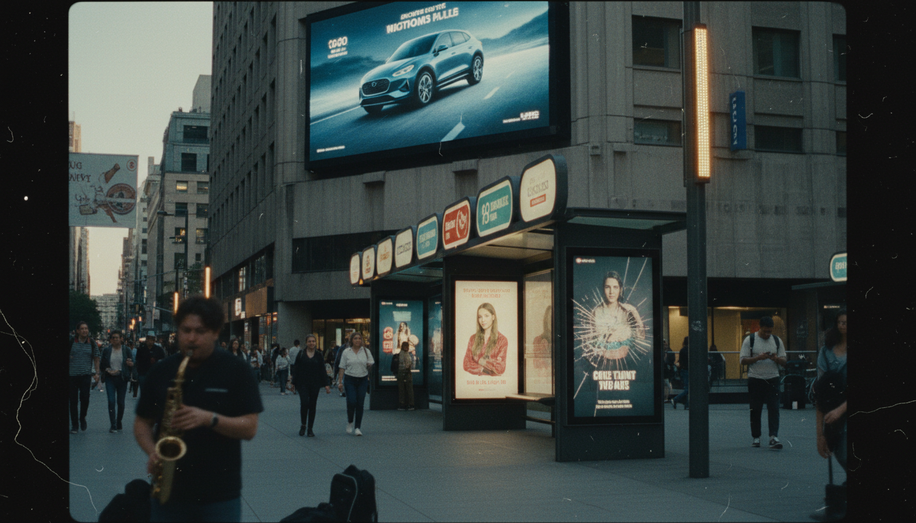

In the evolving urban tapestry, out-of-home (OOH) advertising has transcended its role as a mere interruption, morphing into seamless architectural elements and functional urban furniture that enhance rather than disrupt cityscapes. Digital and static displays now embed themselves into building facades, bus shelters, benches, and even streetlights, creating symbiotic relationships between commerce, design, and daily life. This integration not only amplifies brand visibility but also redefines public spaces as dynamic, revenue-generating canvases that blend utility with artistry.
Consider building wraps, which transform entire facades into immersive advertising surfaces. These full-scale vinyl applications cloak skyscrapers, hotels, and shopping malls, utilizing every inch of smooth exterior real estate to deliver unmissable messaging. Brands like those concealing construction sites with promotional graphics achieve dual benefits: aesthetic camouflage for ongoing developments while providing prolonged exposure at a fraction of traditional billboard costs, thanks to static erection expenses and a lower carbon footprint. Partial wraps, such as those draping a single storey or wrapping around corners, offer cost efficiencies without sacrificing impact. Positioned on high-traffic aspects facing motorists or pedestrians, they leverage one-way vision films that allow building occupants to see out while projecting bold visuals inward-bound audiences can’t ignore. In London, the Dreamies cat campaign exemplified this by installing lifelike 3D feline sculptures “climbing” facades and dangling from balconies, hand-painted to mimic real poses and turning bland walls into interactive photo zones that captured social media frenzy.
Street furniture takes this fusion further, repurposing everyday fixtures like bus shelters, benches, and kiosks into targeted advertising hubs. Positioned in pedestrian-dense zones, these displays marry durability with localized branding, using weather-resistant materials to withstand urban rigors while delivering tailored messages to specific demographics. Digital iterations elevate the experience; for instance, Acadia GMC’s bus shelter screens employed AI-driven face analysis to detect viewer age and gender, dynamically serving one of 30 personalized video ads—a pioneering use of machine learning that personalized OOH in real time. Benches and streetlights, often overlooked, now host slim LED panels or static wraps that glow subtly at dusk, integrating lighting transitions from dawn to twilight for contextual relevance, as seen in running shoe campaigns that synced visuals with natural light cycles.
Digital OOH (DOOH) pushes architectural boundaries with technology that responds to its environment. Video walls and floor-embedded displays in office parks, hospitals, and airports serve dual purposes: wayfinding for visitors and revenue streams via curated ads, turning infrastructure into self-sustaining assets. On building exteriors, motion-activated billboards trigger content based on passerby movement, while AR-enhanced facades invite QR code scans for immersive extensions, like T-Mobile’s Times Square holiday scavenger hunt that overlaid virtual festive elements on existing LEDs. Static counterparts hold their own; Netflix’s minimalist “Binge Responsibly” billboards near gyms used stark contrasts for instant recall, proving simplicity endures in high-traffic flows.
This seamless blending yields tangible benefits. Architecturally, it augments aesthetics—feature wraps highlight windows or prominent aspects, analyzed for audience behavior to maximize visibility across distances and lighting conditions. Economically, buildings gain built-in marketing without retrofits, fostering customer loyalty and newcomer acquisition. Environmentally, static options like wraps reduce waste compared to rotating digital cycles, and their longevity minimizes replacements. Yet challenges persist: regulatory compliance on safety, lighting, and community standards demands careful navigation, ensuring installations enhance rather than overwhelm neighborhoods.
Critics might decry commercialization of public realms, but proponents argue these integrations democratize space. When executed thoughtfully, OOH becomes urban furniture that informs, entertains, and connects—Lego’s bus stop “portals” depicting whales and monsters merging with shelter exteriors tricked the eye into alternate dimensions, sparking delight without alienation. As cities densify, this trend accelerates; 2025 campaigns showcased global ingenuity, from Spotify’s data-driven listening habit billboards to tech-infused street poles pulsing with real-time content.
Ultimately, OOH’s architectural evolution signals a maturing medium. No longer obtrusive eyesores, digital and static displays are chameleons—facades that breathe branding, shelters that shelter and sell, benches that invite lingering glances. By harmonizing with urban rhythms, they craft experiences where advertising feels intrinsic, not imposed, promising a future where cities pulse with purposeful persuasion.