
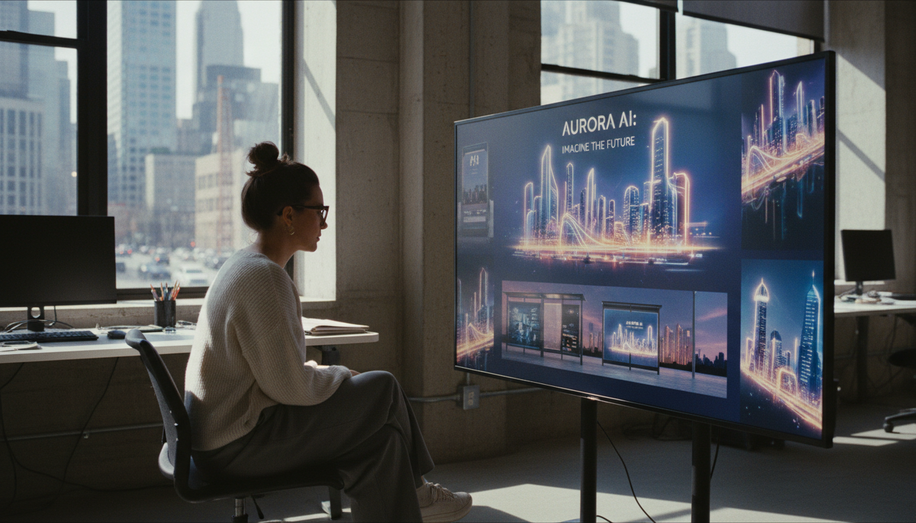

Artificial intelligence is revolutionizing out-of-home (OOH) advertising, positioning itself as an indispensable creative partner that generates innovative design concepts, refines layouts for maximum impact, and predicts campaign performance before a single billboard lights up. Once reliant on human intuition and trial-and-error, OOH campaigns now harness machine learning algorithms to analyze vast datasets—from audience demographics and traffic patterns to weather conditions and historical ad metrics—delivering hyper-targeted visuals that captivate passersby in real time.
At the heart of this transformation are AI tools that streamline the design process, automating what used to take teams days or weeks. Platforms like Adobe Creative Cloud, Canva, Glorify, and AdCreative.ai enable advertisers to input parameters such as target audience profiles, location specifics, and campaign goals, then generate tailored creatives for billboards, posters, and digital signage. These systems dissect audience data on interests and behaviors, layer in location-based insights like pedestrian flow or peak-hour congestion, and cross-reference past performance indicators such as click-through rates and conversions to produce layouts optimized for visibility and engagement. For instance, an AI might suggest bold typography and high-contrast colors for a highway billboard where drivers have mere seconds to absorb the message, ensuring the design cuts through the visual noise of urban environments.
Generative AI takes this further, acting as a boundless idea generator that pushes creative boundaries. Tools like AdCreative.ai automatically adapt outputs to the quirky dimensions of large-format LED screens, such as those in high-traffic transport hubs, producing ads in any required proportion without manual resizing. Designers at agencies are using these to prototype dozens of variations in minutes—swapping color schemes, imagery, or calls-to-action based on predictive analytics that forecast viewer resonance. This not only accelerates ideation but also democratizes high-end design, allowing smaller brands to compete with polished, data-driven campaigns that rival those from top-tier creative shops.
Optimization extends beyond static design into dynamic, real-time adaptation, a hallmark of digital out-of-home (DOOH) integration. Smart billboards powered by AI shift content seamlessly: a sunscreen promotion in the morning sun gives way to raincoat ads during an unexpected downpour, all triggered by live weather feeds and traffic data. In Madrid’s bustling transport interchanges, providers like Clece OOH leverage AI to prioritize screens based on passenger surges—say, directing language academy spots to student-heavy corridors during rush hours. Machine learning refines this further by mimicking human behavior patterns, segmenting audiences with precision and crafting personalized narratives that boost conversion rates beyond traditional A/B testing.
Predictive capabilities represent AI’s most game-changing contribution, allowing advertisers to forecast effectiveness pre-deployment and minimize costly misfires. By scrutinizing historical trends, real-time externalities like events or demographics, and even simulated viewer interactions, AI models project metrics such as dwell time, recall rates, and ultimate ROI. StackAdapt’s platforms, for example, forecast optimal ad slots by factoring in everything from satellite imagery for foot traffic to predictive modeling for niche placements like gym entrances or beachfronts. This preemptive intelligence slashes wasted spend; campaigns that once launched blindly now iterate virtually, with AI-generated heatmaps highlighting layout flaws—perhaps a cluttered call-to-action overshadowed by background elements—before production.
The benefits ripple across the OOH ecosystem. Campaigns become more efficient, scalable, and targeted, yielding ads that not only grab attention but convert viewers into customers at higher rates. AI-driven personalization fosters interactive experiences, blending conversational marketing with computer vision to tailor DOOH content to on-the-fly user data from apps or smart devices. In Australia, agencies deploy weather-responsive visuals on Sydney billboards, enhancing omnichannel strategies without inflating budgets. Globally, this tech unlocks endless location choices via AI-analyzed digital mapping, from urban intersections to projection-mapped spectacles.
Yet, AI shines brightest as a collaborator, not a replacement. Human creatives review and refine AI outputs, infusing brand nuance and emotional depth that algorithms can’t fully replicate. Review processes remain crucial: generated concepts are scrutinized for cultural fit and legal compliance before launch, ensuring authenticity amid automation. As tools evolve—think AI art generators reshaping billboard aesthetics or prompt-based content creators for digital signage—the partnership promises even bolder innovations.
Forward-thinking OOH players are already reaping the rewards. AI not only elevates design quality but optimizes performance holistically, from smarter location selection to dynamic content that engages in context. With conversion-boosting creatives and real-time agility, it’s clear AI is no mere tool—it’s the creative force propelling OOH into a smarter, more measurable era, where every impression counts and prediction trumps guesswork.