
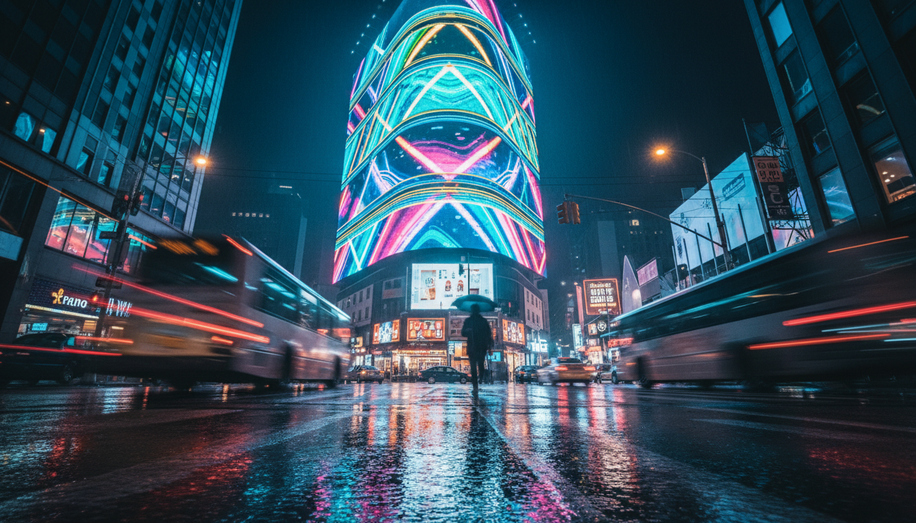

In the bustling world of out-of-home (OOH) advertising, where billboards loom over highways and digital screens flicker in urban plazas, one factor reigns supreme: location. The precise spot where an ad appears can transform a forgettable message into a powerhouse of brand recall, engagement, and conversions, dictating not just visibility but the very relevance of the campaign. Advertisers who master this element harness the natural flow of human movement, turning passive passersby into active consumers.
Consider the raw power of exposure. High-traffic zones—think crowded intersections, shopping malls, or transportation hubs—serve as goldmines for OOH campaigns. These areas guarantee massive impressions, exposing ads to diverse demographics in moments of high receptivity. A billboard on a freeway, for instance, capitalizes on captive audiences stuck in traffic, where dwell time allows messages to sink in. Data from traffic analytics underscores this: placements in such spots can boost visibility exponentially, with vehicular and pedestrian volumes tracked via advanced tools ensuring ads hit peak exposure windows. One retail brand’s experiment with geofencing around a billboard revealed a 25% surge in store footfall within a one-mile radius, proving that proximity to high-traffic nodes doesn’t just amplify reach—it drives tangible action.
Yet volume alone falls short without audience alignment. Strategic placement demands a deep dive into demographics and behaviors, ensuring the ad lands where the right eyes linger. A fitness brand thrives near gyms or sports complexes, where health-conscious individuals congregate, while a coffee chain targets business districts pulsing with morning commuters. This relevance fosters memorability; ads tied to daily routines or local landmarks create emotional connections, elevating brand recall long after the initial glance. In Singapore, BNI bank’s billboards along Geylang Road and Cecil Street—mere 800 meters from its outlets—exemplified hyperlocal precision, blending heavy foot traffic with targeted proximity to spike engagement. Geoanalytics further refines this, mapping movement patterns to match ad sites with audience habits, confirming that quality trumps sheer quantity every time.
Visibility hinges on more than crowds; environmental fit is crucial. Open, unobstructed sites maximize impact, while cluttered or low-light areas dilute it. Highways suit broad-awareness campaigns with bold, simple visuals, as drivers process information in seconds. Urban pedestrial zones, conversely, allow for detailed, interactive elements that reward closer inspection. Lind Media’s approach illustrates this: by assessing client goals first—be it awareness or in-store visits—they pair traffic data with message tailoring. A generic pitch works for unfamiliar audiences in mass-transit spots, but hyper-specific calls-to-action shine near familiar locales, enhancing relevance and response rates.
Seasonality adds another layer of complexity, demanding adaptive strategies. Beachside billboards dazzle in summer but fade in winter, while indoor mall placements surge during holidays. Warmer months swell urban foot traffic, shifting priorities from outdoor spectacles to sheltered digital formats. Advertisers who monitor climate, events, and fluctuations reposition accordingly, sustaining effectiveness year-round. Rural sites, with lower competition, excel for niche targeting, contrasting urban behemoths built for scale—testing via A/B placements reveals optimal spends.
The payoff extends to conversions. Proximity to points of purchase, like shopping centers or transit stops, bridges the gap from impression to impulse. Local promotions on nearby billboards create urgency, prompting immediate visits; a fast-food chain’s traffic-pool analysis optimized outlet placements, yielding 30% more store traffic in the debut month. When location syncs with messaging—promoting events at arenas or services in tourist hubs—it ignites engagement, turning views into visits, scans, or sales.
Technology amplifies these principles. Real-time metrics from geofencing and traffic pools enable dynamic tweaks, linking placements to ROI with precision. Billboard Insider emphasizes balancing volume and relevance, warning that mismatched sites squander budgets. Agencies like Excellent Publicity and Lind Media advocate expert guidance, auditing competition, dwell times, and even creative formats to unlock full potential.
Ultimately, in OOH, location isn’t ancillary—it’s the campaign’s beating heart. Brands ignoring it risk invisibility amid the noise; those embracing it, through data-driven deliberation, command attention where it matters most. As advertising evolves with analytics and interactivity, strategic placement remains the timeless lever for maximum impact, proving that the right spot doesn’t just show your ad—it sells it.