
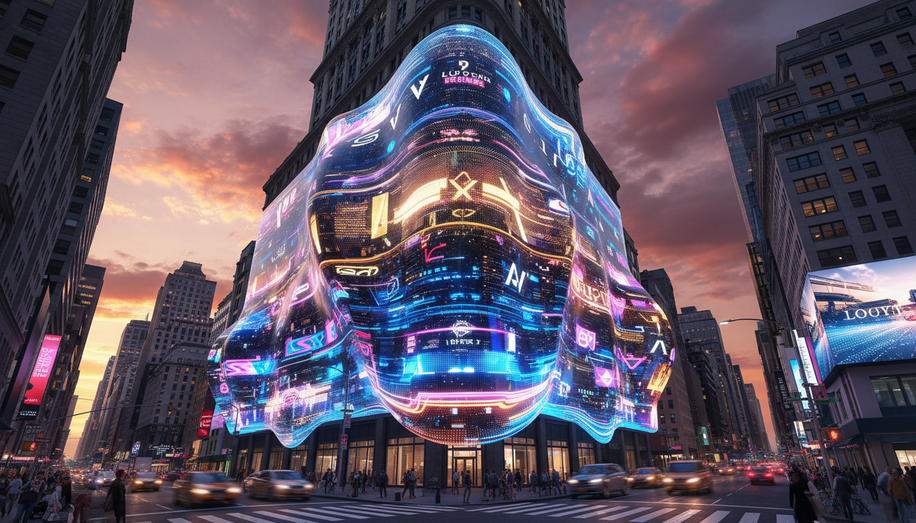

In the heart of bustling cities, where concrete jungles meet the pulse of daily life, out-of-home (OOH) installations are redefining urban landscapes. These large-scale advertising structures no longer merely sell products; they sculpt environments, injecting creativity, interactivity, and even social commentary into public spaces. From towering 3D billboards that mimic consumer packaging to digital screens that respond to weather patterns, OOH is evolving into a transformative force, blending commerce with art to make cities more engaging and memorable.
Consider Krispy Kreme’s ingenious January campaign in Salford, where sunlight is a rare commodity. The brand erected a massive 3D billboard replicating its iconic doughnut box, complete with light-up treats activated by a button press. This installation didn’t just advertise; it pierced the gloom, offering commuters a literal spark of joy and turning a drab thoroughfare into a momentary beacon of delight. Such interventions highlight OOH’s power to humanize urban voids, transforming mundane billboards into interactive experiences that foster emotional connections.
Transit advertising takes this transformation mobile, wrapping buses, subways, and trains in vibrant narratives that traverse diverse neighborhoods. Pepsi Max turned London bus stops into augmented reality portals, using cameras to overlay fantastical scenarios—like whales emerging from streets—directly onto real-time footage. Passengers, peering at screens that blended the outside world with digital whimsy, found their routines disrupted in the most captivating way. Similarly, Paramount Pictures’ ‘Mean Girls’ campaign blanketed bus shelters and subway stations with nostalgic imagery, capitalizing on public transport’s captive audience to build hype through repeated, immersive exposure. These moving canvases not only amplify brand reach across cityscapes but also animate the infrastructure of urban mobility, making commutes feel less like drudgery and more like a journey through branded storytelling.
Street furniture and guerrilla tactics push boundaries further, repurposing everyday elements into advertising artistry. Benches, kiosks, and shelters in pedestrian-heavy zones become textured, touchable displays—posters with QR codes inviting scans for deals or 3D stickers that pop from walls. Lego’s bus stop “portals” in collaboration with artist Nicholas “Blackbulb” crafted whale, monster, and caterpillar installations that seamlessly merged with surroundings, drawing crowds into alternate dimensions of play. Guerrilla efforts, like Corona’s 3D “wave” billboard sculpted from collected plastic waste and featuring surfer Chris Hemsworth, confronted environmental horrors while urging recycling, effectively turning ad space into a public service provocation. These placements weave advertising into the urban fabric, enhancing accessibility and sparking word-of-mouth buzz without overwhelming the skyline.
Digital out-of-home (DOOH) elevates this fusion with technology, creating responsive installations that adapt to their audience and context. McDonald’s McCafe screens in Great Britain activated frozen drink promotions only when temperatures soared above 22 degrees Celsius, displaying city-specific heat alerts to deliver hyper-relevant messaging. Acadia GMC employed facial recognition on digital signage to tailor video ads by age and gender, achieving 11 million targeted impressions and a 17% engagement lift among desired demographics. In Times Square, Marqeta’s blend of 2D graphics and 3D animations on massive LED screens commanded global attention amid 41.9 million annual visitors, proving DOOH’s scalability in iconic locales. Large-format DOOH, from highway billboards to transit wraps, ensures unmissable visibility, with projections indicating it will comprise 38.3% of outdoor advertising by 2023— a trend accelerating into 2026.
Yet, the true impact lies in how these installations elevate urban aesthetics and functionality. Apple’s Olympic-timed campaigns in host cities synchronized OOH with cultural peaks, boosting foot traffic and relevance through event-aligned visuals. Brands like Rituals in Eindhoven used personal delivery illusions on screens, while Simply Roasted supported its star 3D billboard with proximate static ads near supermarkets, creating ecosystems of influence. By integrating with structures—wall wraps on staircases, rooftop spectacles, or weather-reactive displays—OOH turns overlooked spaces into vibrant focal points.
Critics might argue that commercialization risks cluttering cities, but evidence suggests the opposite: thoughtful OOH enhances livability. Strategic placements in high-traffic areas maximize exposure while minimizing intrusion, often incorporating durable, custom-printed materials for longevity. Interactive elements, from button-activated lights to AI-driven personalization, command attention that digital scrolls cannot, reaching wide demographics without opt-outs.
As urban populations swell, OOH installations stand as vital threads in the city tapestry, merging commerce with creativity to foster wonder amid the everyday. They don’t just advertise; they reimagine streets as stages, inviting passersby to pause, engage, and envision their surroundings anew. In 2026, with DOOH’s rise and innovative printing enabling bolder executions, these transformations promise to make cities not just bearable, but breathtaking. As OOH continues its evolution into a transformative urban force, platforms like Blindspot become indispensable, equipping brands with the location intelligence to find those perfect “stages” and the audience analytics to tailor “breathtaking” narratives. Their programmatic DOOH capabilities ensure dynamic, responsive installations, while robust ROI measurement proves that these creative interventions not only captivate passersby but also deliver tangible business results, solidifying OOH’s role as a vital, measurable thread in the city’s tapestry: https://seeblindspot.com/