
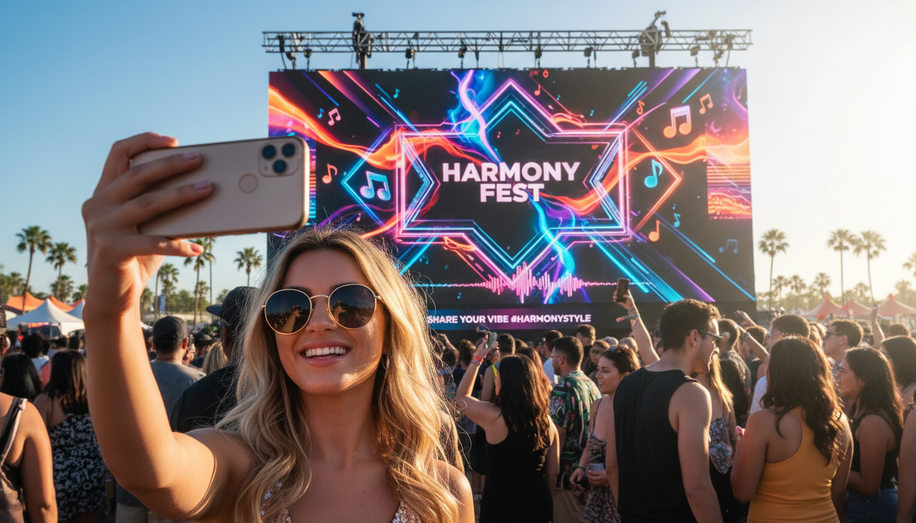

In the evolving landscape of marketing, out-of-home (OOH) advertising and influencer partnerships are converging to create campaigns that dominate both physical streets and digital feeds, amplifying brand reach in unprecedented ways. Brands are increasingly layering bold OOH executions—billboards, digital screens, and street activations—with influencer endorsements to bridge offline visibility and online virality, turning static displays into dynamic conversation starters. This synergy leverages OOH’s unmissable presence to spark influencer content that extends engagement far beyond the initial impression.
Consider how OOH’s inherent shareability fuels influencer amplification. Modern OOH, especially digital out-of-home (DOOH), transforms urban environments into Instagram-ready backdrops, prompting passersby and influencers alike to capture and post. A prime example is Superside’s 2023 San Francisco blitz, which blanketed the city with billboards, coffee trucks, and guerrilla tactics timed to major tech conferences like SaaStr and Dreamforce. The campaign drove a 140% surge in call requests from California, a 77% increase in direct traffic, and 47% more organic search visits—results that gained further traction as attendees and locals shared the immersive displays on social media. Imagine pairing this with influencers: lifestyle creators attending those events could tag the brand in their stories, crediting the OOH spectacle for their posts and directing followers to exclusive offers, effectively multiplying impressions from street-level to global feeds.
Influencer marketing’s proven ROI provides the perfect complement. MVMT, the watch brand that scaled to a $90 million valuation before its acquisition by Movado, built its empire on micro-influencers generating aspirational content—over 39,000 pieces and 100,000 referral conversions—without heavy traditional ad spends. Gymshark similarly bypassed conventional advertising, relying on influencer word-of-mouth to expand to 130 countries, with user-generated content (UGC) handling brand awareness and sales. When fused with OOH, these tactics create a feedback loop: influencers spot a provocative billboard, snap it, and weave it into their narrative, lending authenticity while OOH provides the scale influencers can’t match alone.
Real-world integrations highlight the potential. Radio personality Sway Calloway’s Times Square billboard for Big Brothers Big Sisters of America (BBBSA) turned a public service message into a social phenomenon, as he appeared live to rally mentors, sparking shares across platforms. Brands can replicate this by seeding influencers near high-impact OOH sites. For instance, Jack in the Box’s DOOH push for its Cheddar Loaded Cheeseburger used static and video creatives across indoor and outdoor venues, drawing 1.3 million customers; enlisting foodie influencers to “discover” and review those ads could have boosted UGC, extending foot traffic into sustained online buzz. In beauty, Rimmel London’s Influenster sampling campaign targeted 18- to 30-year-old enthusiasts, yielding 1,200 reviews, 15.7 million impressions, and a 44% sales lift—pair this with OOH pop-ups in key markets, and influencers could amplify product trials into viral unboxings tied to real-world landmarks.
The mechanics of combination are straightforward yet powerful. Start with geo-targeted OOH to capture mass attention: a digital billboard in high-footfall areas like Times Square or Chicago’s Magnificent Mile ensures broad exposure. Then, activate influencers—nano to macro—who align with the brand’s ethos, providing them exclusive access or promo codes linked to the OOH creative. Tools like GRIN have enabled brands such as Organifi to outreach 25,000 emails, recruit 250 creators, and secure 10,000 conversions, proving scalable management is feasible. Quiz Clothing, pivoting to social during store closures, boosted engagement with UGC; integrating OOH window displays photographed by influencers would have hyper-localized that momentum.
Measurement underscores the value. OOH alone delivers measurable lifts—Blue Wheel Media’s haircare client saw sales spike via 100+ TikTok and Instagram creators, while Trifecta Nutrition built athlete endorsements for social proof. Combined, attribution sharpens: QR codes on billboards track scans to influencer-driven traffic, while social listening captures #OOHtoFeed moments. Notion’s community-sourced Times Square campaign garnered 1.5 billion impressions through authentic storytelling; influencer partnerships could personalize those for niche audiences.
Challenges exist, from OOH’s upfront costs to influencer authenticity concerns, but data counters them. Mari + Gold saw 4.5x engagement growth and 2,000% link-click increases via GRIN-managed campaigns. For brands, the play is strategic activation: time OOH bursts with influencer drops, use AR filters on DOOH for interactive shares, or host influencer takeovers at activations. ICHIGO Inc. grew its creator roster 30x while executing monthly campaigns—add OOH priming in target cities, and cultural resonance skyrockets.
Ultimately, OOH-influencer hybrids redefine reach, blending inescapable physicality with trusted digital voices. As urban screens evolve and social algorithms favor real-world content, brands ignoring this fusion risk invisibility. Those embracing it, from startups to giants, command attention across channels, proving that the street remains marketing’s ultimate amplifier.