
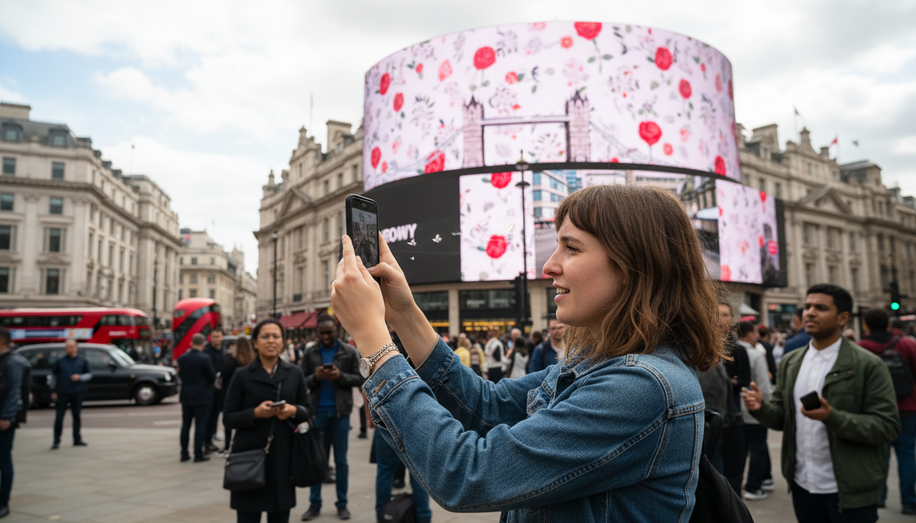

In the bustling streets of urban centers, where traditional billboards once competed for fleeting glances, augmented reality (AR) filters are reshaping out-of-home (OOH) advertising into dynamic portals of interaction. Brands are leveraging these digital overlays—accessible via smartphone cameras—to transform static displays into immersive experiences that pull consumers from the physical world into personalized digital realms. This fusion not only captivates passersby but extends campaigns far beyond their geographic footprint, turning one-off sightings into shareable, viral moments that amplify reach through social media.
Consider Pepsi Max’s seminal 2015 “Unbelievable” bus shelter campaign, a benchmark for AR’s disruptive potential in OOH. Hidden cameras captured live street feeds, projecting illusions of asteroids crashing, UFOs invading, and tentacles emerging from the pavement onto shelter screens. Commuters’ shocked reactions, filmed and shared online, generated millions of views, proving AR’s power to convert passive observers into active participants—and unwitting brand evangelists. This early success highlighted a key shift: AR filters invite real-time engagement, where users point their phones at markers like QR codes or murals to unlock layered content, blurring the line between advertisement and entertainment.
Fast-forward to 2024, and telecom giant Verizon elevated this concept with BrandXR-powered AR mural storefronts across Miami. In Hialeah, Midtown, and Coconut Grove, vibrant murals sprang to life through Snapchat’s WebAR. Scanning a Hialeah mural revealed 3D portraits of local residents morphing into futuristic cityscapes, emphasizing Verizon’s connective role in diverse communities. Midtown’s skyscraper design animated with pulsing lights and vehicles, while Coconut Grove’s greenery intertwined with neon circuits, symbolizing tech-nature harmony. Users interacted with emerging creatures and messages, fostering emotional ties that drove social shares and foot traffic to nearby stores. Such campaigns exemplify how AR extends OOH digitally: a mural in a high-traffic spot becomes a persistent online asset, with real-time analytics tracking interactions, dwell times, and conversions.
Similarly, the Electrifly Detroit festival in metro Detroit deployed 15 AR-embedded murals, turning streets into interactive galleries. Via a simple app, festival-goers unlocked animations, audio narratives, and explorable 3D elements layered atop artists’ works. BrandXR’s platform ensured seamless access, democratizing AR for thousands without technical hurdles. This not only boosted dwell time but collected data on user preferences, enabling brands to refine messaging and extend the campaign digitally through user-generated content. Vodafone adopted a comparable tactic with AR billboards in select cities, where static visuals hid portals to 3D graphics, mini-games, and promotions. Passersby unlocking coupons or tech demos via their cameras sparked immediate actions, like store visits, while shares propelled the campaign virally.
These examples underscore AR’s strategic advantages in OOH. Engagement soars as filters demand interaction—gesture recognition or facial filters personalize content in real time, resonating with tech-savvy demographics in high-footfall zones like shopping districts or tourist hubs. Memorable multi-sensory elements, from sound effects to haptic feedback simulations, forge lasting impressions, differentiating brands in oversaturated spaces. Personalization tailors experiences: a travel brand might overlay virtual beaches on city billboards, letting users “step” into destinations. Data harvested from scans reveals behaviors, optimizing future efforts, while cost savings emerge from reusable digital assets that update without physical changes.
Extending OOH into digital spaces amplifies impact exponentially. Viral sharing on platforms like Instagram or Snapchat propels campaigns globally; Pepsi’s bus shelter footage, for instance, transcended New York to worldwide buzz. Gamification adds stickiness—NHS’s AR blood donation simulator let users witness virtual life-saving effects, building empathy and calls-to-action. QR-triggered filters on billboards launch branded games, directing users to e-commerce or apps, seamlessly bridging offline exposure to online sales.
Challenges persist, including location scouting for optimal demographics and traffic, plus partnerships with specialists like BrandXR for stable, scalable tech. Yet, as smartphones saturate markets, AR’s accessibility via WebAR lowers barriers, making it viable for brands of all sizes. The NHS emotional connector or Verizon’s cultural nods show AR’s versatility across sectors, from health to tech.
Ultimately, AR filters are not mere gimmicks but evolutions of OOH, creating bridges where physical ads seed digital journeys. By inviting consumers to co-create experiences—scanning, sharing, purchasing—brands cultivate loyalty in an attention-scarce era. As urban landscapes digitize, expect more murals that pulse with life, shelters that surprise, and billboards that beckon phones, proving OOH’s vitality through augmented ingenuity.