
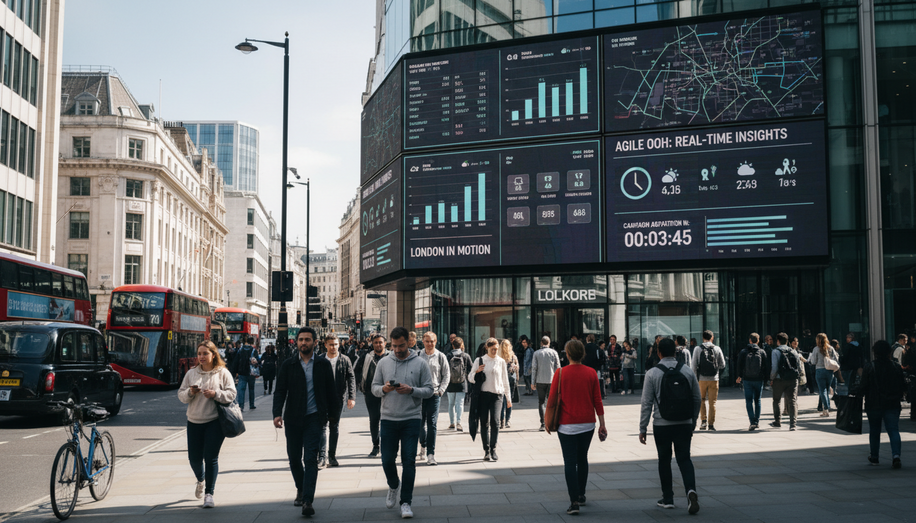

In the fast-paced world of out-of-home (OOH) advertising, real-time consumer data has emerged as a game-changer, enabling brands to pivot from static billboards to dynamic, responsive campaigns that capture attention in the moment. Traditional OOH relied on broad demographics and fixed messaging, often resulting in wasted impressions amid shifting audience behaviors. Today, streams of live data—ranging from foot traffic patterns and weather updates to social media trends and event triggers—allow advertisers to make agile decisions, tailoring content on digital billboards to hyper-relevant contexts and boosting engagement by up to 50 percent.
This transformation hinges on integrating real-time analytics into digital out-of-home (DOOH) platforms, where JavaScript-powered billboards process environmental cues instantaneously. For instance, mobility analytics reveal peak hours and consumer movement patterns, helping marketers segment audiences by location, time, and behavior to inform precise media placements. Geospatial data further refines this by mapping audience saturation, purchasing power, and brand affinity around points of interest, ensuring ads appear where and when they matter most. A billboard near a bustling urban intersection might switch from a morning coffee promotion to a lunch special as footfall data signals shifting commuter habits, minimizing irrelevance and maximizing resonance.
Contextual adaptation takes this further, syncing ads with live external factors. Weather APIs trigger rain-themed promotions for umbrellas or sunny-day ice cream deals, while traffic flow data activates high-impact messages during congestion peaks. Brands like McDonald’s have capitalized on this, using digital billboard analytics to localize offers based on time-of-day and conditions, driving measurable upticks in nearby store visits and sales. Similarly, Nike adjusted product launch campaigns in real time by monitoring impressions and engagement during peak footfall, aligning content with actual audience density for heightened brand interaction.
Predictive elements amplify these reactive strategies. By blending historical foot traffic with live inputs, advertisers forecast optimal timings and locations, identifying high-traffic zones or event-aligned opportunities. Machine learning models automate content rotation and bidding, processing demographic, psychographic, and behavioral data to target segments proactively. This data-driven foresight not only elevates ROI—through 20-40 percent reductions in wasted impressions—but also fosters cross-channel synergy, where OOH creatives mirror simultaneous mobile or social pushes for unified experiences.
Real-time feedback loops close the circle, turning billboards into interactive touchpoints. Tools embed surveys or sensors to gauge immediate responses, enabling swift tweaks like A/B testing creatives on the fly. Social media trends or sports scores can prompt instant ad refreshes, such as celebrating a local team’s victory to tap cultural momentum. Camera inputs and environmental sensors add interactivity, responding to passerby proximity for personalized calls-to-action. Taggify’s programmatic DOOH (pDOOH) exemplifies this, allowing performance monitoring that lets advertisers modify underperforming weather-based campaigns mid-flight, optimizing for real-world conversions.
The business outcomes are compelling. Campaigns leveraging these tactics report 15-25 percent lifts in conversion rates, alongside sharper attribution linking OOH exposure to in-store visits via geo-fencing and mobility tracking. Retail sales trends and product availability data dynamically showcase in-stock items, preventing promotion of unavailable goods and streamlining supply chain tie-ins. For outdoor advertisers, this means scalable automation: AI handles audience classification via geolocation APIs and sensor feeds, delivering tailored creatives without manual intervention.
Yet challenges persist. Data privacy regulations demand careful handling of location and behavioral signals, while infrastructure gaps in sensor-equipped billboards limit rollout in some markets. Integration hurdles between disparate feeds—weather, events, demographics—require robust platforms like those using TensorFlow.js for edge processing. Still, forward-thinking agencies are bridging these, as seen in Zigpoll’s feedback tools that quantify sentiment and engagement for iterative refinement.
Ultimately, real-time data empowers OOH to evolve from a blunt instrument into a precision tool, where agility meets relevance. Brands that harness footfall insights, contextual triggers, and predictive analytics not only capture fleeting consumer moments but drive tangible growth—proving that in advertising’s physical realm, timeliness is the ultimate currency. As DOOH networks expand, this data revolution promises to redefine outdoor strategies, making every impression count.
This data revolution demands sophisticated platforms that can aggregate and act on these insights at speed. Blindspot empowers advertisers with real-time campaign performance tracking, precise audience measurement, and programmatic DOOH campaign management, directly enabling the dynamic contextual adaptation and measurable ROI discussed. By transforming raw data into actionable intelligence, Blindspot helps brands ensure every impression is precisely targeted and optimized for maximum impact and accountability in the evolving OOH landscape. https://seeblindspot.com/