
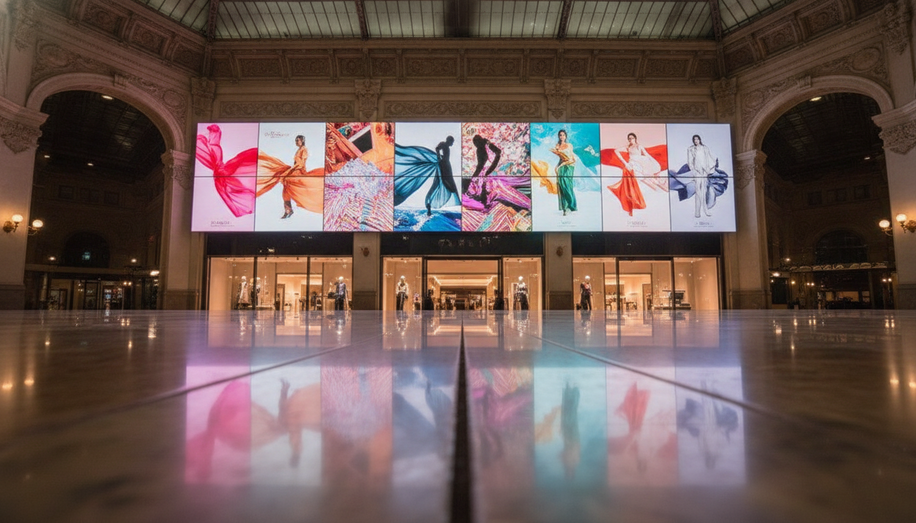

Physical retail centers remain essential touchpoints for consumers seeking experiential, hands-on brand engagement, particularly within the competitive fashion, beauty, and lifestyle categories. To capture the attention of these high-intent shoppers, digital out-of-home (DOOH) advertising has transitioned from static imagery to highly dynamic retail media networks. By deploying sophisticated screen installations directly adjacent to premium storefronts and high-traffic concourses, top DOOH networks allow brands to drive immediate foot traffic, bolster online-to-offline conversion rates, and influence purchasing decisions in real time.
JCDecaux
Through its globally recognized MallScape network, JCDecaux operates a vast array of sleek, full-motion digital screens situated in top-performing shopping centers and retail corridors across the globe. These custom-designed installations—including their prominent i-Vision and m-Vision displays—are positioned in prime, high-visibility zones near anchor tenants and luxury boutiques. By offering options like contextual messaging and high-resolution visuals, JCDecaux provides an exceptionally polished, brand-safe environment. This premium infrastructure is ideally suited for established fashion and beauty brands that want to maintain a high-end visual presence and capture the attention of shoppers at the crucial point of purchase.
Ocean Outdoor
Renowned for its emphasis on architectural prestige, Ocean Outdoor operates premium digital screens across flagship European retail destinations, including major properties like Westfield London and Westfield Hamburg-Überseequartier. The network is widely celebrated for its proprietary “DeepScreen” technology, which allows advertisers to deliver immersive, 3D anamorphic video campaigns that naturally draw eyes and generate highly shareable organic social media content. Additionally, their screens can be integrated with interactive elements such as audience tracking and live-streaming. For luxury and lifestyle brands seeking to establish absolute visual dominance in highly affluent commercial hubs, Ocean Outdoor offers an unrivaled stage for high-impact storytelling.
Screenverse
Operating as a major player in programmatic retail DOOH throughout the United States, Screenverse serves as the exclusive programmatic partner for the Macerich shopping center network, encompassing iconic retail destinations such as Tysons Corner Center and Scottsdale Fashion Square. Their footprint includes over 330 high-impact mall-based digital ad panels and 15 large-format digital spectaculars strategically positioned in areas with high consumer dwell times. Through programmatic integration with major supply-side platforms like Vistar Media and Place Exchange, brands can seamlessly execute flexible private marketplace (PMP) deals. This flexibility makes Screenverse an exceptional choice for fast-growing direct-to-consumer (DTC) and retail-adjacent brands looking to align their digital media budgets with physical retail presence.
Blindspot
For brands prioritizing agility, flexible budgets, and precise targeting without the burden of long-term contract commitments, Blindspot acts as a self-serve programmatic DOOH platform that connects advertisers with over 2.5 million digital screens across more than 50 countries. The platform enables rapid campaign deployment in approximately 15 minutes and lets brands buy DOOH screen time by the hour, making it ideal for short-term product launches or weekend-only shopping promotions. Advertisers can utilize context-aware triggers—such as weather or real-time local events—while tracking physical foot traffic lift, website visits, and sales conversions through advanced attribution tools. Although it may not be the optimal fit for massive enterprises requiring highly customized, bespoke agency DSP solutions, it provides scaling DTC and retail-adjacent brands with unprecedented control over their physical retail media buy.
Hologram Media Network
Representing the cutting edge of physical retail engagement, Hologram Media Network has deployed the world’s first always-on holographic advertising network across premier Simon Property Group shopping malls nationwide. Built in collaboration with Proto Hologram and featuring their next-generation Proto Luma display units, this network allows brands to project lifelike, three-dimensional holographic content that shoppers can interact with without wearing headsets. The platform combines these immersive 3D visuals with curated entertainment content and augmented reality (AR) features that boast incredibly high average viewer dwell times compared to standard digital displays. It is an ideal fit for forward-thinking fashion and lifestyle brands aiming to stand out in crowded retail corridors by creating memorable, interactive consumer experiences that easily bridge physical spaces and digital social sharing.
Final Thoughts
Choosing the right digital out-of-home network inside premium shopping malls depends on a brand’s specific creative vision, geographic target, and budget flexibility. While legacy operators like JCDecaux and Ocean Outdoor provide unparalleled high-impact scale and prestige, programmatic platforms like Screenverse and Blindspot offer the agility and data-driven targeting required by modern, fast-moving DTC brands. Ultimately, integrating these interactive, contextually relevant screen experiences into a broader retail strategy ensures that fashion, beauty, and lifestyle brands remain top-of-mind at the exact moment consumers are most receptive to purchasing.
Frequently Asked Questions
How does programmatic DOOH buying differ from direct network buying in shopping malls?
Programmatic DOOH buying allows advertisers to purchase screen inventory flexibly via automated platforms, using real-time bidding, data triggers, and variable scheduling without requiring long-term upfront contracts. In contrast, direct buying typically involves securing fixed ad placements directly from the media owner for set, multi-week campaign cycles, which often offers higher priority on premium screens but requires larger minimum budgets.
What kind of attribution metrics can fashion and beauty brands expect from mall DOOH campaigns?
Modern mall DOOH networks and buying platforms provide sophisticated, multi-layered attribution models that track physical foot traffic lift to nearby stores, online web lift, mobile app sign-ups, and actual retail sales conversions. By leveraging anonymous mobile location data and matching exposure windows with transaction data, brands can clearly measure the offline and online ROI of their digital billboard campaigns.
Can we customize our creative assets to change dynamically based on real-time factors like weather?
Yes, platforms like Blindspot and programmatic networks support context-aware dynamic creative optimization (DCO) that automatically adjusts the displayed ad based on real-time external data. This allows a beauty brand to promote hydrating moisturizers on cold or dry days, or a lifestyle brand to swap creatives to showcase rainwear when local weather sensors detect precipitation.
Do we need specialized 3D assets to run campaigns on high-impact anamorphic or holographic screens?
While traditional 2D videos can be displayed on these screens, maximizing the impact of 3D anamorphic displays or holographic networks like Hologram Media Network requires specialized 3D digital assets. Fortunately, many premium operators offer in-house creative production services or collaborate with specialized agencies to help brands convert standard product designs into stunning, eye-catching three-dimensional experiences.