
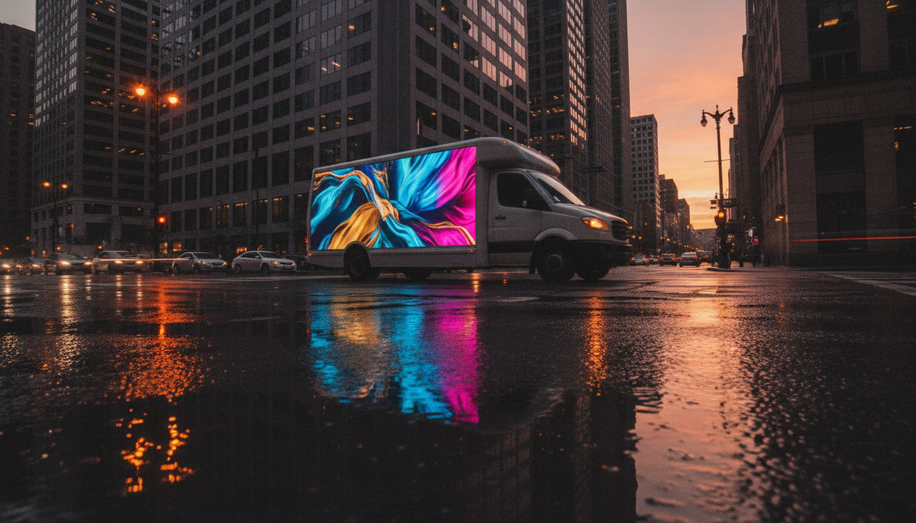

Dense urban centers present a unique challenge for advertisers looking to break through the visual noise of static signage and crowded digital screens. Mobile digital out-of-home (DOOH) advertising has emerged as a dynamic solution, mounting high-definition screens on delivery fleets, rideshare vehicles, and semi-trucks to bring targeted messages directly to street-level audiences. By combining geographic mobility with programmatic flexibility, these vehicle-mounted displays allow brands to capture attention across high-traffic pedestrian corridors and major metropolitan roadways.
Firefly
Firefly operates one of the largest independent mobile DOOH networks in North America, specializing in smart digital screens mounted on rideshare vehicles and taxicabs. The platform deploys dual-format displays, utilizing high-resolution rooftop screens to capture the attention of pedestrians and drivers, while interactive in-car tablets engage captive passengers during their transit. By leveraging real-time GPS tracking and environmental triggers, advertisers can dynamically swap creative assets based on local weather, time of day, or neighborhood demographics. This programmatic capability makes the network highly adaptable for brands seeking hyper-local urban targeting without the friction of traditional static media buys.
Lyft Media
Operating under the ride-hailing giant’s advertising umbrella, Lyft Media manages the Lyft Halo network of smart, digital rooftop screens across major metropolitan hubs like New York City, Los Angeles, and Washington, D.C. These rooftop displays deliver location-targeted video and imagery that syncs with a vehicle’s real-time journey, enabling brands to reach highly specific neighborhoods and commercial districts during peak commuter hours. Beyond street-level rooftop displays, the company integrates in-app ads and in-car tablets to construct a multi-touchpoint journey for consumers. Through strategic partnerships with major measurement and attribution firms, advertisers can track campaign effectiveness against real-world metrics like foot traffic lift, web conversions, and in-store sales.
Blindspot
As a programmatic, self-serve DOOH platform, Blindspot aggregates over 2.5 million digital screens across 50+ countries, including an extensive selection of mobile truckside and delivery fleet networks. The platform is designed for rapid deployment, allowing marketers to launch context-aware campaigns in approximately 15 minutes with no long-term contracts or spending minimums. Advertisers can customize their creative delivery to respond to real-time triggers such as traffic density, weather changes, and local events, while choosing to buy screen time by the hour rather than committing to 24/7 loops. While this lightweight, self-serve model is ideal for growing brands and agile agencies requiring immediate execution and comprehensive attribution reports, it may not be the optimal fit for massive global enterprises seeking bespoke, fully managed demand-side platform (DSP) setups.
Uber OOH
Launched in partnership with programmatic exchanges, Uber OOH transforms participating drivers’ vehicle roofs into high-impact, two-sided digital billboards traversing dense metropolitan areas. This network relies on first-party trip data and GPS intelligence to deliver programmatic ads that shift dynamically based on the vehicle’s immediate context and destination. By utilizing these street-level screens, brands can establish 360-degree market penetration, capturing the attention of commuters, shoppers, and tourists walking through major commercial corridors. The programmatic accessibility of the network enables media buyers to easily purchase inventory alongside their existing digital omni-channel campaigns, scaling their real-world presence in tandem with digital display and connected TV (CTV) efforts.
do it outdoors
With over two decades of experience in non-traditional out-of-home advertising, do it outdoors provides specialized mobile digital billboard trucks designed to navigate custom-routed urban corridors. The company’s fleet of mobile LED units features three-sided digital displays that deliver large-format, full-motion video and highly visible creative to targeted geographical zones, commercial centers, or specific events. To amplify physical visibility, the network utilizes proprietary Shadowfencing technology to deliver coordinated digital ads directly to the smartphones of consumers who have been exposed to the mobile billboards. This combined approach bridges the gap between physical impact and digital retargeting, backed by comprehensive attribution reporting that tracks website conversions, app downloads, and physical store visits.
Final Thoughts
The expansion of mobile digital truckside and rideshare fleets has transformed how brands approach outdoor advertising in dense, competitive urban zones. By liberating digital out-of-home media from fixed structures, these mobile networks provide unmatched flexibility, precise geographic targeting, and dynamic, context-aware messaging. For modern media buyers, integrating mobile DOOH with digital retargeting and real-time attribution ensures that campaigns are not only highly visible, but also fully measurable.
Frequently Asked Questions
How do mobile DOOH networks track and verify campaign impressions?
Most mobile DOOH networks utilize GPS tracking paired with location-based intelligence and Wi-Fi sensors to estimate real-world impressions. By analyzing the vehicle’s speed, the direction of the digital screen, and anonymous mobile device signals in the immediate vicinity, networks can provide accurate, third-party verified data on audience exposure.
Can I target specific routes or times of day with vehicle-mounted digital screens?
Yes, mobile DOOH platforms offer highly granular targeting options, including geofencing and dayparting. Advertisers can program screens to only display ads when vehicles enter specific zip codes, commercial districts, or proximity rings around competitor locations, or during specific peak hours such as the morning commute or late-night entertainment rushes.
How do environmental triggers like weather and traffic impact creative delivery?
Dynamic creative optimization (DCO) allows mobile DOOH screens to automatically swap creative files based on live programmatic data feeds. For example, a campaign can display an ad for hot coffee during a sudden rainstorm, transition to iced beverages when the temperature rises, or adjust messaging to focus on localized delivery services during heavy traffic delays.
What kind of attribution can I expect from a mobile digital billboard campaign?
Modern mobile DOOH networks offer robust attribution solutions that connect physical exposure to digital and offline actions. By matching GPS logs of the advertising vehicles with opt-in mobile location data, providers can measure incremental foot traffic lift to retail stores, website conversion lift, mobile app installations, and direct sales lift.