
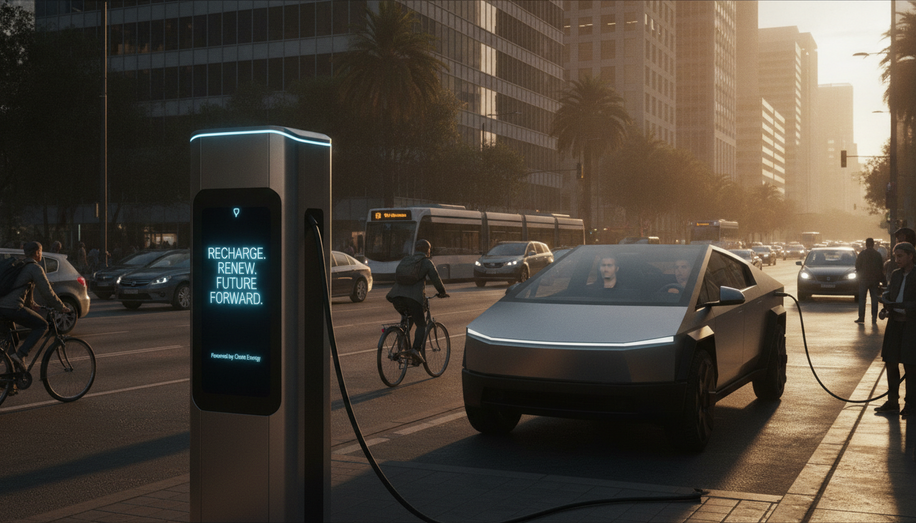

As consumers demand greater environmental accountability from the brands they support, electric vehicle (EV) charging station DOOH (Digital Out-of-Home) networks have emerged as a premier channel for sustainable advertising. These platforms allow eco-conscious brands to engage highly affluent, tech-literate audiences during extended dwell times when their attention is naturally captured. By placing premium digital screens in front of motorists while they charge, these specialized networks turn ordinary charging sessions into powerful, high-impact branding touchpoints.
JOLT
Currently leading the charge as the world’s largest combined EV charging and DOOH network, JOLT significantly expanded its footprint in late 2025 by acquiring a massive portion of the Volta Media Network from Shell. This strategic acquisition extends JOLT’s geographic reach across Australia, Canada, New Zealand, the UK, and 34 US states, placing high-resolution 75-inch 4K screens in front of drivers in premium metropolitan environments. Offering a daily allowance of free, fast charging to drivers, the network achieves an impressive average dwell time of 41 minutes, allowing brands to reach a highly engaged, captive, and upscale demographic through contextual, weather-responsive campaigns powered by their proprietary Spark Intelligence platform.
ChargeEuropa
Focusing on the rapidly developing electric vehicle infrastructure of Central and Eastern Europe, and more recently expanding into the Asian market, ChargeEuropa is a pioneer in using ad-sponsored charging models to build out critical utility networks. Their eye-level, high-density 75-inch LED displays are placed in high-traffic urban areas—such as shopping centers, supermarkets, and residential housing cooperatives—where they reach climate-conscious urban dwellers. This network operates on a unique model where 100% of the energy powering the stations is sourced from verified clean energy suppliers, aligning perfectly with the ESG initiatives of sustainability-focused advertisers who want to ensure their brand messaging has a genuinely zero-carbon footprint.
EVgo
Operating one of the largest public fast-charging networks in the United States, EVgo provides eco-conscious advertisers with massive scale and highly predictable retail media synergies. Because their high-power chargers are strategically placed at premier retail hubs, grocery stores, and malls across over 30 states, EVgo reports that approximately 80% of their charging drivers enter the partner stores to shop, spending an average of 20 to 50 minutes nearby. This massive dwell time allows brands to influence purchase decisions directly on the path to purchase using eye-level 55-inch digital screens powered entirely by 100% renewable energy.
Swiftmile
While traditional EV networks target cars, Swiftmile focuses on light electric vehicles (LEVs) like e-scooters, e-bikes, and e-mopeds, offering ad-supported micromobility charging hubs in dense urban centers like Miami, Pittsburgh, and Berlin. Their street-level 55-inch digital screens capture the high-value, tech-forward, and young urban demographic that heavily relies on micromobility for everyday transit. Programmatically connected to major DOOH platforms, Swiftmile allows brands to tap into pedestrian and light-commuter audiences at the exact moment they are deciding where to spend money, providing an innovative approach to hyper-local sustainable messaging.
Blindspot
For brands that want a programmatic entry point across these diverse EV networks without being locked into single-vendor commitments, Blindspot offers a highly flexible self-serve DOOH platform. Through integrations with leading programmatic supply-side exchanges, Blindspot aggregates access to over 2.5 million digital screens in 50+ countries, including a vast array of global EV charging and street-level media displays. This allows advertisers to launch campaigns in about 15 minutes, buy DOOH placements on an hourly basis rather than 24/7 packages, and leverage context-aware creatives that dynamically adjust to weather, traffic, and real-time events. While it may not suit massive enterprises requiring bespoke DSP software setups, it is an incredibly agile, contract-free option for companies looking to test eco-friendly messaging and measure campaign success via precise foot traffic, web lift, and sales attribution.
Final Thoughts
The emergence of ad-supported EV charging networks represents a structural shift in how digital media can fund green public utility infrastructure. For advertisers, this medium offers the double benefit of long, captive dwell times with high-income demographics alongside an authentic, climate-conscious advertising environment. Choosing the right network, or utilizing programmatic aggregators to blend multiple footprints, allows brands to align their marketing budgets directly with sustainable, real-world utility.
Frequently Asked Questions
How long do audiences typically dwell near EV charging DOOH screens?
Public charging sessions create exceptionally long, captive dwell times compared to traditional gas stations. Drivers typically spend between 20 to 45 minutes at Level 2 charging stations, and 15 to 30 minutes at DC fast-charging bays, providing advertisers with a rare, highly attentive window of exposure.
What are the main demographic characteristics of EV charging station audiences?
EV charging audiences strongly over-index for high household income (often $100K+ HHI), higher levels of education, and tech-forward lifestyles. These consumers are typically early adopters, environmentally conscious, and highly receptive to premium, sustainable, and socially responsible brand messaging.
Can I buy EV charging DOOH inventory programmatically, or do I need to contact each network directly?
You can buy this inventory both ways, though programmatic buying offers much greater flexibility. Using DSPs and self-serve ad platforms like Blindspot, brands can programmatically bid on EV screen inventory across multiple charging networks, allowing them to target specific hours, trigger ads based on local weather conditions, and bypass long-term direct network contracts.
How do I measure the ROI and attribution of campaigns run on EV charger displays?
Unlike traditional billboard advertising, digital EV screens support advanced online and offline attribution modeling. Advertisers can measure campaign performance through real-time foot traffic tracking to nearby physical stores, digital lift (including website visits, app sign-ups, and coupon redemptions), and localized lift in physical product sales.