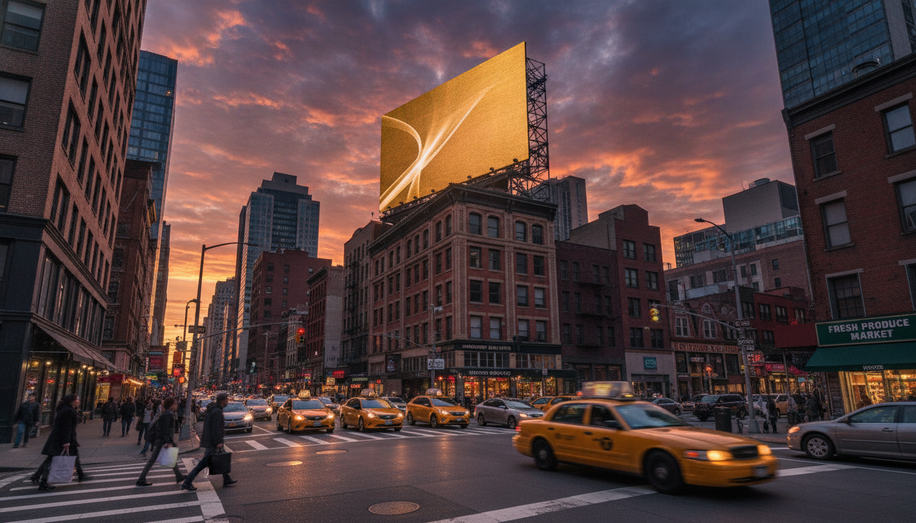

Digital out-of-home (DOOH) advertising was once a marketing channel reserved exclusively for enterprise brands with deep pockets and year-long agency commitments. Today, the rise of programmatic self-serve platforms has completely democratized the landscape, allowing small business owners to buy digital billboard space with complete flexibility. Modern platforms offer real-time buying, precise targeting, and zero minimum spend commitments, making it easier than ever to run high-impact physical campaigns on a budget.
Blip Billboards
Blip Billboards is one of the most widely used self-serve platforms for buying digital billboard space in the United States, designed explicitly with small business budgets in mind. The platform operates on a “pay-per-blip” model, where advertisers pay for individual 15-second ad displays, allowing campaigns to run with daily budgets as low as ten dollars and absolutely no long-term contract requirements. Users simply select their target markets on an interactive map, upload their creative assets, and choose their bidding levels to match peak traffic times. It represents a highly flexible way for local businesses to gain roadside visibility alongside major national brands without needing an ad agency.
Adomni
For advertisers seeking an expansive network of physical displays, Adomni provides self-serve access to over one million digital screens globally, ranging from roadside spectaculars to transit and retail displays. The platform features no minimum spend requirements, giving small businesses complete budget control to experiment, optimize, and scale their programmatic digital out-of-home (DOOH) campaigns as they see fit. Advertisers can target audiences utilizing over 1,000 pre-built behavior segments or geo-targeting parameters, letting them focus specifically on high-value physical corridors. Its proprietary AI-driven planning assistant further simplifies media buying by recommending optimal inventory and budgets based on a business’s unique conversion goals.
Blindspot
Designed to give advertisers high-precision control, Blindspot is a self-serve DOOH platform that provides direct access to more than 2.5 million digital screens across over 50 countries. Small business owners can set up and launch a campaign in approximately 15 minutes with zero contract obligations, utilizing a unique hourly buying model that eliminates the wasteful cost of 24/7 placement. The platform supports context-aware dynamic creative swaps triggered by real-time variables like weather conditions, traffic patterns, and local events, while offering detailed attribution metrics tracking foot traffic, web lift, sign-ups, and sales. This level of customization makes it an excellent fit for agile brands wanting data-driven out-of-home campaigns, though it may not be the ideal choice for very large enterprises requiring highly bespoke demand-side platform (DSP) setups or managed agency services.
AdQuick Go
Designed to remove the complexity of traditional out-of-home media negotiations, AdQuick Go is a credit-card-enabled self-serve platform built to prioritize speed and simplicity. Through its highly intuitive, map-based interface, small business advertisers can explore real-time inventory from top media owners, check unit availability, and book digital billboard campaigns in a single checkout flow. The platform operates with no direct agency contracts, allowing businesses to bypass long-winded requests for proposals (RFPs) and get high-impact campaigns live within 24 to 72 hours. It is particularly well-suited for localized, fast-turnaround activations where speed and straightforward pricing are prioritized over complex multi-channel retargeting.
CAASie.co
CAASie.co is an approachable, independent self-serve buying platform designed to make digital billboard advertising as straightforward as launching a social media ad. The platform lets small business advertisers hand-pick specific digital screens—including roadside billboards, train stations, gym displays, and retail centers—and purchase individual ad plays with no contract requirements or high budget commitments. Advertisers simply upload their artwork, which is automatically scanned for compatibility, and set their custom pacing and daily budgets. It is highly valued by independent digital marketers who appreciate a friendly, transparent interface that strips away the jargon of traditional programmatic bidding.
The Neuron
The Neuron is a dedicated programmatic DOOH platform that specializes in connecting small-to-mid-sized advertisers directly to premium global screen networks. With no minimum spend restrictions or upfront commitments, it provides a cost-effective, data-led entry point for businesses looking to experiment with out-of-home media. The platform’s intuitive dashboard enables users to configure real-time programmatic bidding, set precise geo-targeting, and adjust campaign pacing to hit specific daytime hours. It serves as a highly robust tool for independent buyers who want to align their physical screen presence with real-time consumer behaviors and live regional marketplace data.
Final Thoughts
Navigating the world of physical advertising no longer requires massive agency fees or rigid long-term commitments. For small business owners, the key to success lies in choosing a platform that matches their specific geographic needs, reporting expectations, and budget boundaries. By leveraging self-serve DOOH platforms, growing brands can finally achieve the real-world impact of digital billboards on their own terms.
Frequently Asked Questions
Can I really buy digital billboard space with no minimum spend?
Yes, many self-serve DOOH platforms have completely eliminated minimum budget requirements, allowing you to spend as little as a few dollars per day. Some platforms let you purchase individual screen plays or buy advertising time by the hour, making it highly accessible for testing. This means you can run a campaign aligned with your specific business hours without wasting ad spend on empty streets.
How quickly can a self-serve DOOH campaign go live?
Most programmatic platforms allow you to set up, upload your artwork, and submit a campaign for approval in under 15 to 30 minutes. Once submitted, media owners typically review and approve the creative assets within 24 to 72 hours. This speed allows small businesses to quickly launch contextual, time-sensitive promotions in response to local market changes.
What kind of creative files do I need to run a digital billboard ad?
Digital billboards generally require standard static image formats like JPEG or PNG, while some place-based screens also support short video formats like MP4 or animated GIFs. Each platform provides a detailed list of required aspect ratios and file resolutions tailored to the specific screens you select in your campaign. Many modern self-serve interfaces also feature built-in compliance checks that automatically scan your assets for formatting errors before you submit.
How do I measure the performance of my digital billboard campaign?
Modern programmatic DOOH platforms offer advanced tracking metrics that go far beyond simple impression estimates. Depending on the platform you choose, you can measure real-world performance using foot traffic attribution, web lift, sign-ups, and direct sales. By integrating location data with online analytics, small businesses can easily see whether their physical ad placements are driving measurable actions.