
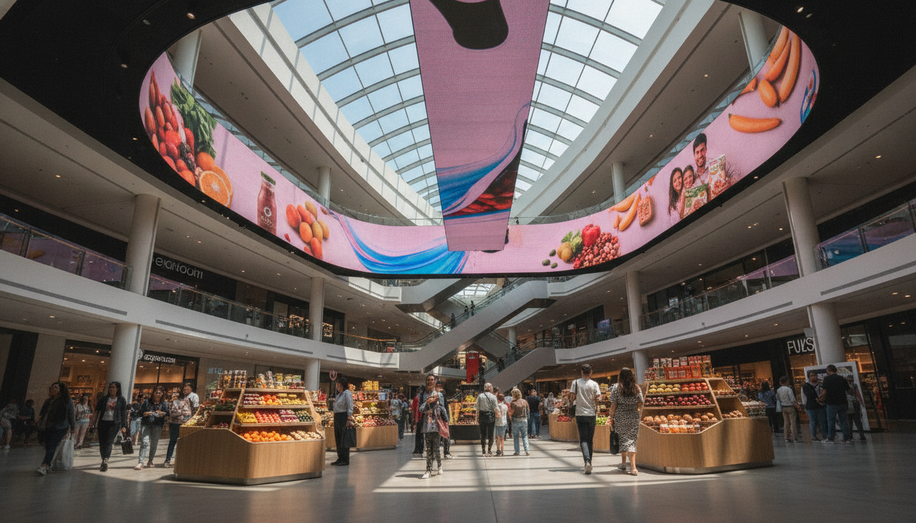

The physical retail store has officially emerged as the premier frontier for digital out-of-home (DOOH) advertising, allowing consumer packaged goods (CPG) brands to capture shopper attention directly at the point of purchase. As online channels struggle with rising costs, banner blindness, and the erosion of third-party cookies, major Retail Media Networks (RMNs) are rapidly digitizing their physical aisles with sophisticated in-store screens, endcap displays, and checkout registers. This strategic convergence of first-party loyalty data with physical screen assets has transformed traditional brick-and-mortar environments into highly measurable, programmatic advertising ecosystems that drive real-world sales.
1. Walmart Connect
Walmart Connect leverages its massive footprint of over 4,700 U.S. stores to offer an expansive network of in-store digital screens, including high-visibility placements at self-checkout registers, TV walls, and deli counters. Reaching approximately 150 million weekly in-store customers, the platform allows CPG brands to target shoppers based on real-time, first-party purchase history and demographic data rather than inferred online behaviors. Advertisers benefit from highly effective, closed-loop measurement that directly links digital screen exposures to physical sales lift, supported by recent updates that transition these in-store displays to programmatic, auction-based buying models. The network’s immense scale and ability to deliver contextually relevant, data-driven ads at the final point of decision make it a cornerstone for modern omnichannel marketing campaigns.
2. Kroger Precision Marketing
Driven by the retail giant’s advanced data science arm, 84.51°, Kroger Precision Marketing has modernized its physical store footprint through an advanced in-store digital display network developed in partnership with Barrows Connected Stores. Rather than retrofitting standard monitors to walls, this initiative seamlessly integrates high-impact, animated digital screens into custom-built shelf fixtures and refrigerated endcaps across select grocery locations. Brands can deliver dynamically optimized, contextually triggered creative assets right next to products on the shelf, capturing high-intent shoppers at the exact moment they make a buying decision. Kroger’s robust first-party loyalty program data allows for unmatched targeting precision and SKU-level attribution, ensuring that physical screen impressions are tied back to actual household purchases.
3. Roundel
Target’s retail media business, Roundel, extends its premium, guest-centric shopping experience into the physical world through an array of curated in-store digital screens, audio integrations, and interactive displays. Positioned strategically in high-engagement zones such as beauty, electronics, and seasonal sections, these screens target Target’s highly brand-loyal, style-conscious shopper base during their average 30-to-45-minute store visits. By integrating in-store DOOH with its proprietary Target Circle loyalty program data, Roundel enables brands to run sophisticated multi-channel campaigns that seamlessly blend physical and digital touchpoints. The network is continuously expanding its programmatic capabilities, offering brands detailed performance metrics that demonstrate how physical screen exposure drives incremental sales both in-store and on Target’s digital platforms.
4. Albertsons Media Collective
Albertsons Media Collective has significantly accelerated its physical footprint by expanding its in-store digital display network, powered by software and hardware partner STRATACACHE, to over 800 of its top-performing grocery locations. Operating across household banners like Safeway, Vons, and Jewel-Osco, this network features large-format premium digital screens positioned at store entrances and high-traffic produce sections to inspire shoppers as their trips begin. The network has distinguished itself in the market through a newly introduced “matched market incrementality” measurement framework, which successfully isolates causal sales lift at the store level rather than relying on correlation. This rigorous approach to closed-loop attribution allows CPG brands to confidently align their in-store DOOH spending with genuine bottom-line growth.
5. Co-op Media Network
In the UK convenience sector, Co-op Media Network has emerged as a major player by launching its dedicated “Co-op Media Network Out of Home” proposition, utilizing over 1,000 front-of-store digital screens in partnership with Smart Outdoor. This extensive footprint—complemented by thousands of internal digital touchpoints like customer-facing tills, kiosks, and self-service screens—reaches everyday shoppers making local, high-frequency neighborhood trips rather than standard highway commutes. By embedding full-motion digital screens directly into local communities, the network delivers consistent, high-frequency exposure that targets impulsive convenience missions such as food-to-go and quick dinner planning. The network relies on its robust Co-op Compass data platform to provide advertisers with detailed mission-level shopper insights and performance reporting, proving the high return on investment that localized, convenience-based DOOH can achieve.
As physical stores undergo this digital transformation, the boundaries between traditional out-of-home advertising and retail media continue to dissolve. By leveraging these advanced in-store screen networks, CPG brands can transition from broad-reach awareness campaigns to precise, data-driven activations right at the point of sale. Ultimately, the future of retail advertising lies in this seamless integration of physical screen networks with first-party transactional data, turning everyday store visits into highly engaging, measurable brand experiences.