
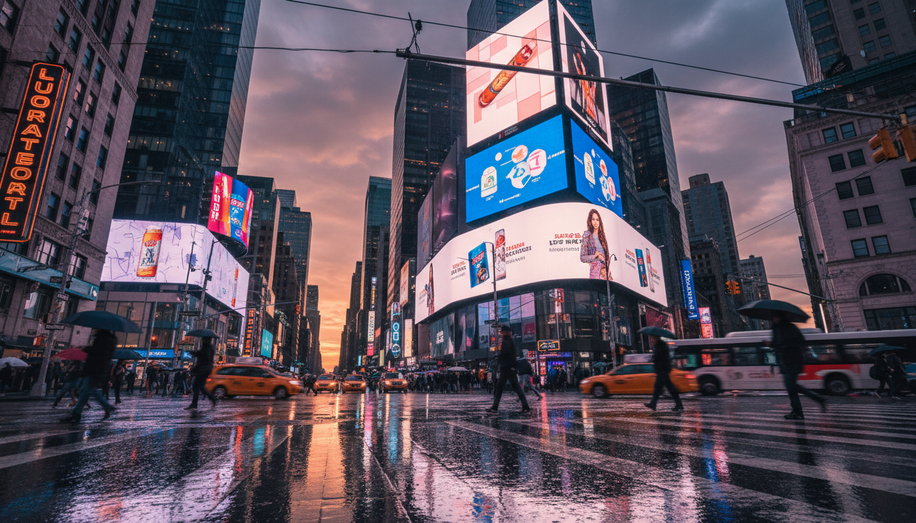

Out-of-home advertising has never been more visible—or more scrutinized. From towering digital billboards on highways to interactive screens in transit hubs, OOH campaigns operate in a dense web of legal, regulatory, and ethical obligations. For brands and media owners, navigating this terrain isn’t a box-tick exercise; it’s central to brand safety, campaign continuity, and public trust.
The starting point is understanding that OOH regulation is layered. At the top sit national or federal rules on advertising content, consumer protection, and highway safety. Beneath that are state or regional outdoor advertising acts that govern placement, size, and permitting, particularly along major roadways. Finally, municipal zoning codes and planning policies add hyper-local restrictions that often determine whether a structure is approved or torn down. A digital billboard that complies with federal law but violates a city’s setback requirements can still be ordered dark—or removed entirely.
Placement and permitting are the first major fault lines. Most jurisdictions tightly regulate signs visible from highways, major arterials, and protected scenic routes. Regulations can dictate everything from maximum height and total square footage to distance from interchanges, schools, or residential zones. Some require that billboards be located only in areas zoned commercial or industrial. In many regions, permits are not just procedural; they create property interests that can be revoked if conditions are breached. Failing to secure the correct permits, or ignoring conditions related to illumination, structural safety, or spacing, can lead to fines, forced removal, and strained relationships with both regulators and communities.
Digital out-of-home (DOOH) has added new regulatory pressure points. Authorities increasingly impose rules on brightness levels, dwell times, and the frequency of creative changes to minimize driver distraction and light pollution. Content that flashes, mimics traffic signals, or uses high-intensity animations near roadways is often restricted or outright banned. In urban cores, rules may govern screen placement to protect heritage views, reduce visual clutter, or limit light trespass into neighboring buildings. For media owners, engineering specifications and compliance logs—documenting brightness settings, copy-change intervals, and maintenance—are becoming critical evidence should regulators or local residents raise complaints.
Content regulation is the other pillar. Most countries enforce laws against deceptive, misleading, or harmful advertising, and many have industry self-regulatory codes that sit on top of statutory rules. For OOH, the bar is higher because exposure is largely unavoidable and often includes children. Restrictions typically cover tobacco, certain alcohol messaging, gambling, adult content, and political advertising, particularly near schools or places of worship. Many jurisdictions also prohibit content that could be considered discriminatory, hateful, or inciting violence. Even when the law permits edgy or controversial creative, brands risk public backlash and local regulatory scrutiny if they push too far in family-heavy environments such as transit systems or city centers.
Ethical standards fill the gaps the law doesn’t explicitly address. Responsible OOH campaigns avoid exploiting vulnerable groups, respect cultural and religious sensitivities, and steer clear of shock tactics that might distress viewers. In practice, that might mean adapting creative based on neighborhood demographics, language use, or proximity to sensitive sites like hospitals and memorials. Industry codes of conduct and advertising standards authorities provide frameworks for resolving complaints and can recommend amendments or withdrawals of problematic campaigns before matters escalate into formal sanctions.
Digital formats raise a further layer of complexity: data privacy. While a static billboard does not collect personal information, many DOOH deployments are linked to mobile location data, Wi-Fi pings, or camera-based analytics. When advertisers use device IDs, movement patterns, or demographic inference to target or measure OOH exposure, privacy law comes firmly into play. Regulations such as the GDPR in Europe, and various state privacy laws in the United States and elsewhere, restrict how personal data can be collected, processed, and shared. Even when data is anonymized, regulators scrutinize whether it can be re-identified and whether individuals had meaningful notice and an opportunity to opt out. Any use of facial recognition or emotion-tracking technology on public screens is especially sensitive and in some places explicitly banned.
Compliance in this environment demands more than a legal sign-off at the end of the creative process. Best practice is to integrate regulatory and ethical checks from planning through execution. That means conducting site-by-site due diligence on zoning and permitting; consulting local transportation and planning authorities; and keeping detailed records of approvals, structural inspections, and ongoing maintenance. For multi-market campaigns, it means building a regulatory matrix that captures differences in content rules, size limits, and digital display restrictions across jurisdictions, then designing creative and media plans to the strictest common denominator.
Collaboration is crucial. Media owners typically carry primary responsibility for ensuring their inventory complies with structural, zoning, and permit rules, but advertisers have strong incentives to verify that their campaigns are running on lawful sites. Agencies, technology providers, and measurement partners must also align on privacy-safe data practices and clear contractual obligations around compliance. When creative pushes into sensitive territory—on health claims, political issues, or youth-oriented products—early engagement with legal counsel and, where appropriate, self-regulatory bodies can preempt costly last-minute changes or public controversies.
Ultimately, OOH’s power lies in its ability to dominate public space. That visibility is both opportunity and obligation. Advertisers who treat regulation as a strategic input rather than a constraint—baking legal, ethical, and privacy considerations into the DNA of their OOH planning—are better positioned to avoid disruption, protect their reputations, and maintain the social license that keeps the medium thriving. In a regulatory landscape that is tightening, especially around digital screens and data, compliance is no longer a defensive posture; it is a competitive advantage.
To truly master this complex environment, solutions like Blindspot become indispensable. Its advanced location intelligence and site selection capabilities enable brands and media owners to proactively identify compliant OOH placements that adhere to zoning, permitting, and hyper-local restrictions, while programmatic DOOH campaign management ensures real-time adherence to dynamic regulations concerning dwell times, brightness, and content changes. This empowers advertisers to navigate regulatory pressures with precision, transforming compliance into a clear competitive edge. Explore how at https://seeblindspot.com/