
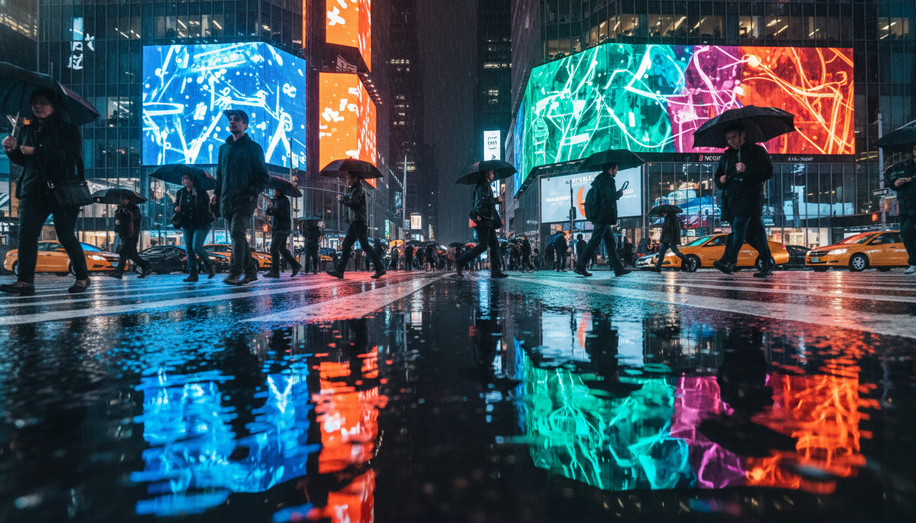

In the relentless hustle of urban landscapes, where billboards battle for fleeting glances and digital screens flicker amid the chaos of traffic, color emerges as an invisible conductor orchestrating consumer emotions. Out-of-home (OOH) advertising, with its massive scale and ephemeral exposure, demands more than visual punch—strategic hues that pierce the subconscious, linger in memory, and subtly steer behavior. Psychologists and marketers alike have long decoded color’s power, but in OOH’s unique outdoor arena, where sunlight shifts, distances distort, and distractions abound, these choices become a high-stakes science of emotional engineering.
Red, the undisputed attention-grabber, pulses with urgency and excitement, making it a staple for OOH campaigns craving immediate impact. Studies from color psychology experts, including insights from Verywell Mind, reveal how red elevates heart rates, spikes metabolism, and triggers visceral reactions akin to danger or desire. Fast-food giants like McDonald’s and KFC plaster their golden arches against crimson backdrops on highway billboards, not by accident. This warm warrior stimulates appetite and accelerates decision-making—perfect for drivers zipping by at 70 miles per hour, where a split-second dopamine hit can convert hunger into a pit stop. Yet, in OOH’s unforgiving daylight, overuse risks visual fatigue; pair it sparingly with neutrals to avoid overwhelming passersby, ensuring the message sticks rather than scorches.
Contrast that with blue’s serene reliability, a hue that whispers trust and composure amid the outdoor frenzy. Banks and tech firms, from Chase to IBM, cloak their OOH displays in cerulean tones to evoke stability and professionalism. Research highlighted in marketing analyses, such as those from Framework Films, shows blue lowers blood pressure and fosters calm, ideal for transit hubs where commuters seek reassurance. In digital OOH (DOOH) formats, where videos loop in three-second bursts, blue’s cool palette holds attention without aggression, enhancing memorability by 20-30% in A/B tests cited by industry reports. Its versatility shines in variable weather—rain-slicked streets amplify its depth—turning transient exposures into lasting brand associations.
Yellow bursts onto the scene with unbridled optimism, igniting joy and youthfulness that cuts through gray commutes. Often pitted against green in what some call the “yellow-green war” of digital platforms, per Sryahwa Publications, yellow demands visibility from afar, its high luminance making it a beacon for event posters or seasonal promotions. Think Spotify’s vibrant blasts or IKEA’s cheerful signage: it sparks curiosity and approachability, boosting recall by tapping into subconscious cheer. However, in OOH’s broad canvases, its intensity can strain eyes under harsh sun, so designers temper it with black outlines for legibility, transforming potential eyestrain into engaging energy.
Green, the emblem of growth and harmony, grounds emotional narratives in sustainability and balance. As eco-conscious brands like Patagonia dominate OOH with verdant visuals, color psychology underscores its role in reducing stress and signaling freshness—Mental Health America notes its mood-lifting parallels to nature immersion. On sprawling rooftop displays or park benches, green blends seamlessly with environments, fostering subconscious affinity without shouting. DOOH studies emphasize its first-three-seconds supremacy in video ads, where it subtly influences perceptions of health and ethics, nudging eco-purchases amid urban greenwashing skepticism.
Orange and pink add playful nuance, blending red’s fire with yellow’s warmth for approachable enthusiasm. Orange, as seen in Nickelodeon’s billboards or Home Depot’s signage, conveys adventure and affordability, encouraging interaction in youth-targeted campaigns. Pink, softer and empathetic, calms aggression—Lyft’s rideshare wraps use it to evoke kindness and approachability, per Printivity insights, ideal for pedestrian-heavy zones. These hues excel in OOH by humanizing massive formats, making monolithic ads feel inviting.
Yet color’s alchemy in OOH transcends singles; combinations craft narratives. Warm reds and oranges propel impulse buys on retail strips, while cool blues and greens build loyalty in corporate districts. The outdoor milieu amplifies this: chromatic adaptation under shifting light means testing for golden-hour glow or nocturnal neon. Data from Innervate and Radvine Marketing stresses personalization—dynamic DOOH swaps palettes based on audience demographics or time of day, skyrocketing engagement by aligning with emotional contexts.
Ultimately, OOH designers who master this psychology don’t just decorate space—they inhabit minds. Up to 90% of snap judgments hinge on color, per Framework Films, making strategic palettes the linchpin for memorability and action. As 2025’s mood-driven trends evolve toward personalized, data-fueled hues, brands ignoring this spectrum risk fading into the background. In an era of sensory overload, color isn’t mere aesthetics—it’s the emotional hook that turns fleeting sights into enduring impressions, proving that in OOH, the right shade doesn’t just stand out; it strikes home. With platforms like Blindspot, brands can transition from intuition to precision, utilizing real-time performance tracking and audience analytics to dynamically tailor color schemes across OOH and DOOH campaigns. This data-driven approach ensures every hue resonates, transforming strategic emotional engineering into tangible results and lasting impact. Learn more at https://seeblindspot.com/