
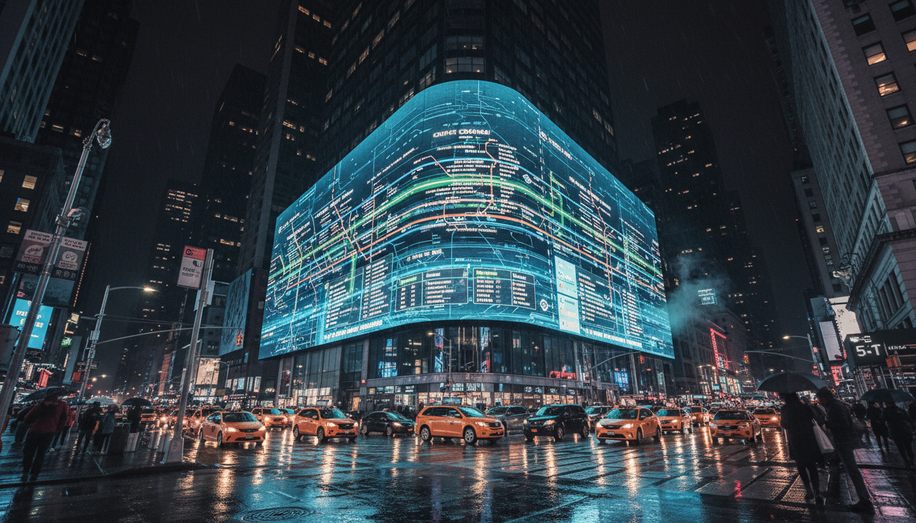

Once upon a time, billboards were static sentinels—immense vinyl canvases plastered with unchanging slogans, weathering the elements while drivers zipped by in a blur. But the digital revolution, igniting around 2005 with the debut of the first LED-powered displays, shattered that monotony. These early digital billboards marked a seismic shift in out-of-home (OOH) advertising, evolving from mere picture frames into versatile content machines capable of cycling through multiple ads in loops. No longer bound by the rigors of printing and installation, advertisers could swap messages remotely, tailoring promotions to the clock: breakfast deals at dawn, happy hours at dusk. This flexibility alone propelled digital out-of-home (DOOH) adoption, as noted in industry timelines from the era, when computer-aided design had already paved the way in the 1970s, only to explode with pixel-perfect dynamism two decades later.
Yet the true metamorphosis began as LED technology matured, pushing beyond basic loops into realms of interactivity and precision. High-resolution screens, now standard, deliver video, animation, and 3D effects that static billboards could never dream of. Modular LED panels allow for curved, multi-screen clusters, as seen in urban landmarks like Denver’s Colorado Convention Center, where synchronized displays adapt brightness to ambient light, slashing energy use while amplifying visual punch. By the 2010s, motion sensors and touchscreens turned passive viewers into participants—billboards urging selfies with branded hashtags, then flashing user content in real-time. A coffee chain might detect foot traffic spikes and beam out flash sales, or a retailer could sync with passing vehicles via Bluetooth, turning drives into dialogues.
The leap to “smart” billboards, powered by artificial intelligence and data analytics, has redefined targeting with surgical accuracy. Gone are the days of blanket messaging; today’s screens harvest traffic patterns, weather feeds, and even demographic snapshots to serve hyper-relevant ads. On a sweltering afternoon, a digital billboard might pivot from hot cocoa to iced lattes, drawing from live meteorological data. Facial recognition—ethically deployed in many markets—segments audiences by age or group size, customizing pitches on the fly. In smart cities, this integration deepens: billboards now mesh with urban infrastructure, feeding real-time transit updates, emergency alerts, or event schedules alongside commercials. Singapore and Dubai exemplify this fusion, where DOOH networks double as civic nerve centers, using GPS and IoT to guide commuters or promote sustainability drives amid traffic jams.
Mobile billboards have accelerated this evolution, transforming trucks into roving smart screens since the late 1990s LED boom. No longer fixed sentinels, these vehicles prowl festivals, city cores, and highways, swapping content dynamically to chase trends or events. High-tech iterations incorporate augmented reality (AR), overlaying virtual try-ons for fashion brands or interactive games that ping smartphones. Energy-efficient displays, a nod to sustainability, cut power draw by up to 50 percent compared to early models, aligning with global green mandates. Data collection has become a goldmine: anonymized metrics on dwell time, engagement rates, and conversions arm advertisers with ROI proof that static OOH could only approximate.
Looking ahead, the horizon gleams with promise. Machine learning promises predictive personalization, where billboards anticipate needs—suggesting umbrellas before the rain hits—while 5G enables seamless AR holograms and blockchain verifies ad authenticity. In connected ecosystems, these screens will converse with wearables and autonomous vehicles, crafting micro-moments of relevance. Challenges persist, from regulatory hurdles on data privacy to the premium costs of cutting-edge installs, but the trajectory is clear: digital billboards have transcended advertising artifacts to become dynamic information hubs, pulsing with the city’s rhythm.
This evolution underscores OOH’s resilience in a fragmented media landscape. What began as looped novelties now anchors smart urban fabrics, blending commerce, community, and connectivity. As technology hurtles forward, one thing is certain: the billboard, once a silent shout, has found its voice—and it’s smarter than ever.