
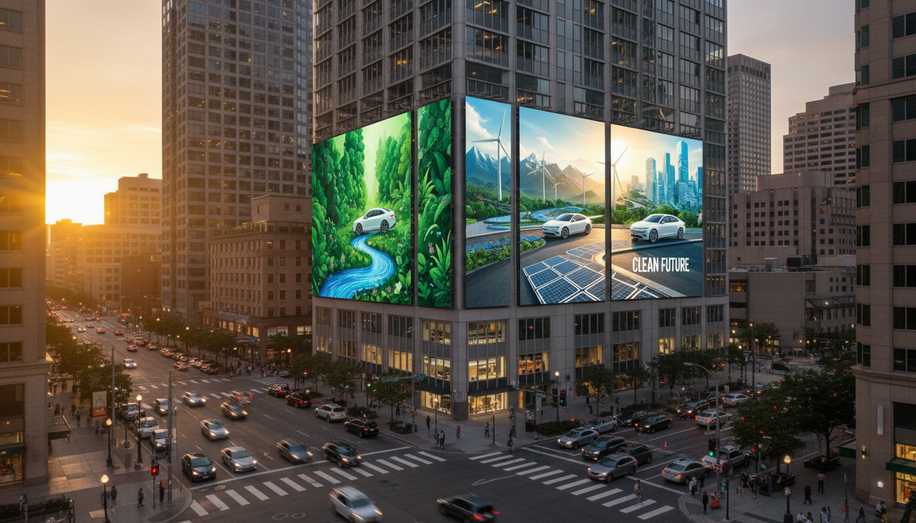

In the bustling rhythm of urban life, where commuters rush past billboards and shoppers glance at transit screens, out-of-home (OOH) advertising has evolved from mere visual interruptions into a dynamic canvas for brand storytelling. Brands are increasingly harnessing sequences of static and digital placements to unfold multi-part narratives, turning fleeting encounters into memorable sagas that deepen engagement and boost recall over time. This approach transforms OOH from a static medium into a serialized experience, much like chapters in a novel encountered along a daily journey.
Consider the power of sequential storytelling in OOH. Advertisers can map placements to audience movement patterns, creating a narrative arc that builds progressively. A delivery service, for instance, deployed posters across New York City subways, each revealing a fragment of a story tailored to riders’ commutes. This strategy generated 1.1 million earned social impressions in one week and lifted app usage by 10 percent, proving how static OOH can serialize a message for immersion. Static billboards serve as reliable anchors—unchanging vignettes that reinforce familiarity—while digital OOH (DOOH) injects dynamism, allowing real-time updates that evolve the plot based on weather, events, or viewer data.
The key lies in crafting narratives that resonate emotionally, leveraging OOH’s inherent strengths: massive reach and unavoidable presence. Stories stick because people remember them up to 22 times better than isolated facts, a psychological edge amplified in OOH’s constrained format where a single image or phrase must captivate in seconds. Brands weave compelling arcs by starting with intrigue—a provocative visual metaphor on a highway billboard that hints at conflict—then escalating tension on urban digital screens, and resolving with a call to action via QR codes at retail hubs. This multi-placement choreography ensures the story unfolds naturally, mirroring how audiences consume media in fragments across their day.
Digital capabilities elevate this further, turning placements into interactive chapters. DOOH’s interactivity—think touchscreens, real-time content swaps, or user-generated integrations—invites participation, fostering ownership in the narrative. A campaign might begin with a static poster teasing a character’s dilemma, followed by a DOOH screen polling passersby for plot twists, then culminating in personalized digital extensions synced to mobile apps. Such innovation not only captures attention but also drives action, as immersive experiences prime consumers for purchase moments. By blending static reliability with digital fluidity, brands create cohesive tales across channels, enhancing recognition and trust.
Successful executions demand strategic precision. First, define a core message that distills the brand’s mission into emotional beats—authenticity trumps overselling, leaving audiences hungry for the next installment. Visuals reign supreme; humans process images 60,000 times faster than text, so bold metaphors, location-tied contexts, or humorous surprises make stories pop amid the blur of motion. Humor, for example, sparks word-of-mouth, while tying narratives to local landmarks grounds them in relevance. Consistency across placements is non-negotiable: mismatched chapters fracture recall, but unified motifs—like recurring characters or motifs—build anticipation.
Real-world campaigns illustrate the payoff. Folk-tale inspired billboards draw on cultural touchstones for instant connection, priming viewers with prologues that direct them online via URLs or QR codes. DOOH campaigns experimenting with influencers or live updates, as in creator programs, amplify virality by blending OOH with social ecosystems. Even hybrid static-digital sequences reinforce digital efforts, extending online narratives into physical spaces for compounded recall. Measurement tracks success through impressions, engagement lifts, and downstream metrics like app downloads or sales spikes, validating the investment.
Challenges persist—budget constraints, placement logistics, and audience saturation—but the rewards outweigh them. In an era of ad fatigue, serialized OOH narratives cut through by evoking curiosity and connection, turning passive viewers into active participants. Brands bold enough to treat OOH as a storytelling tapestry, not isolated ads, reap deeper loyalty. As technology advances programmatic buying and data-driven targeting, this canvas will only expand, inviting ever-richer tales that linger long after the commute ends.
Ultimately, OOH’s magic unfolds in its public intimacy: narratives shared in collective motion, weaving brands into the fabric of daily life. By sequencing static and digital placements thoughtfully, marketers don’t just advertise—they author experiences that audiences eagerly follow to their conclusion.