
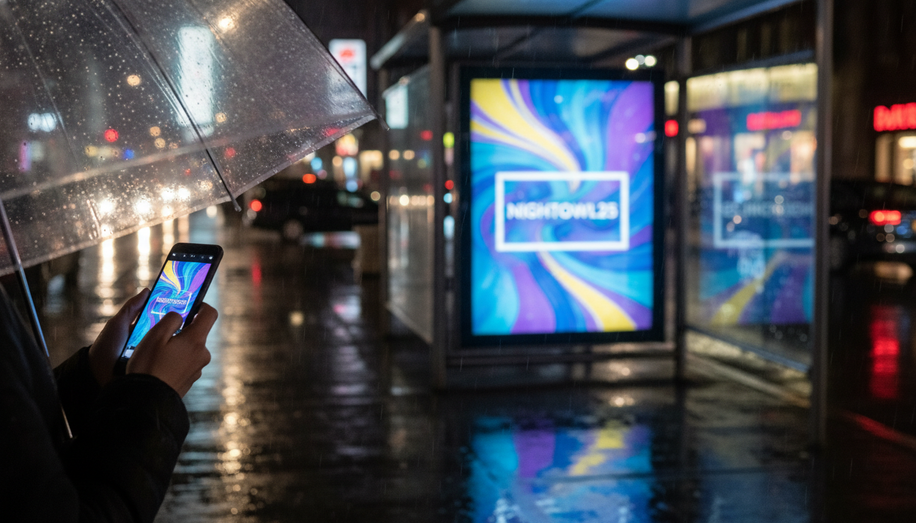

In the bustling streets of modern cities, where digital screens flicker alongside traditional billboards, out-of-home (OOH) advertising is evolving from a mere visibility tool into a direct catalyst for e-commerce sales. Brands are bridging the gap between offline exposure and online conversions by embedding trackable elements like QR codes, custom landing pages, and unique discount codes into their campaigns, creating measurable pathways from physical impressions to digital purchases.
This integration marks a seismic shift in marketing paradigms. Once relegated to top-of-funnel awareness, OOH now permeates the entire customer journey, driving app downloads, website visits, and immediate buys. A March 2026 study titled *The Power of Proximity: OOH Media and Its Evolving Role in Connected Commerce* surveyed 106 marketers and agency executives, revealing that 98 percent view OOH as foundational to connected commerce—the fusion of media, data, and technology across touchpoints. Among respondents, 54 percent called it a core component, with 52 percent citing its cost-effective reach and 51 percent praising its ability to lift retail traffic and ensure consistent messaging. Experts like Rahul Chakraborty, a senior industry leader, emphasize that while e-commerce drives only about 2 percent of current OOH spends, this synergy is deepening through data-driven targeting and hyper-local creatives, transforming OOH into a conversion engine.
At the heart of these strategies lie simple yet powerful digital bridges. QR codes, prominently displayed on digital out-of-home (DOOH) formats like billboards and point-of-purchase screens, offer instant access to e-commerce platforms. In Lima, for instance, Latcom deployed QR codes on high-value neighborhood mupis—urban poster displays—that redirected users to app download links, boosting online engagement. Consumers exposed to such OOH ads are 63 percent more likely to take action, such as visiting websites or making e-commerce purchases, outperforming TV, radio, and print by four times per dollar spent. Digital billboards top the list for supporting connected commerce at 65 percent approval, followed closely by interactive displays at 63 percent, allowing real-time scans that funnel foot traffic into online carts.
Custom landing pages and unique discount codes take this further, providing granular tracking. Agencies now design OOH creatives with bespoke URLs or promo codes visible only on screens, enabling precise attribution. A fitness brand in Delhi, for example, unified its “Transform Your Life in 30 Days” message across metro hoardings and Instagram, but layered in unique codes to monitor scans converting to sign-ups. Post-campaign analytics via Google Analytics or Tag Manager reveal spikes in website visits, QR scans, and conversions, linking offline impressions to online behaviors. Programmatic DOOH amplifies this with hyper-local targeting, delivering context-specific content—think weather-tied promotions or event-driven discounts—directly influencing nearby shoppers to pull out their phones.
Measurement is no longer an afterthought but the backbone of these campaigns. Marketers integrate OOH with digital channels using UTM parameters on QR-linked pages, tracking branded search volume, direct traffic, and social buzz. Tools like CRM integrations and performance dashboards quantify ROI, showing how street furniture or transit displays correlate with sales lifts. In one approach, consistent messaging across OOH and social media creates a feedback loop: a large-scale billboard blitz prompts measurable upticks in app downloads and e-commerce transactions, justifying budgets to stakeholders. Raquel Miara, Latcom’s Commercial Director for New Business in LATAM, advises measuring synergy through media mixes, tech tools, and research to push sales precisely when needed.
Data-driven site selection enhances precision. By overlaying digital analytics from Google Ads or Facebook Audience Manager onto OOH inventory, brands pinpoint hotspots like Cyber City Gurugram or Rajiv Chowk Metro Station, ensuring ads reach high-intent audiences. This location intelligence, combined with localized creatives backed by regional influencers, builds credibility and drives emotional resonance offline while channeling it online.
Challenges persist, particularly in attribution amid multi-channel noise, but advancements in programmatic buying and dynamic creative optimization are closing the loop. OOH’s real-world proximity—reaching consumers in motion—complements e-commerce’s precision, fostering omni-channel strategies that yield short-term performance and long-term brand equity. As Chakraborty notes, the future demands seamless integration where OOH delivers not just visibility, but verifiable engagement.
Forward-thinking brands are already reaping rewards. E-commerce giants report sustained top-of-mind awareness and hyper-segmented reach, with OOH keeping sales active across micro-zones. Retailers blending digital in-store screens with near-store signage see compounded effects, turning passersby into pixels on checkout pages. In an era of fragmented attention, this offline-to-online alchemy proves OOH’s enduring power: massive scale meets meticulous tracking, propelling e-commerce growth one scan at a time.