
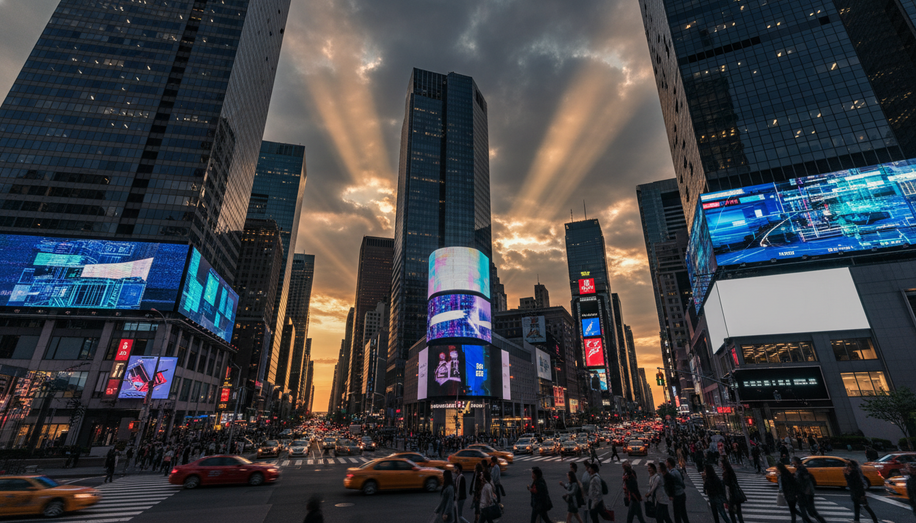

The out-of-home advertising industry is undergoing a fundamental shift in how it approaches site selection, moving away from traditional metrics like duration and share of voice toward a data-driven methodology that prioritizes audience intelligence and contextual relevance. This evolution is reshaping media planning for advertisers of all sizes, enabling them to identify and activate prime real estate with unprecedented precision and measurable impact.
Location intelligence has emerged as the cornerstone of modern OOH strategy, fundamentally changing how planners evaluate potential placements. Rather than relying on historical assumptions about foot traffic patterns, today’s most effective campaigns leverage three primary data sources: movement data, audience data, and contextual data. When combined strategically, these sources provide a comprehensive understanding of consumer behavior, allowing advertisers to move beyond generic “spray and pray” approaches toward placement with purpose. Movement data reveals how audiences actually navigate urban environments, audience data identifies who is present at specific locations, and contextual data—including points of interest, retail chains, and neighborhood demographics—adds critical layers of understanding about consumer surroundings at the exact moment of ad impression.
The practical application of these data sources transforms site selection from an art into a science. Advertisers can now analyze consumer profiles enriched by online activities and geo-behavioral insights, strategically placing ads in high-traffic areas frequented by their ideal customers. This targeted approach enables real-time optimization, allowing campaigns to be adjusted swiftly to maximize impact and ensuring ongoing effectiveness. Rather than treating OOH as a mass-reach medium, data-driven practitioners focus on understanding the collective audience that passes by each location, then matching that audience composition to campaign objectives.
Strategic placement begins with identifying venues where target audiences naturally congregate and are already receptive to messaging. Research demonstrates that this approach delivers tangible results—one case study showed an 88% awareness lift through deliberate venue selection across bars and restaurants, fitness centers, barbershops, doctor’s offices, convenience stores, and local event activations. The success of such campaigns lies not in sheer volume of placements, but in choosing environments where the intended audience is present, relaxed, and contextually primed to receive the message.
Format diversity amplifies the effectiveness of strategically selected sites. Combining static media, digital displays, wrapped vehicles, and event activations creates multiple touchpoints across different contexts, increasing frequency and reinforcing messaging without inducing ad fatigue. Digital out-of-home formats offer particular advantages here, with research showing that premium large-format digital OOH commands over five times more attention than online display formats, making format selection a critical component of overall site strategy.
The analytical tools enabling this approach have matured considerably. Planners can now employ geo targeting, proximity targeting, and point-of-interest targeting to tailor ad placements based on audience movement and environment. Platforms that integrate movement, audience, and contextual data enable advertisers to analyze urban consumer behavior at scale, enriching audience insights with location-specific context. These capabilities democratize data-driven planning—campaigns of any size and budget can now leverage sophisticated location intelligence rather than relying solely on premium placements.
Cultural intelligence represents an often-overlooked analytical dimension in site selection. Recognizing that certain venues serve as cultural hubs—barbershops and beauty establishments, for example—or that healthcare conversations naturally occur in doctor’s offices, allows planners to align messaging context with audience mindset. This cultural awareness, combined with quantitative location data, creates more engaging campaigns with customized messaging tailored to audience preferences and behaviors in specific locations.
Looking forward, the industry’s trajectory is clear: sites that once seemed valuable based on traditional metrics may be surpassed by unconventional placements backed by rigorous audience data. The competitive advantage lies not in accessing exclusive inventory, but in asking more sophisticated questions about who passes through each location, when, and under what circumstances they are most receptive to specific messaging. As data sources continue proliferating and analytical capabilities advance, successful OOH media planners will be those who treat site selection as a strategic discipline grounded in audience intelligence, contextual relevance, and measurable performance outcomes.