
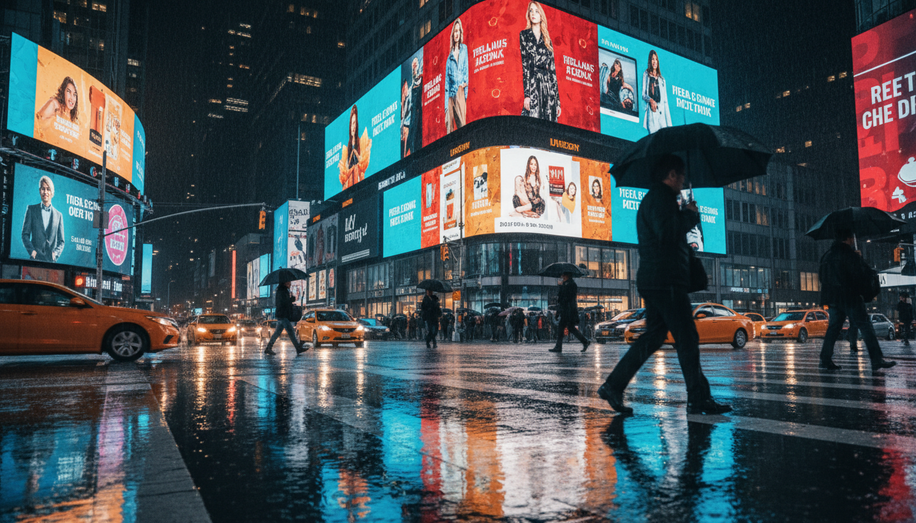

Retailers are revolutionizing their media networks by folding out-of-home (OOH) inventory into the mix, propelling brands far beyond digital screens and e-commerce walls to capture shoppers in the physical world. This fusion of retail media networks (RMNs) with digital OOH—think dynamic screens at store entrances, aisle endcaps, and checkout kiosks—delivers hyper-targeted messaging that drives foot traffic, sparks impulse buys, and ties ad spend directly to sales, both online and off.
Once limited to online banners and sponsored search results, RMNs are exploding as retailers like Walmart, Kroger, Amazon, and 7-Eleven leverage their troves of first-party data—loyalty program insights, purchase histories, and browsing patterns—to turn physical stores into precision ad engines. Projections paint a staggering picture: global retail media ad spend is barreling toward $165 billion by 2026, with U.S. spending alone hitting $69-71 billion next year, outpacing the broader ad market. Omnichannel efforts, including off-site OOH, are forecast to reach $61.2 billion in 2025, underscoring how in-store and nearby digital displays have shifted from afterthoughts to core revenue drivers with profit margins soaring 50-90%.
The mechanics are elegantly simple yet powerfully effective. Digital OOH screens, powered by platforms like Broadsign, Walmart Connect, and Kroger Precision, pull real-time data to serve contextually relevant ads. A shopper eyeing snacks in the grocery aisle might glance up to see a personalized pitch for a complementary drink, triggered by their loyalty app or recent online searches. In malls and supermarkets, these displays command attention amid the retail buzz—eye-tracking studies show dwell times of 10-15 seconds, dwarfing mobile scroll-past rates—and boost purchase lifts by 20-30%, capitalizing on impulse decisions that fuel up to 70% of grocery buys. QR codes and NFC tags turn screens into shoppable portals, linking directly to checkout or apps for seamless conversions.
This expansion isn’t confined to aisles. Retailers are weaving OOH into broader ecosystems, including transit signage, billboards near stores, and geofenced activations that guide consumers along the path to purchase. Catalina dubs it an “amplifier,” blasting hyper-local messages to draw crowds to specific locations, while Walmart and Home Depot bundle in-store displays with connected TV (CTV) and off-site options to lure non-endemic advertisers like banks and automakers. T-Mobile’s acquisition of Vistar Media signals even bigger ambitions, injecting OOH infrastructure into thousands of stores for full-funnel campaigns that blend physical presence with digital precision.
Attribution, long a pain point for traditional OOH’s static billboards, is the secret sauce here. Closed-loop measurement connects ad exposure to actual sales—online via pixels and cookies, offline through loyalty data and geofencing—proving return on investment with ironclad metrics. Over 95% of media buyers crave programmatic access to these networks, per Koddi research, as it streamlines buying like online channels via platforms from StackAdapt and others. Retailers repurpose digital creatives—emails, social ads—for physical screens, ensuring message consistency across touchpoints while tapping shopper behavior for smarter targeting.
Challenges linger, from privacy concerns over data use to the need for seamless tech integration, but the momentum is unstoppable. As social commerce eclipses $100 billion by 2026, expect AI-driven personalization via mobile beacons, video walls predicting needs (wine by the cheese aisle), and buy-now-pay-later flashes to supercharge upsells. Retailers are morphing into media powerhouses, offering omnipresent reach backed by measurable outcomes that reclaim stores as the heart of the shopper journey—where over 80% of purchases still occur despite digital hype.
For brands, this means extended reach without silos: an online ad on Amazon can cascade to a store screen, driving traffic and sales attribution across channels. OOH specialists stand to thrive, partnering with RMNs to transform static inventory into dynamic revenue machines. In this new frontier, every retail moment pulses with opportunity, proving that the most effective ads don’t just get seen—they get shopped, lifting loyalty and bottom lines in equal measure.