
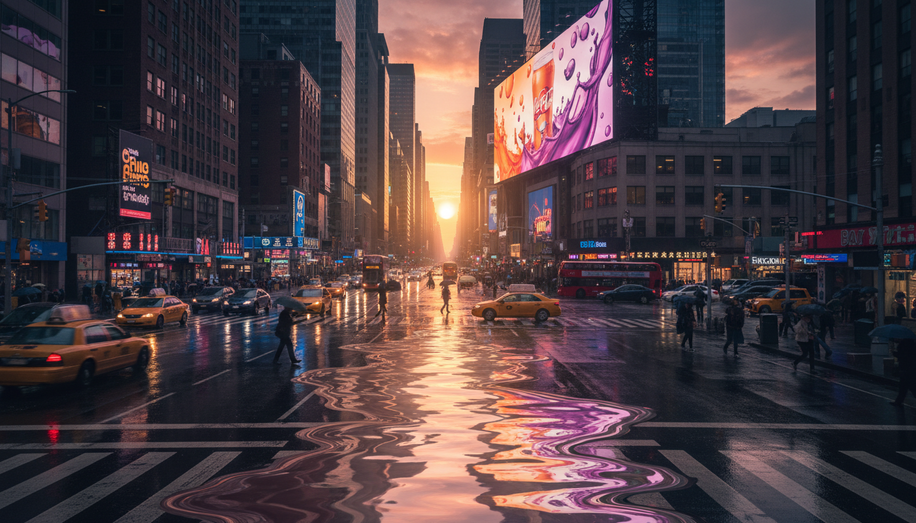

In the bustling heart of a city, where steel skyscrapers pierce the sky and traffic hums relentlessly, a billboard doesn’t just hang— it converses. Imagine a digital display on a rainy afternoon in Tokyo that mirrors passing pedestrians’ umbrellas, their colors splashing across the screen in a symphony of shared motion. This is contextual integration at its finest: out-of-home (OOH) advertising that doesn’t shout over its surroundings but harmonizes with them, turning urban chaos into a canvas for memorable storytelling. By design, such campaigns amplify messages through clever symbiosis with environments, whether gritty streets, storied landmarks, or serene natural vistas, proving that context isn’t mere backdrop—it’s the kingmaker of impact.
The principle hinges on environmental attunement, where ads become extensions of their locale rather than intrusions. In high-traffic intersections, for instance, placements leverage data analytics to sync with pedestrian flows and vehicular rhythms, ensuring visibility without visual pollution. Consider historical landmarks, where sensitivity reigns supreme. A campaign near Rome’s Colosseum might project faint, ethereal gladiatorial silhouettes onto a facade at dusk, using energy-efficient LED projections that fade into the ancient stone’s texture. This respects zoning laws and cultural heritage while forging emotional bonds—viewers don’t see an ad; they witness a dialogue between past and present. Collaboration with local governments becomes essential here, aligning designs with sustainability guidelines to secure approvals and community buy-in.
Urban landscapes offer fertile ground for ingenuity. In New York City’s Times Square, where neon overload risks ad fatigue, brands deploy interactive elements like QR codes or NFC touchpoints embedded in billboards. Passersby scan to unlock augmented reality overlays that transform the ad into a personalized urban adventure, such as a virtual street art mural that interacts with real-time weather data. Digital technologies shine here, enabling real-time content swaps without reprinting— a sustainable pivot that cuts waste while adapting to contextual shifts like rush hour crowds or festivals. Interactive features minimize resource use; touchscreens and motion sensors engage without excess paper, creating lasting impressions through participation rather than passive viewing.
Extending to natural environments reveals even bolder artistry. Brands are pioneering “ecosystem integration,” where OOH melds with wilderness to champion conservation. Picture solar-powered billboards in California’s redwood forests, their frames camouflaged with living moss walls that purify air as they advertise eco-brands. These structures draw renewable energy from the sun, powering displays that dim during wildlife peak hours to avoid disruption. In Australian outback campaigns, ads mimic eucalyptus bark textures using biodegradable polyethylene films and water-based inks, blending seamlessly so motorists feel the message as an organic whisper rather than a corporate yell. Such designs reduce carbon footprints—recyclable vinyl replaces PVC, LEDs slash energy draw by up to 80 percent—while heightening memorability through surprise harmony.
Historical precedents underscore the potency. The Body Shop’s London bus shelters doubled as air-purifying gardens, their green walls filtering pollutants amid smoggy streets, intertwining brand ethos with urban respiration. Patagonia’s “Don’t Buy This Jacket” provocation, echoed in OOH, used minimalist messaging on repurposed materials near trailheads, prompting reflection amid nature’s grandeur. Coca-Cola’s “2nd Lives” initiative repurposed billboards into community hubs post-campaign, their modular frames yielding playgrounds or solar stations in underserved locales. These cases reveal a pattern: contextual mastery boosts engagement. Studies affirm larger, environment-synced ads outperform generics, with bus exteriors in dynamic settings drawing 30 percent more views than static interiors.
Yet integration demands balance. Overreach risks disruption— a flashy LED amid a quiet village green jars like a foghorn at dawn. Smart tech counters this: AI algorithms optimize timing, dimming lights in low-traffic lulls or tailoring visuals to demographics via traffic pattern data. Challenges persist, like maintaining visibility with eco-materials that might fade faster, but innovations like non-toxic inks and solar backups resolve them without compromise. Brands partnering with green vendors ensure compliance, from ISO 14001 certifications tracking waste metrics to carbon offsets neutralizing emissions.
Ultimately, context elevates OOH from ephemeral glance to cultural artifact. In an era of ad saturation, these campaigns—rooted in local sourcing, renewable power, and interactive subtlety—don’t just sell; they belong. They remind us that the most unforgettable ads are those that reflect their world back at us, sharper and more vividly. As urban fabrics evolve, so must advertising: blending innovation with empathy to reign supreme.