
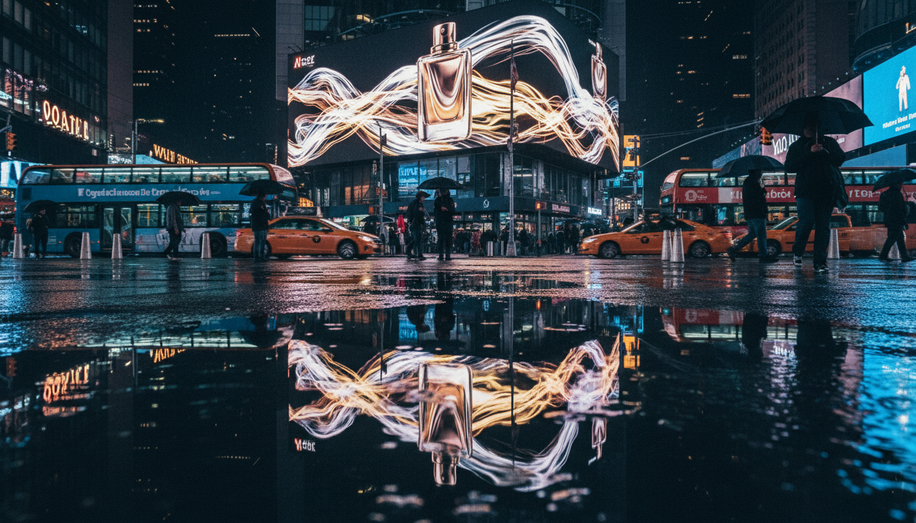

In the neon-drenched veil of night, out-of-home (OOH) advertising transforms from static canvas to dynamic beacon, where strategic illumination elevates mere visibility into an emotional symphony. Gone are the days of brute-force floodlights washing out colors; today’s masters of the glow wield light as a sculptor’s tool, blending physics and psychology to amplify brand narratives after dusk. This artful science ensures OOH campaigns not only pierce the darkness but linger in the psyche, turning billboards into nocturnal landmarks that guide eyes, stir moods, and seal memories.
At its core, effective OOH lighting hinges on uniformity, a principle demanding meticulous fixture placement and beam angle precision to banish hot spots and shadows. Industry experts advocate wide beam angles—typically 90° to 120°—for billboards, allowing light patterns to overlap into a seamless wash that blankets the entire surface. Narrower 30° beams, by contrast, serve as spotlights for distant accents, like a logo’s edge, but risk uneven coverage on larger faces. Top-mounted fixtures minimize glare and light spill, ideal for dark-sky compliant zones, though they demand careful aiming to avoid self-shadowing from billboard frames. Bottom-mounted options counter this but require shielding to curb pollution toward drivers below. The gold standard? A lux meter test yielding a 3:1 maximum-to-minimum ratio—say, 150 lux in corners against 450 lux at center—ensuring readability from any angle or distance.
Color temperature emerges as lighting’s emotional conductor, tuning viewer response with surgical intent. Warmer tones around 3000K evoke comfort and familiarity, perfect for hospitality brands luring evening passersby with a hearth-like glow. Cooler 5000K-6500K variants project sleek modernity, suiting tech or luxury messaging with crisp, invigorating clarity. These choices extend beyond aesthetics: high-contrast designs, where illuminated text pops against subdued backgrounds, boost legibility in high-ambient urban glare, while adaptive dimming sensors calibrate brightness to twilight shifts, conserving energy without sacrificing punch. For textured signage, grazing linear LEDs skim surfaces to dramatize depth, transforming a simple facade into a tactile spectacle that begs closer inspection.
Beam distribution and layout evolve with billboard anatomy. Elongated narrow faces thrive under medium-beam floods spaced 1.5 to 2.6 meters apart, while towering 8-to-12-meter behemoths demand bidirectional top-and-bottom arrays for flawless coverage. Digital OOH adds nuance: self-illuminating screens must throttle output to dodge driver discomfort—overly bright displays cause glare, dim ones fade into oblivion—often integrating auto-adjusting algorithms synced to ambient light. Here, uniformity ratios below 4:1 prevent banding, harmonizing with surrounding streetlights to ease visual fatigue. Neon strips and edge-lit accents inject flair, outlining logos with programmable flickers that pulse brand rhythms, far surpassing outdated internal backlighting.
Yet mastery demands context-aware restraint; over-illumination backfires, bleaching hues, spiking costs, and alienating viewers with glare. In bustling districts, 200-400 lux suffices for punch, tapering in quieter realms to match surroundings. Seasonal tweaks—repositioning for solstice sun angles or ramping intensity for early evenings—prolong campaigns’ vigor through shorter days. Maintenance elevates the craft: adjustable mounts and durable LEDs, like those with symmetrical/asymmetrical spectra, adapt to wind-swayed frames, ensuring 24/7 reliability.
Psychologically, this illumination arsenal crafts mood as potently as copy. Backlit depth conjures dimension, drawing eyes to focal messages; strategic shadows on 3D elements heighten intrigue, guiding gazes like a storyteller’s pause. A luxury watch ad bathed in cool precision light whispers sophistication; a diner sign’s warm halo summons hunger. Data underscores the payoff: evenly lit OOH garners higher recall, with night visibility extending reach by 30-50% in low-light metros. Brands like global chains now commission lighting blueprints alongside creatives, treating light as integral to messaging.
As urban nights lengthen under smart-city mandates, strategic illumination redefines OOH’s frontier. It’s no longer about outshining rivals but orchestrating light to resonate—uniform, evocative, efficient. Designers who decode beam physics, color psychology, and environmental interplay don’t just light signs; they ignite connections, proving that in the art of the glow, darkness is the ultimate canvas.