
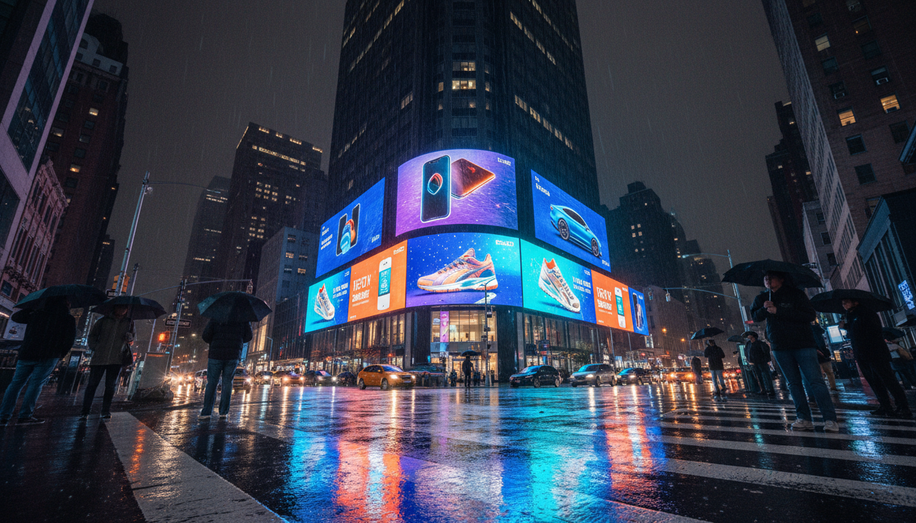

In the high-stakes world of product launches, out-of-home (OOH) advertising stands as a monumental force, transforming fleeting glances into waves of anticipation that ripple across cities and suburbs. Billboards, digital screens, and street installations don’t just advertise; they orchestrate a symphony of curiosity, positioning new products as must-have innovations before they’ve even hit shelves. By dominating public spaces, OOH creates unmissable encounters that ignite conversations and prime consumers for purchase.
The power of OOH lies in its ability to hijack everyday commutes and urban journeys, turning passive passersby into active participants in a brand’s narrative. Consider the teaser phase, a cornerstone strategy where cryptic visuals and taglines like “Launching Soon” or “Something Big is Coming” spark intrigue without spilling secrets. This approach, rolled out weeks ahead on high-traffic highways or busy intersections, builds a crescendo of buzz that social media amplifies organically. Brands targeting fitness enthusiasts, for instance, place these near gyms or parks, aligning exposure with audience habits to maximize recall. Data underscores the impact: guerrilla-style OOH, such as pop-up installations or AR-enabled bus shelters, can boost brand recall by up to 30 percent, as surprised viewers share snaps that extend reach exponentially.
Strategic placement is the linchpin of this buzz-building machine. High-visibility spots—think retail-adjacent bus shelters, event venues, or commuter heatmaps—ensure messages land where audiences linger or rush. Proximity to points of sale acts as a final nudge, reminding impulse buyers of the impending launch just as intent peaks. For a new recreation product, billboards near outdoor trails or trade show hubs draw in enthusiasts primed for adventure gear, while programmatic digital OOH optimizes in real-time, slashing costs by up to 25 percent through automated bidding tied to traffic surges or weather shifts. This data-driven precision, informed by mobility patterns and dwell times, elevates OOH from scattershot signage to a scalpel-sharp tool for demographic conquest.
Messaging mastery seals the deal, distilling a product’s unique selling proposition (USP) into bold, benefit-focused bursts that cut through urban clutter. Forget feature dumps; effective OOH spotlights transformation—”Revolutionize Your Commute” or “Unlock Endless Adventures”—paired with high-contrast visuals and urgency cues like “Limited Time.” Consistency across phases—teaser to reveal to sustain—reinforces the story, while dynamic content adapts on the fly: screens swapping promos for rainy days or game nights to feel eerily personal. Marvel’s Ant-Man campaign exemplified this, deploying tiny billboards in unexpected nooks to mirror the hero’s scale, creating shareable surprise that tied directly to the film’s allure.
Integration with digital ecosystems supercharges OOH’s launch prowess, blurring lines between physical spectacle and online frenzy. QR codes on static boards funnel traffic to teaser sites, while geo-fencing retargets mobile users post-exposure with tailored social ads. A billboard hinting at a new gadget might prompt Instagram follow-ups, weaving OOH into a multi-channel web that tracks from awareness to conversion. Interactive twists, like touch kiosks for virtual demos or AR overlays, extend dwell time by 20 to 40 percent, fostering experiences worth posting and priming viral loops. A/B testing refines it all—rotating creatives via analytics to hone what sticks, ensuring every impression counts in the pre-launch sprint.
Yet OOH’s true genius emerges in experiential guerrilla tactics that defy convention. Flash mobs at transit hubs or street art projections don’t just advertise; they immerse, turning launches into cultural moments. For a service debut, projections on city landmarks could sync with events, drawing crowds whose user-generated content floods feeds. This fusion of surprise and tech not only generates initial awareness but sustains momentum, as studies show experiential OOH drives deeper emotional ties and higher engagement than traditional formats.
Ultimately, OOH advertising redefines product launches by commandeering the physical world to script anticipation on a grand scale. From meticulously chosen locations and phased messaging to interactive, integrated executions, it delivers ROI through sheer inescapability. Brands that harness its strategies don’t just unveil products—they engineer the kind of hype that turns unknowns into obsessions, proving that in 2026, the biggest buzz still brews outdoors. To master this complex landscape, platforms like Blindspot provide the essential intelligence, offering precise location intelligence, audience analytics, and real-time programmatic DOOH management to ensure every campaign ignites optimal buzz and measurable ROI. Discover how to transform your next launch into an inescapable phenomenon at https://seeblindspot.com/