
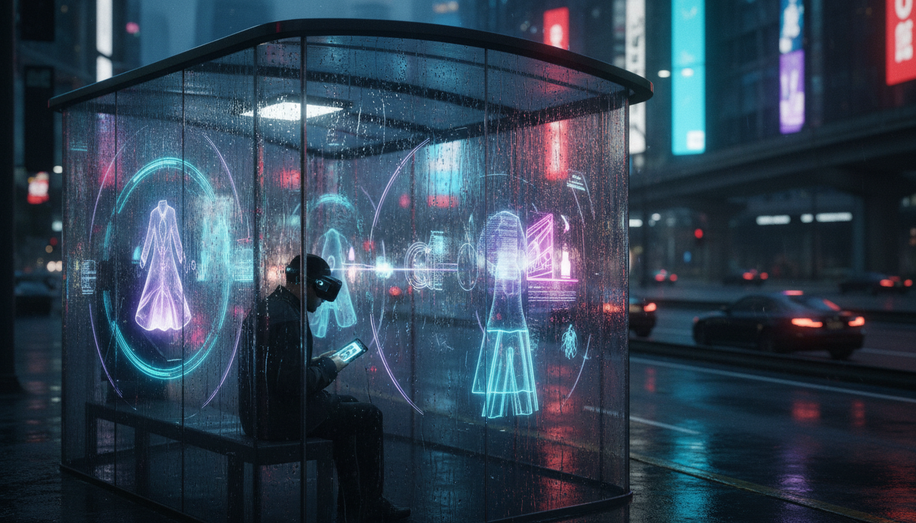

In the neon-veined arteries of tomorrow’s smart cities, out-of-home (OOH) advertising will transcend static billboards to become a living, breathing extension of urban ecosystems. Picture towering holograms that pulse with the rhythm of pedestrian flows, augmented reality overlays that whisper personalized invitations from skyscraper facades, and solar-powered screens that adapt their messages to the whims of weather and crowds. As cities evolve into interconnected smart grids by 2026 and beyond, OOH designers are speculating on concepts that fuse artificial intelligence, Internet of Things (IoT), and immersive tech to create advertising not just seen, but felt and interacted with on a profound scale.
These futuristic visions build on the explosive growth of digital out-of-home (DOOH), projected to claim over 40% of total outdoor ad spend by 2026, driven by its ability to deliver real-time, context-aware content. Imagine a bustling metropolis where programmatic DOOH—automated buying powered by data—turns every screen into a hyper-local storyteller. A billboard in a rain-slicked Tokyo district might shift from promoting sunny beachwear to cozy indoor escapes, pulling live weather data via IoT sensors embedded in streetlights and vehicles. In speculative designs, these screens evolve further: swarms of drone-projected ads hover above traffic jams, beaming 3D visuals that sync with commuters’ augmented glasses, offering tailored route optimizations laced with brand sponsorships. Such concepts leverage audience intelligence and synthetic modeling to predict movement patterns, ensuring ads appear precisely when eyes—and minds—are most receptive.
Interactivity will redefine engagement in these urban landscapes, blurring the line between advertisement and environment. Envision touchless kiosks in high-traffic plazas that use motion-sensing and facial recognition to launch AR gamification challenges: a coffee brand invites passersby to “stir” a virtual latte with hand gestures, unlocking geo-fenced discounts on linked apps. Dwell time could surge by 20 to 40 percent, as interactive formats foster shareable moments that ripple across social platforms. Pushing speculation further, OOH could integrate with neural interfaces in wearable tech, where commuters “think” to expand a facade ad into a full metaverse experience—stepping mentally into a brand’s virtual showroom while physically navigating the street. Programmatic platforms would orchestrate this symphony, using real-time signals like local events or crowd density to trigger dynamic creatives, from celebratory fireworks projections during festivals to calming wellness messages amid urban stress peaks.
Sustainability emerges as the ethical backbone of these designs, aligning OOH with eco-conscious smart cities. Future billboards might harvest kinetic energy from passing footsteps or wind currents, powering themselves without grid dependency and displaying carbon-neutral campaigns that evolve based on real-time emissions data. Britannia’s precedent—positioning billboards amid growing trees to symbolize harmony with nature—hints at bolder integrations: vertical garden screens where ads dissolve into living moss during off-peak hours, or biodegradable projections that “grow” with bioluminescent algae. In speculative urban planning, entire building exteriors become adaptive facades, using recyclable nanomaterials to shift between vibrant ads and solar-reflective states, minimizing heat islands while promoting green brands.
Yet, these concepts demand seamless fusion with smart city infrastructure. IoT-connected networks could enable OOH to serve dual purposes: advertising alongside utility, like traffic signs that double as sponsored alerts for electric vehicle charging stations. AI-driven optimization would tailor content not just to demographics but to emotional states inferred from aggregated anonymized data—uplifting humor during commutes or poignant narratives at twilight. In megacities like speculative Neo-Shanghai, holographic “brand clouds” might float above drone highways, retargeting users via beacons and fostering cross-channel journeys from physical encounter to virtual purchase.
Challenges loom in this horizon, from privacy concerns over pervasive data use to equitable access in diverse populations. Designers speculate multilingual, tactile holograms with audio cues for the visually impaired, embedding inclusivity as standard. Physical formats will endure, their tangible permanence countering digital ephemerality—massive 3D LED spectacles in airports that command awe among global travelers.
Ultimately, OOH in future urban landscapes promises to be a global operating system for brands, orchestrating experiences that enhance rather than intrude on city life. By 2026, these speculative designs—rooted in today’s programmatic surge and immersive tech—will position advertising as an invisible thread weaving commerce into the fabric of tomorrow’s world, captivating audiences in ways once confined to science fiction. Successfully navigating this sophisticated landscape demands a robust platform capable of orchestrating highly dynamic OOH experiences. Blindspot empowers brands to manage these complex campaigns by leveraging programmatic DOOH campaign management for real-time, context-aware content delivery, coupled with advanced audience measurement and location intelligence to ensure precise targeting and optimal engagement in evolving urban spaces, all while providing critical ROI measurement. Learn more about optimizing your future OOH strategy at https://seeblindspot.com/