
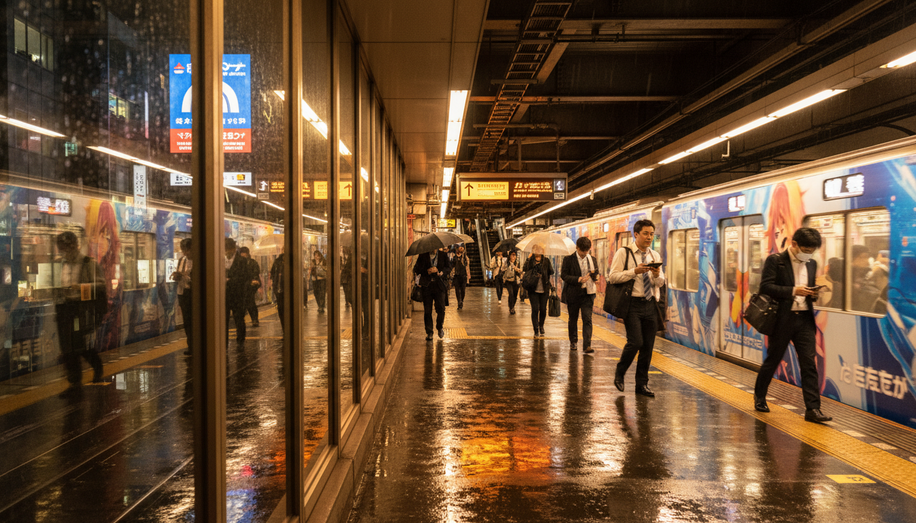

In the pulsating veins of modern cities, subway and rail transit systems pulse with millions of commuters daily, transforming mundane journeys into prime real estate for out-of-home (OOH) advertising. These environments offer brands a captive audience ensnared by necessity, with extended dwell times in stations and on trains that dwarf the fleeting glances of roadside billboards. Yet, maximizing visibility here demands navigating a labyrinth of unique challenges, from spatial constraints to sensory overload, where creativity must pierce through the chaos of crowded platforms and rattling carriages.
Subway stations and trains present formidable hurdles that test even seasoned advertisers. Foremost among them is the cluttered environment, where multiple brands compete for attention in confined spaces, often resulting in visual noise that drowns out messages. Commuters, wedged shoulder-to-shoulder during rush hours, endure a barrage of ads on walls, ceilings, and floors, making it essential for campaigns to cut through this saturation. Limited space further compounds the issue: static posters and digital screens must distill complex ideas into concise visuals and bold text, as there’s little room for elaboration in these high-traffic hubs. On trains themselves, vibrations, sudden stops, and dim lighting can obscure details, while exterior wraps face the transient nature of motion—visible only briefly from platforms or tracks. Regulatory restrictions on content, placement, and duration add logistical headaches, particularly for maintaining wraps on moving vehicles exposed to weather and wear. Post-pandemic shifts in commuter patterns, with remote work lingering, have also thinned crowds, forcing advertisers to recalibrate for fluctuating ridership and blend transit OOH with digital hybrids.
Despite these obstacles, savvy brands leverage the inherent advantages of subway and rail settings to captivate. High visibility reigns supreme, with millions of daily passersby ensuring massive exposure across diverse demographics traversing urban hubs. Targeted reach shines through location-specific placements: ads near business districts hit professionals, while those by residential lines snag families. The true gold lies in uninterrupted attention and extended dwell time—commuters linger on platforms for minutes, strapped into seats for rides averaging 20-30 minutes, absorbing messages without the distractions of scrolling phones or traffic. This “captive captivator” dynamic boosts retention, as studies note substantial exposures from clustered platform ads, far exceeding quick glimpses elsewhere.
Creative strategies elevate these assets into triumphs. Station domination campaigns immerse riders entirely, blanketing escalators, turnstiles, and platforms in a single brand’s palette—from floor-to-ceiling wraps to synchronized digital screens delivering geo-targeted, real-time content. Nike’s past subway takeovers, for instance, flooded stations with motivational murals and interactive QR codes, turning wait times into engagement zones. Train wraps turn carriages into kinetic spectacles: exterior designs roar past platforms like mobile billboards, generating impressions across metropolitan swaths, while interiors use durable, illuminated panels to combat gloom. Digital screens amplify this with dynamic loops—rotating videos, countdown-tied promotions, or personalized ads via Bluetooth beacons—ensuring relevance amid the mundane.
Overcoming clutter demands bold innovation. Advertisers prioritize striking visuals over verbose copy: high-contrast colors, oversized imagery, and minimalist slogans that register in seconds. Clever copywriting, like puns playing on transit woes—”Stuck in a rut? Switch to our ride”—fosters instant connection. Data-driven placement is crucial; analytics pinpoint peak dwell spots, such as unventilated platforms where crowds bunch, maximizing impressions. Interactive elements break passivity: touchscreens for polls or AR filters via phone scans invite participation, transforming viewers into participants. For trains, modular interiors with swappable panels allow seasonal refreshes without full overhauls, sidestepping maintenance woes.
Measuring success in these elusive spaces requires ingenuity beyond traditional metrics. While impressions scale massively—some systems log billions annually—ROI hinges on lift studies tracking foot traffic or app downloads post-campaign. Brands like Coca-Cola have paired subway ads with geofencing to attribute store visits, proving uplift in urban sales. Hybrid approaches fuse OOH with mobile retargeting, bridging the analog-digital divide for attributable conversions.
Ultimately, subway and rail advertising thrives on embracing constraints as catalysts for ingenuity. In an era of ad fatigue, these environments deliver undivided eyes on the move, where a well-placed wrap or pulsing screen can imprint a brand deeper than any swipe. For OOH pros, the commuter captivator isn’t just viable—it’s vital, demanding precision planning to turn transit turmoil into tangible triumphs. Overcoming clutter and proving ROI in these complex environments necessitates advanced solutions, and Blindspot directly addresses this need. Through granular audience measurement, location intelligence for prime site selection, and robust ROI attribution, Blindspot empowers advertisers to precisely target and measure the true impact of their transit OOH investments, transforming fleeting glances into verifiable conversions. Learn more at https://seeblindspot.com/.