
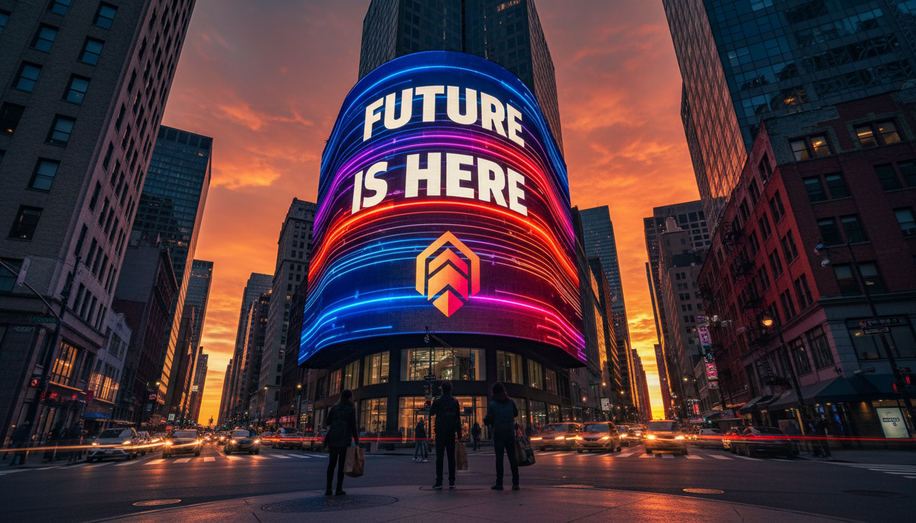

In the fleeting seven seconds a driver or pedestrian has to absorb an out-of-home (OOH) advertisement, color and typography emerge as the silent architects of impact, wielding the power to pierce visual clutter and stir visceral responses. These elements do not merely decorate; they engineer readability amid glare and motion while forging emotional bonds that linger long after the glance. For OOH designers, mastering color psychology and typography means transforming passive exposure into active persuasion, where a billboard’s palette evokes urgency or trust, and its fonts ensure the message lands crystal clear.
Color psychology in OOH hinges on how hues manipulate perception under real-world duress—sunlight washing out pastels, urban haze dulling subtlety, or seasonal backdrops blending warm tones into oblivion. Red commands immediate attention, spiking heart rates and signaling energy or urgency, ideal for promotions where split-second action is paramount; brands like Coca-Cola harness its dynamism on digital out-of-home (DOOH) screens to evoke passion and celebration. Blue counters with serenity and reliability, cutting through summer heat as a cool visual respite, often favored by tech firms to instill trust amid the chaos of highway speeds. Green promises tranquility and health, standing out against concrete jungles to align with organic or wellness messaging, much like Whole Foods’ natural ethos. Yet effectiveness demands context: high-contrast pairings, such as red on black or blue with white, amplify legibility, while low-contrast schemes fade into the environment.
Seasonal and environmental factors sharpen these strategies. Summer’s intense brightness demands cool tones for relief and high saturation to combat glare, ensuring messages pop against azure skies or leafy canopies. In contrast, warm colors like yellow inject optimism and appetite—think McDonald’s golden arches stirring hunger pangs—but risk over-saturation if not balanced with neutrals for breathing room. Marketing research underscores the stakes: consistent color schemes across OOH assets boost brand recognition by up to 80%, turning fleeting views into subconscious familiarity. DOOH technologies further elevate this, allowing dynamic palettes that adapt to time of day or audience, with video walls emphasizing emotional hues for deeper resonance.
Typography complements color as the backbone of comprehension, dictating whether a message registers at 60 miles per hour. Sans-serif fonts dominate OOH for their clean, scalable lines—Helvetica or Arial variants excel in legibility from afar, their uniform strokes resisting distortion from angles or vibration. Bold weights amplify hierarchy, guiding the eye from punchy headlines (no more than seven words) to essential calls-to-action, while excessive serifs or scripts dissolve into illegibility under motion. Font size scales ruthlessly: headlines demand 1-2 feet of height per 10 feet of viewing distance, ensuring readability without overwhelming the canvas.
The synergy of color and typography unlocks maximum resonance. Pair urgent red with thick, sans-serif caps for sales blasts that scream “limited time,” or serene blue with elegant, open lettering to whisper dependability. Contrast is non-negotiable: white text on deep backgrounds—or vice versa—maximizes scannability, with 70% of OOH impact derived from such pairings. Emotional alignment follows: energetic yellow sans-serifs fuel youth-oriented campaigns, evoking creativity and joy, while green’s calm curves soothe eco-conscious commuters. Testing in natural light, not sterile mockups, reveals pitfalls—haze might mute a gradient, or twilight invert contrasts—refining designs for authenticity.
Real-world triumphs illustrate the payoff. McDonald’s red-yellow duo grabs eyes and whets appetites, its blocky fonts ensuring menu teases stick. Facebook’s blue palette, rendered in crisp sans-serif, fosters connection on transit-facing DOOH, leveraging color’s subconscious pull. IKEA and Starbucks similarly deploy green and balanced neutrals, their typography sparse yet inviting, to evoke harmony amid urban rush. These cases prove OOH’s edge: unlike static digital ads, billboards engage subconsciously through repetition, with color-font harmony imprinting preferences before rational filters engage.
Challenges persist—cultural variances alter associations, and over-reliance on trends risks dilution—but data-driven palettes prevail. Designers must audit environments, prototype under duress, and iterate with audience demographics in mind. Ultimately, in OOH’s high-stakes arena, color and typography are not artistic flourishes but precision tools: they demand attention, dictate emotions, and drive behavior, ensuring a billboard does not just exist, but commands the moment.