
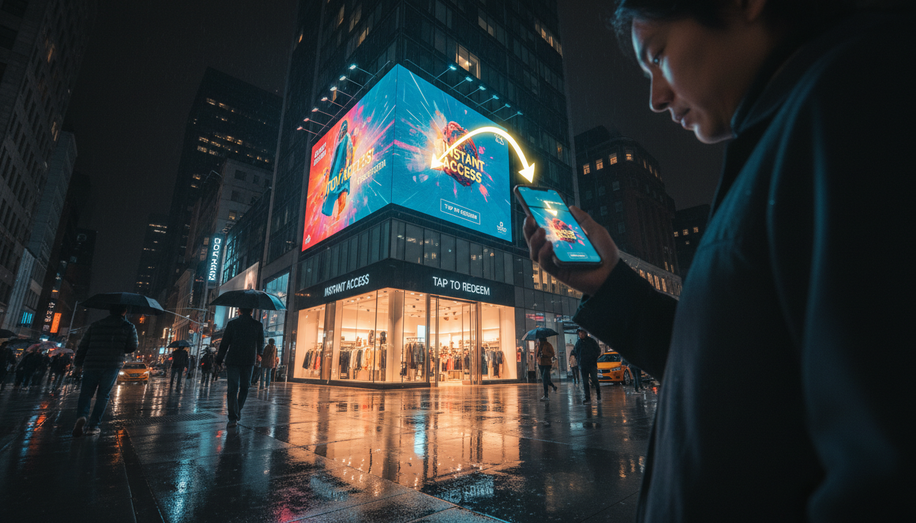

In the evolving landscape of advertising, out-of-home (OOH) media has emerged as a vital cornerstone of retail media networks, seamlessly bridging physical and digital realms to shepherd shoppers from initial awareness to final purchase. Retail media networks, once confined to online banners and sponsored searches, now extend into high-traffic physical spaces through digital OOH (DOOH) screens in malls, storefronts, and transit hubs, creating a unified ecosystem that leverages retailer first-party data for precise targeting. This integration transforms static retail environments into dynamic advertising hubs, where brands can deliver contextually relevant messages that resonate at critical decision-making moments.
The shopper journey—awareness, consideration, and conversion—benefits immensely from OOH’s ability to complement online channels. Upper-funnel OOH exposures on billboards or street furniture build broad awareness, while in-store DOOH networks near aisles deliver hyper-targeted consideration messaging, drawing on real-time data like purchase history or foot traffic patterns. Grocery TV CEO Marlow Nickell emphasizes the unparalleled frequency and contextual relevance of in-store retail media, noting that brands achieve unmatched reach within trusted community environments, unlocking immense untapped potential for activation. As shoppers move closer to the point of purchase, these networks adapt content dynamically—by time of day, location, or audience—fostering impulse decisions and measurable sales lifts both online and offline.
Clear Channel CMO Dan Levi underscores OOH’s evolving role in the broader media mix, highlighting collaborations that measure not just billboard impressions but their incremental business impact alongside digital channels and social influencers. Advanced analytics have elevated OOH beyond traditional upper-funnel tactics, proving its efficacy in driving footfall to brick-and-mortar stores and generating halo effects across omnichannel strategies. For instance, integration of DOOH into omnichannel demand-side platforms (DSPs) allows programmatic buying of curated inventory, making the medium more accessible and transactable for marketers seeking flexible execution. This un-siloing of OOH with online retail media enables sequential messaging: a mobile ad sparks interest, OOH reinforces it en route to the store, and in-store screens seal the conversion.
Retailers, in turn, monetize these networks as sophisticated ecosystems blending digital signage, content strategy, advertising management, and consumer engagement tools. Beyond mere screens, RMNs turn physical spaces into revenue-generating assets, selling ad space to endemic and non-endemic brands while enhancing the shopper experience. In Australia, for example, retail media has ballooned into an $850 million market, projected to hit $3 billion by 2027, fueled by first-party data from shopper interactions that powers targeted ads across in-store screens, radio, websites, apps, and even off-platform DOOH like billboards. Globally, organizations like DPAA are championing this frontier through resources, webinars, and case studies that demonstrate how in-store RMNs transform point-of-purchase advertising within the DOOH ecosystem.
The synergy shines in omnichannel campaigns, where OOH extends digital narratives into the physical world at peak attention moments. Brands leverage retailer data for smarter targeting, connecting ad exposure to tangible outcomes like increased in-store activity, app engagement, and sales. Momentara’s platform exemplifies this by ensuring DOOH compatibility with RMNs, enabling dynamic creative versioning that aligns offline media with in-store digital marketing for cohesive storytelling. As retail environments evolve from static aisles to data-driven channels, OOH’s integration pushes budgets toward measurable proximity to purchase, outpacing impressions-alone metrics.
Challenges persist, including the need for media buyers to fully embrace retailer insights and seamless tech integrations. Yet, as programmatic DOOH adoption grows and measurement frameworks mature, OOH solidifies its position as indispensable. Forward-thinking brands are already reaping rewards: consistent messaging across CTV, mobile, social, and OOH bridges online exposure with real-world action, amplifying ROI throughout the shopper journey.
Ultimately, OOH’s strategic fusion with retail media networks redefines advertising efficiency, guiding consumers fluidly across touchpoints. By harnessing the power of physical presence and digital precision, these networks not only drive conversions but also fortify brand loyalty in an increasingly hybrid retail world. To effectively leverage this synergy, platforms like Blindspot empower brands with programmatic DOOH campaign management and granular ROI measurement, ensuring seamless integration and tangible business impact within retail media networks. This enables marketers to optimize every touchpoint from awareness to conversion, precisely tracking performance across physical and digital realms. Discover how at https://seeblindspot.com/.