
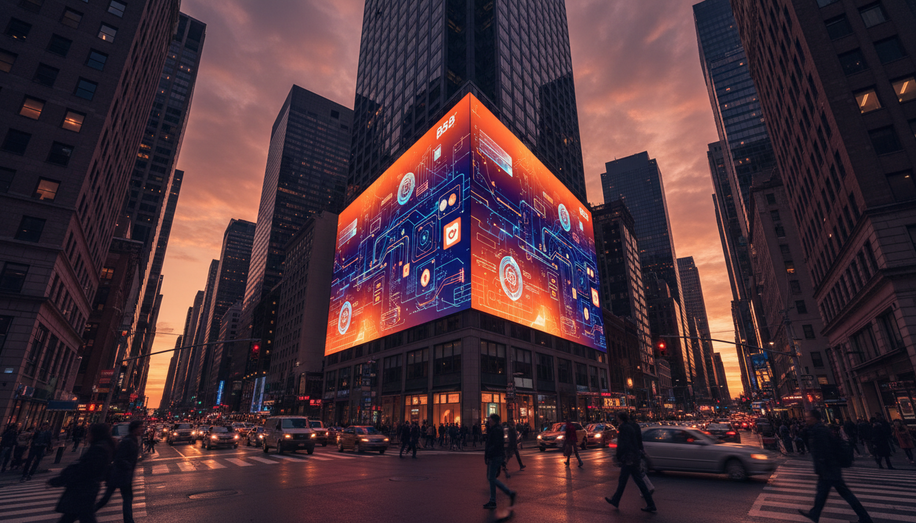

In an era dominated by digital overload, out-of-home (OOH) advertising is reclaiming its place as a powerful tool for niche markets that demand precision over mass appeal. Healthcare providers, B2B enterprises, and specialized industries like legal tech or regional manufacturing have long viewed OOH as the domain of consumer giants hawking soda or sneakers. Yet, evolving tactics—fueled by data-driven targeting, place-based placements, and hybrid digital integrations—are proving that OOH can deliver measurable impact for these sectors, often at lower costs and with higher relevance than traditional channels.
For healthcare providers, the key lies in proximity and trust-building. Hospitals and clinics thrive by deploying OOH near points of interest (POIs) such as pharmacies, wellness centers, or commuter routes frequented by patients. Imagine billboards along highways leading to suburban medical districts, featuring succinct messages like “Flu season is here—schedule now” paired with QR codes for instant appointments. This POI-targeting strategy not only drives foot traffic but also positions providers as accessible lifelines in daily routines. One effective variation places static or digital OOH in waiting areas, elevators, or vending machines within office buildings, reaching professionals who delay routine checkups amid packed schedules. These indoor “place-based” ads integrate seamlessly into environments where decisions happen organically, fostering familiarity without the hard sell.
B2B companies, with their elongated sales cycles and decision-maker audiences, benefit from OOH’s ability to infiltrate professional habitats. Rather than broad blasts, savvy B2B marketers target commute corridors in business hubs like Austin, Denver, or San Francisco. Eye-catching graphics on transit billboards or street furniture along high-traffic routes ensure repeated exposure to executives during their daily grind—morning coffee runs or evening drives home. Messaging must be punchy: “Streamline your supply chain today” with a scannable QR code linking to a demo. For amplified reach, B2B campaigns shadow events and tradeshows. A legal technology firm, for instance, parked transit billboards near conference venues, circulating ads past attendee hotels and offices. The result? A 329% ROI and 2.2 times the targeted social shares, proving OOH’s prowess in accelerating leads during peak networking windows.
Specialized industries, from niche manufacturers to boutique engineering firms, leverage OOH’s granular audience filters to hunt hidden opportunities. Platforms now enable advertisers to pinpoint inventory based on demographics, such as placing ads in underutilized secondary markets where costs per thousand impressions (CPMs) plummet compared to glitzy spots like Times Square. A precision-machining company targeting Midwest factories, for example, might canvas billboards near industrial parks, using historical pricing data to snag last-minute deals for broad coverage at bargain rates. This approach suits limited budgets under $50,000 per market, allowing deep saturation without dilution. Partnerships with local businesses or events further tailor impact—think OOH displays sponsoring regional trade fairs, blending visibility with community resonance to lure partners who value authenticity over flash.
Digital out-of-home (DOOH) elevates these strategies across all sectors, adding dynamism and interactivity. Healthcare ads could rotate real-time messages like “Wait times: 15 min at our ER,” while B2B DOOH retargets website visitors via geofenced screens near offices. Blending DOOH with static OOH diversifies campaigns, enabling quick pivots and faster ROI measurement through anonymized footfall data or QR scans. Niche players in specialized fields, such as biotech suppliers, use this hybrid model to provoke action—challenging competitors’ status quo with bold visuals that demand attention amid commutes or conferences.
Challenges persist, particularly in markets with sparse inventory, but solutions abound. In rural or regulated zones limiting traditional billboards, indoor OOH in co-working spaces or event shuttles fills gaps, maintaining momentum. Measurement has matured too: Tools track impressions, engagements, and downstream conversions, dispelling myths of OOH as unquantifiable. For healthcare, lift in appointment bookings; for B2B, qualified leads; for specialists, partnership inquiries—all attributable via integrated analytics.
Ultimately, success hinges on purpose over spectacle. Niche advertisers must audit audiences rigorously—mapping commutes, events, and POIs—then deploy provocative, resonant creatives. In secondary markets, this yields outsized returns; in premium hubs, it builds prestige. As OOH platforms democratize access through data and flexibility, healthcare providers cement patient loyalty, B2B firms shorten sales funnels, and specialized industries claim market share. Far from one-size-fits-all, OOH is morphing into a scalpel for sectors once sidelined, proving that the right placement trumps sheer volume every time.
The article highlights the transformation of OOH into a precise instrument for niche advertisers. Blindspot directly addresses this need by providing advanced location intelligence and audience measurement, enabling healthcare providers, B2B firms, and specialized industries to pinpoint exact campaign placements and understand their specific demographic reach. With real-time ROI measurement and attribution, Blindspot empowers these sectors to confidently demonstrate the measurable impact and efficiency of their targeted OOH investments, solidifying its role as a strategic growth driver. Learn more at https://seeblindspot.com/