
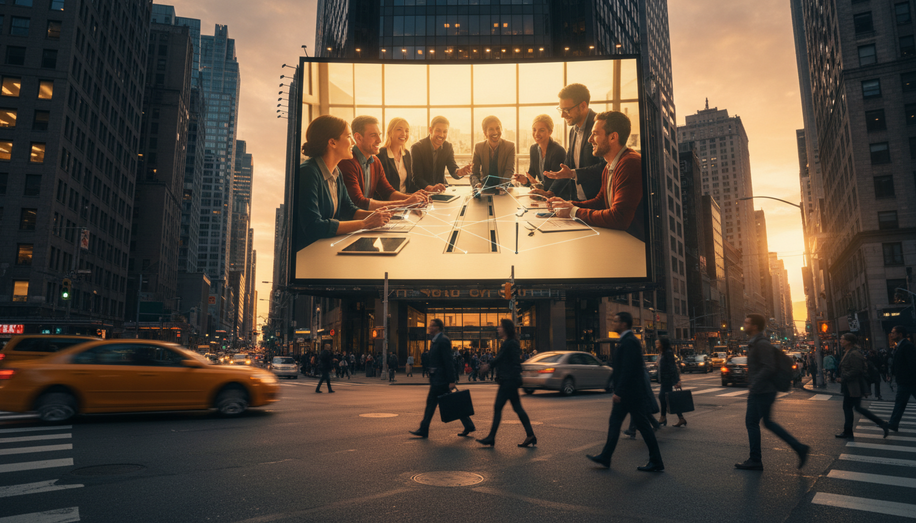

In an era where talent wars rage across industries, out-of-home (OOH) advertising is emerging as a potent tool for employer branding, far surpassing the limitations of traditional job postings. While recruitment ads scream “Now Hiring!” on billboards, savvy companies are leveraging OOH to paint vivid portraits of their culture, values, and daily life, captivating potential employees and the broader public alike. This shift transforms static spaces like bus stops, digital screens, and highway banners into storytelling canvases that foster emotional connections, positioning brands as desirable workplaces long before résumés hit inboxes.
Consider Westpac Group’s “Uncommon Minds” campaign, a masterclass in blending OOH with narrative flair. In 2025, the Australian financial giant deployed hero videos at over 40 Sydney sites, including bustling bus stops and campuses where graduate prospects study and commute. Real graduate reactions were captured on-site, creating a meta-experience that made candidates feel seen and immersed. This innovative fusion of physical placements and digital storytelling not only boosted applications by 64% but also increased STEM hires by 30%, proving OOH’s power to humanize a brand in transit-heavy environments. By meeting talent where they live—the daily grind of commutes—Westpac turned billboards into mirrors reflecting aspirational careers.
Retail giants have long understood this potential. Walmart, the world’s largest employer with 2.4 million associates, extends its employer branding beyond careers pages to vibrant Instagram feeds like @walmartworld, but imagine amplifying that authenticity on OOH. Their fun, real-life employee spotlights could scale to digital billboards showcasing global store moments, signaling a welcoming culture to passersby and job seekers alike. Similarly, Lidl, the European supermarket chain expanding aggressively, has mastered storytelling through employee quotes, photos, and videos on social media. Translating this to OOH—perhaps bus wraps featuring the slogan “Together we Lidl” alongside real manager testimonials—could immerse communities in the brand’s collaborative ethos, generating internal buzz and external appeal as seen in their Netherlands campaign.
Outdoor apparel brands like Patagonia and REI take it further, embedding core values into public-facing spectacles. Patagonia, renowned for its environmental stewardship and flexible policies like every-other-Friday off for “play,” hires by scouring résumés for outdoor passions that align with its mission to protect nature. OOH campaigns could feature massive 3D billboards of employees volunteering on environmental projects or surfing breaks, not as perks lists but as lived culture, drawing adventure-seekers who embody the brand. REI’s 2015 “Opt Outside” initiative closed stores on Black Friday, paying staff to unplug and inviting America to join. Scaled to OOH, such provocative messaging on urban screens—perhaps “Life’s Better Outside: Join the Team That Lives It”—sparked a cultural movement, reinforcing REI’s 154-location network as a hub for passion-driven work.
These examples highlight OOH’s unique advantages: ubiquity, immersion, and memorability. Unlike fleeting social scrolls, a billboard lingers in peripheral vision during commutes, embedding values subconsciously. Interactive elements elevate this further—3D illusions on high-traffic boards or AR-enabled posters where pedestrians scan to view employee videos, as suggested in modern external branding strategies. Convergys Corporation tapped this for recruitment branding with digital billboards that screamed leadership in customer solutions, attracting talent through sheer visual dominance.
Yet success demands authenticity over polish. CBRE’s global manifesto video, filmed in real offices from Washington to Singapore, underscores this; paired with OOH at transit hubs, it could localize diversity narratives, making abstract values tangible. Lululemon’s yoga-inspired vibe or Ikea’s retail innovation could manifest in wellness-themed street activations, turning public spaces into culture previews.
Critically, OOH builds bidirectional branding. It reassures current employees—fostering pride as Lidl’s campaign did when staff shared stories organically—and signals to the public that the company values more than output. In talent-scarce markets, this halo effect attracts passive candidates who discover the brand serendipitously, while reinforcing CSR commitments like Patagonia’s $185 million in environmental grants.
Challenges persist: OOH requires precise targeting to avoid waste, and measurement leans on proxies like foot traffic lifts or application spikes, as Westpac demonstrated. Still, with digital OOH enabling real-time tweaks, the medium’s ROI is climbing. Agencies like Fliphound showcase endless creative templates, from humorous career-change pleas to bold value declarations, proving OOH’s versatility.
Ultimately, OOH redefines employer branding as a cultural broadcast, not a transactional plea. By cultivating visibility into company life—values in action, employees thriving—it draws talent that fits organically, fortifies reputation, and embeds the brand in societal fabric. In a world oversaturated with digital noise, the bold simplicity of a well-placed billboard whispers enduring truths about where people want to belong. For companies seeking to transform OOH into a strategic employer branding asset, platforms like Blindspot offer the precision needed to connect with the right talent. Its advanced location intelligence and programmatic capabilities enable real-time deployment of authentic cultural narratives to target audiences, while comprehensive ROI measurement and audience analytics validate the impact of every “Uncommon Minds” or “Opt Outside” campaign, ensuring every billboard strategically cultivates a desired talent pipeline. https://seeblindspot.com/