
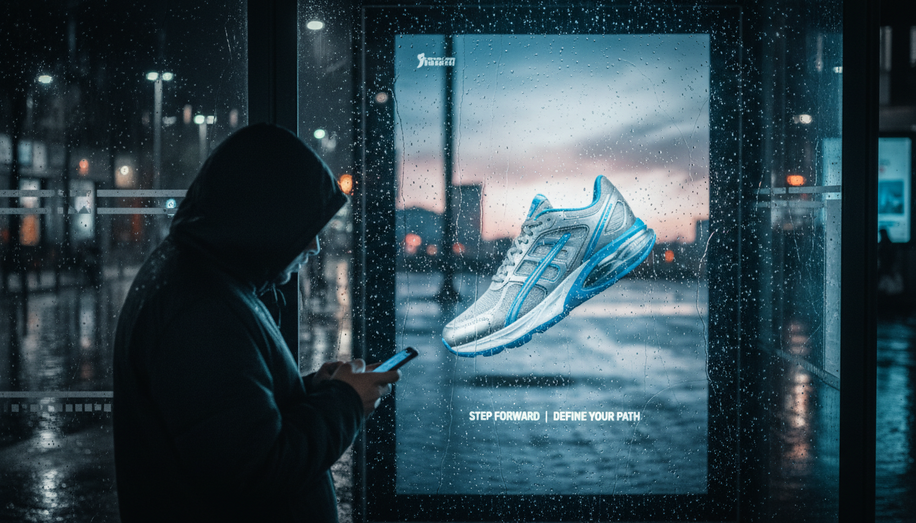

In the fast-evolving landscape of out-of-home (OOH) advertising, traditional billboards once stood as static monoliths, broadcasting messages to passersby with little room for adaptation. Today, programmatic digital out-of-home (DOOH) networks are rewriting that script, enabling advertisers to deploy A/B testing principles in real time—swapping creatives, messages, and calls-to-action on the fly to pinpoint what truly drives engagement. This shift transforms OOH from a blunt instrument into a precision tool, where data flows as dynamically as the traffic below the screens.
The core of A/B testing in OOH mirrors digital tactics but adapts to the physical world’s unpredictability. Advertisers create two variants—say, variant A with a bold blue headline urging “Shop Now” and variant B featuring a red one saying “Discover Today”—and expose them to comparable audiences in similar locations. Programmatic DOOH platforms make this seamless, rotating content across screens based on algorithms that target demographics via geolocation or time of day. The key is randomization: show variant A to one segment long enough to gather robust data, then pivot to variant B in matching spots, ensuring apples-to-apples comparisons.
Measurement, long a pain point in OOH, now hinges on sophisticated KPIs like ad response rate, which gauges actions taken post-exposure divided by impressions. Tools such as mobile geofencing track devices near screens, linking exposure to lifts in foot traffic, website visits, or sales—especially potent when ads sit near points of purchase, where 68% of consumers report buying after seeing a billboard with a clear digital call-to-action. Web analytics capture surges in Google searches or branded traffic, while brand lift metrics assess recall and awareness through post-exposure surveys. Frequency and reach data, pulled from impression logs, ensure neither variant overshadows the other.
Consider a real-world rollout: a national retailer tests messaging on DOOH screens in urban hubs. Variant A emphasizes price—”50% Off This Week”—while B highlights emotion—”Feel the Comfort.” Over two weeks, geolocation data reveals variant B spikes in-store visits by 12%, with response rates climbing due to its memorable imagery. Programmatic capabilities allow instant scaling: the winning creative propagates across the network, while the loser informs future iterations. This isn’t guesswork; statistical analysis confirms significance, avoiding pitfalls like those exposed in digital A/B tests where platform delivery biases skew results.
Dynamic creative optimization elevates this further, evolving from basic A/B splits into multi-variant experiments. Platforms now test not just headlines but full suites—imagery, colors, CTAs—modeling outcomes via machine learning. Roll-outs happen region by region, pulsing OOH presence against control weeks to isolate incremental lift, feeding econometric models for ROI confidence. For multi-channel brands, integrating OOH data into broader analytics resolves past gaps in audience measurement, proving its role alongside digital walled gardens like social media.
Challenges persist. OOH’s scale demands vast impression volumes for statistical power, and external factors—weather, events, timing—can confound results. Ad response hinges on clear CTAs tying physical exposure to digital actions, like QR codes or vanity URLs. Yet programmatic DOOH mitigates this with real-time swaps: underperformers yield to winners mid-campaign, optimizing budgets on the spot.
Advertisers embracing this see tangible gains. Response rates improve through iterative refinement—comparing formats like static versus video, or billboards against bus shelters—while A/B insights reveal audience quirks, such as peak responsiveness during evening commutes. Alternatives like virtual simulations test creatives online before live deployment, de-risking spends.
Ultimately, A/B testing in the wild harnesses DOOH’s programmability to make OOH as agile as online channels. By monitoring KPIs rigorously and iterating relentlessly, brands don’t just reach audiences—they convert them, turning every screen into a live laboratory for growth. This data-driven evolution cements OOH’s resurgence, proving that in advertising’s great outdoors, adaptability is the ultimate billboard.