
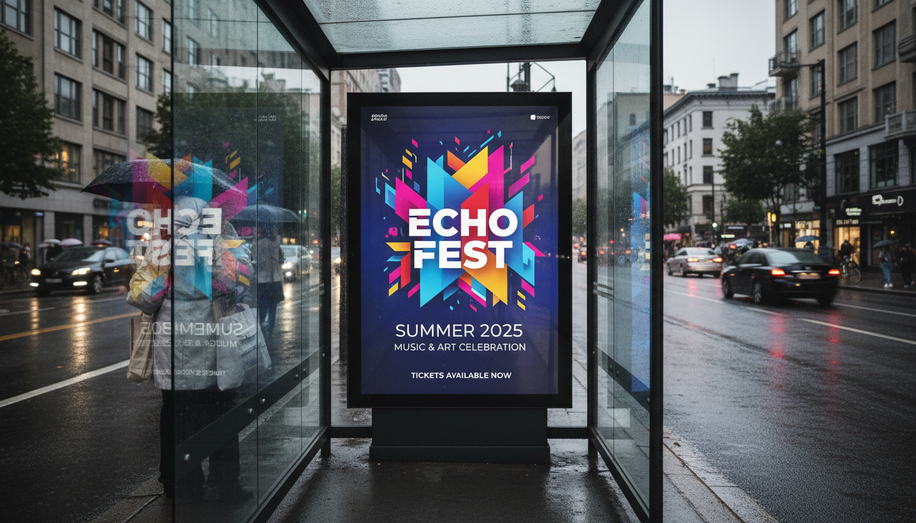

In the pulsating heart of a city, where commuters rush past towering billboards and festival-goers weave through streets lined with vibrant posters, out-of-home (OOH) advertising ignites the spark for live events. From hyper-local street posters hyping neighborhood concerts to massive digital displays dominating festival precincts, OOH proves indispensable for driving ticket sales, swelling attendance, and crafting an electric buzz around concerts, festivals, and exhibitions. Unlike fleeting digital ads that users can swipe away, OOH commands unavoidable attention in public spaces, reaching thousands daily with messages that linger in the mind.
Strategic placement forms the cornerstone of OOH’s power for event promotion. Billboards positioned along high-traffic commuter routes or near event venues capture eyes at peak moments, turning everyday journeys into opportunities for discovery. For a major music festival, ads on busy highways build early awareness among drivers planning ahead, while those proximate to the site snag last-minute attendees. Traffic pattern analysis refines this further: placing posters in shopping districts or public squares ensures relevance, as seen in campaigns where mobile billboards prowled neighborhoods during peak hours, adapting in real-time to crowd flows and boosting exposure exponentially. A national study underscores this, revealing that 71% of drivers notice roadside billboards, with 37% glancing each pass, fostering repeated impressions that cement event details.
Digital innovation elevates OOH from static signage to interactive gateways. QR codes emblazoned on posters and billboards link passersby instantly to ticket portals, bridging physical encounters with digital conversions and spurring immediate action. Dynamic digital billboards take this further, tailoring content by time of day—morning commutes flash lineup teasers for concerts, evenings pulse with festival vibes—or even weather, ensuring relevance that digital screens alone can’t match. Event-based targeting shines here: during a sports game or exhibition, screens pivot to promote nearby happenings, capitalizing on gathered crowds. Nearly 80% of consumers report engaging with OOH ads in recent months, a testament to their role in prompting real-world responses like ticket purchases.
Crafting messages that resonate amplifies OOH’s pull. Concise, bold visuals adhere to the five-second rule, delivering key details—headliners for concerts, star exhibits for shows—in an instant, leveraging images over text for superior recall. Tailor to demographics: rock festival posters evoke raw energy with gritty fonts and artist shots, while exhibitions highlight intellectual hooks like keynote innovators. Emotional triggers—joy from a festival’s communal spirit, nostalgia from a reunion concert—forge deeper connections, enhanced by brand consistency across platforms, where the same hashtag or logo ties OOH to social media, sparking shares and viral buzz.
Timing sequences the assault for maximum impact. Campaigns launch months out with broad awareness via large-format billboards, ramping to aggressive pushes weeks before via street posters and mobile units, capturing early birds and procrastinators alike. This phased strategy mirrors successful cases: a small business saw 20% foot traffic surge from targeted bus shelter ads for a local event, while national brands parlayed citywide billboards into substantial sales lifts for major festivals. Wild postings—layers of striking posters in urban hotspots—add guerrilla flair, perfect for exhibitions needing underground hype, outperforming digital in memorability amid ad-blocker fatigue.
OOH’s measurability has evolved, revolutionizing its appeal. Analytics now track footfall lifts, ticket redemptions via QR scans, and social lifts from integrated hashtags, proving ROI where once it was intuited. For exhibitions, transit wraps on buses shuttling visitors amplify on-site buzz; concerts thrive on venue-proximal digital towers pulsing with live crowd footage. Hyper-local tactics shine for community festivals: street furniture ads in target zip codes drive neighborhood turnout, while scalable digital networks blanket metros for blockbuster events.
Yet OOH’s true alchemy lies in its tangibility. In an era of screen saturation, these ads invade the physical world, unavoidable and immersive, building anticipation that digital can’t replicate. A concert billboard glimpsed daily erodes resistance until tickets sell out; festival posters clustering downtown create FOMO that social feeds amplify. Exhibitions gain credibility from grand-scale displays signaling prestige. Promoters blending OOH with cross-channel efforts—matching visuals online—reap compounded gains, as consistent messaging across realms strengthens recall and trust.
Ultimately, OOH transforms event promotion from whisper to roar. By harnessing location savvy, tech fusion, emotive storytelling, and precise timing, it not only fills seats but elevates events into cultural musts. As live experiences rebound post-pandemic, OOH stands ready, a proven powerhouse turning passersby into patrons.