
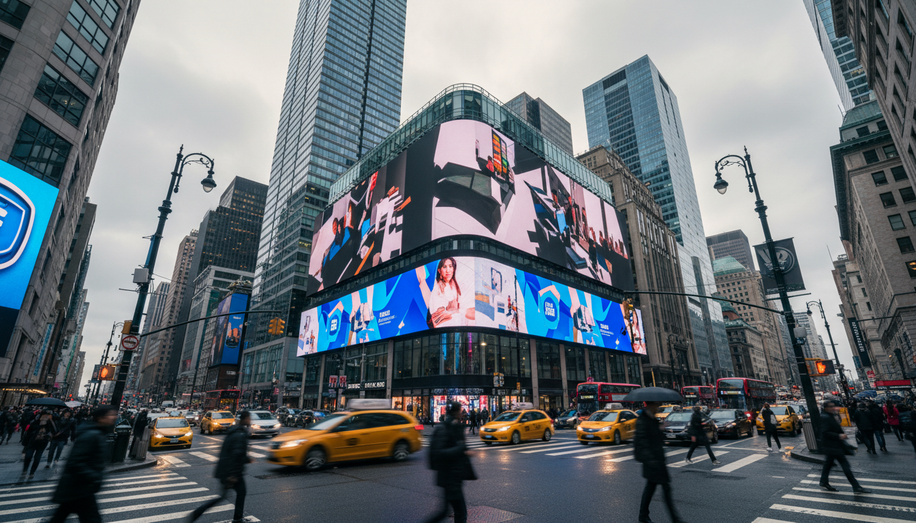

In the fleeting world of out-of-home (OOH) advertising, where a driver’s glance or a pedestrian’s stride allows mere seconds for impact, storytelling emerges as a transformative force. Brands that master this craft transcend static messages, weaving narratives that linger in the mind long after the billboard fades from view. By harnessing sequential placements, striking visuals, and emotional hooks, OOH campaigns can unfold deeper brand stories, turning passive viewers into engaged advocates.
The challenge of OOH lies in its constraints: no sound, no replay button, and audiences in constant motion. Yet humans are wired for stories, a trait rooted in our evolutionary history from cave paintings to epic films. Effective OOH storytelling distills complex brand journeys into instant emotional connections, evoking happiness, nostalgia, or curiosity to drive recall and loyalty. Research shows people process images 60,000 times faster than text, making visuals the cornerstone of this medium. A single, bold image—a visual metaphor—can convey volumes, simplifying ideas into something authentic and relatable amid a sea of competing ads.
Consider McDonald’s minimalist billboards, where the golden arches bend into directional signs, silently narrating convenience and invitation without a single word. This technique relies on instant recognition, ensuring the brand story imprints in 3-5 seconds. Similarly, Coca-Cola’s “Share a Coke” campaign personalized names on billboards, forging personal bonds that sparked sharing and visits to stores. These examples illustrate how emotional hooks—humor, surprise, or empathy—differentiate brands, encouraging social buzz and word-of-mouth.
Sequential placements amplify this power, transforming isolated ads into serialized tales. Imagine a commuter route lined with billboards that build a narrative arc: the first introduces a problem, the second heightens tension with a visual cliffhanger, and the third delivers resolution tied to the brand. Spotify’s “Wrapped” campaign mastered this by displaying real user playlists across cityscapes, evolving daily to reflect listener data. Viewers pieced together their own stories, scanning QR codes for personalization, which boosted app engagement. Such sequences leverage the audience’s journey, mirroring storytelling’s classic structure of setup, conflict, and payoff, even as cars speed by.
Visual impact demands simplicity and clarity. Overloaded designs fail; instead, brands prioritize one key takeaway, bold typography, and high-contrast imagery that tells the story at a glance. Location-specific narratives enhance resonance—ads near landmarks might riff on local lore, tying the brand to cultural fabric. Humor injects memorability: a unexpected twist, like a billboard “melting” in summer heat to promote ice cream, surprises and sticks. Digital OOH (DOOH) elevates this further, enabling real-time evolution. Billboards that change with weather, traffic, or events create dynamic sagas, fostering anticipation as audiences anticipate the next chapter.
To craft these narratives, start with audience insight. Understand pain points, desires, and values to build relatable arcs—adventure for thrill-seekers, serenity for nature lovers. Define a core message, then layer powerful imagery that evokes emotion. Keep it concise: no dense copy, just visuals and a punchy call-to-action (CTA) like a hashtag or URL. Test for glanceability—does the story land in seconds? Implementation involves data-driven personalization, as seen in campaigns using geo-targeted DOOH to humanize brands and inspire action.
Challenges persist: urban clutter demands bolder creativity, and measurement requires tracking beyond impressions, like footfall lifts or social mentions. Yet successes abound. Under Canvas glamping brand’s “Great American Road Trip” narrative spanned billboards, social tie-ins, and events, yielding 30% revenue growth by immersing guests in exploration tales. Spotify and McDonald’s prove sequential and visual storytelling not only captures attention but builds identity, turning OOH into a canvas for lasting brand legacies.
Ultimately, storytelling in OOH redefines advertising’s potential. It shifts from interruption to invitation, creating narratives that resonate beyond the glance. Brands embracing this—through metaphor, sequence, and emotion—forge deeper connections, proving that even in motion, a compelling story stops the world.