
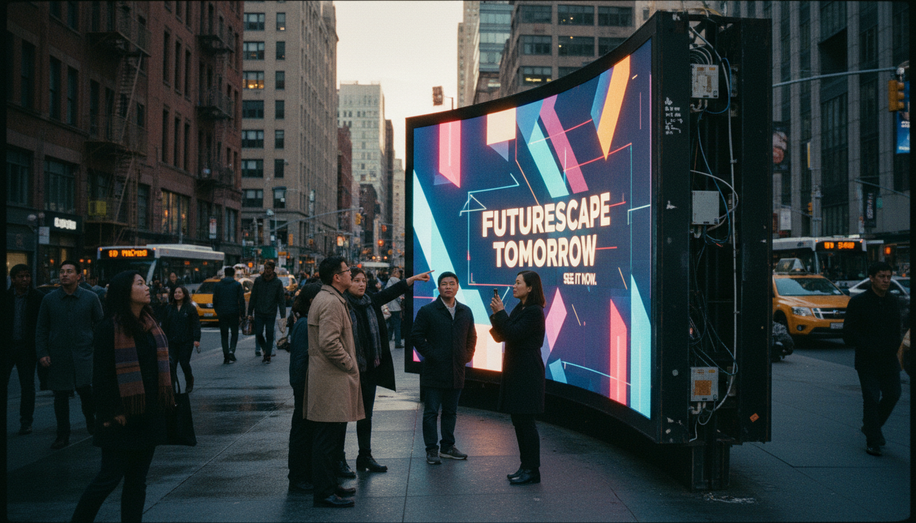

In the throbbing heart of cities like New York, London, or Tokyo, where sidewalks pulse with hurried footsteps and plazas serve as impromptu gathering spots, out-of-home (OOH) advertising finds its ultimate proving ground. Pedestrian zones and high-footfall areas—think bustling shopping districts, transit hubs, and vibrant public squares—offer advertisers unparalleled opportunities to capture attention amid the urban frenzy. Unlike the fleeting glimpses from highway drivers, these environments deliver extended dwell time and intimate proximity, turning casual passersby into engaged prospects.
The magic lies in the slower rhythms of city life. Traffic congestion and frequent stops at crosswalks create natural pauses, allowing pedestrians and even slowed vehicle occupants to absorb messages that might blur past on interstates. Digital billboards, with their vibrant, rotating displays, thrive here, capitalizing on this “dwell time” to boost message retention. A study highlighted by industry reports notes that 43% of adults noticing an OOH ad visit a store within 30 minutes, a conversion rate amplified in dense urban settings where proximity to retail is immediate. In pedestrian-heavy zones, this effect intensifies: people waiting at lights or lingering in plazas have seconds—not milliseconds—to scan surroundings, making bold, hyper-local visuals irresistible.
Pedestrian traffic, often overlooked in favor of vehicular metrics, is the real powerhouse. Urban areas teem with walkers, cyclists, and transit riders, expanding reach beyond cars to a diverse, on-the-move audience. Pylons, pillars, and LED screens positioned at eye level on sidewalks or near stops—typically 1.4 by 3 meters and multi-sided—snag attention from all angles. These formats excel for pedestrians, who can linger long enough to decode QR codes, phone numbers, or interactive calls-to-action like “Scan for exclusive deals at the store ahead.” In contrast to high-speed roads demanding ultra-concise slogans, walkable zones support richer storytelling: promotions for nearby events, live music alerts, or directional cues such as “Coffee break? Stop 50 meters ahead.”
Strategic placement is non-negotiable. High-footfall hotspots—intersections, entertainment districts, parks, and transport nodes—maximize impressions through sheer volume. Assess foot traffic data alongside peak hours; morning rushes into business districts or evening plaza crowds yield repeated exposures, embedding brands into daily routines. This repetition fosters familiarity and trust, as commuters and locals encounter the same vivid OOH creative multiple times, strengthening recall without extra spend. Near shopping centers or cultural venues, OOH doesn’t just advertise—it contextualizes, linking ads to immediate actions like store visits or event attendance.
Yet, urban density demands tailored creativity. Pedestrians glance briefly while navigating crowds, so signage must prioritize instant readability: high-contrast colors, large fonts legible from 10-20 meters, and minimal text that pops against cluttered backdrops. Digital out-of-home (DOOH) elevates this with real-time adaptability—software syncing content to traffic flows or weather, ensuring relevance in plazas where audiences might dwell for minutes. Hyper-local targeting shines: a billboard in a pedestrian overpass or high street can promote the café downstairs or a flash sale blocks away, driving footfall spikes that highways can’t match. Interactive elements, once gimmicks, now convert: QR scans for deals or augmented reality tie-ins turn passive views into active engagements.
Challenges persist in these prime spots. Premium locations command higher costs, but ROI justifies it through superior engagement—slower paces allow dynamic content like video loops or animations that fast traffic renders ineffective. Regulations add hurdles: zoning laws in pedestrian zones often cap sizes or illumination to preserve aesthetics, while clutter from competing signs risks ad fatigue. Savvy planners counter this with data-driven site selection, prioritizing clear sightlines and elevation for pylons overlooking crowds.
Vehicle-pedestrian interplay further amplifies impact. Downtown intersections with stop-and-go flow expose ads to both groups: drivers idling at lights get quick hits, while walkers circle for fuller views. Bridges, tunnels, or metro-adjacent spots blend these audiences, ideal for campaigns blending brand awareness with tactical CTAs. In pedestrianized streets, where cars yield to foot traffic, OOH becomes immersive—large-format boards or street furniture weaving into the environment, boosting visibility by 20-30% over isolated highway placements, per traffic pattern analyses.
Ultimately, success in these zones hinges on matching design to behavior. Bold brevity for fleeting scans, detailed interactivity for lingerers, and always, unmissable relevance. As cities densify and pedestrian-friendly redesigns proliferate—closing streets to cars, expanding plazas—OOH’s urban edge sharpens. Advertisers who master these dynamics don’t just reach crowds; they ignite impulses, converting the city’s kinetic energy into measurable action. In pedestrian zones and high-footfall havens, OOH isn’t merely visible—it’s visceral, proving that in the slow lane of urban life, impact accelerates..