
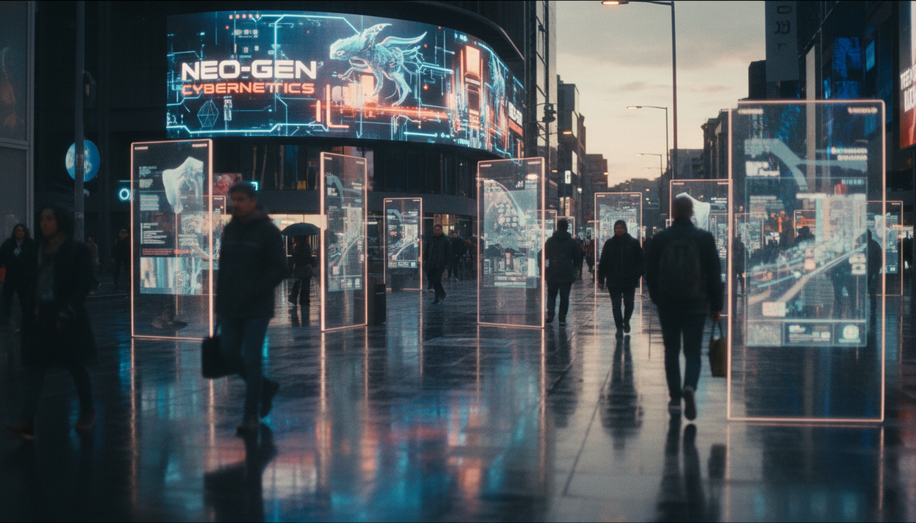

In the heart of bustling city squares and vibrant shopping districts, a shimmering holographic tiger prowls through the air, its muscles rippling as it leaps toward passersby, only to dissolve into a cascade of brand logos. This is no cinematic illusion but the reality of emerging out-of-home (OOH) display technologies reshaping urban advertising. From holographic projections that defy gravity to flexible screens that curve around building facades, these innovations are eclipsing traditional digital billboards, turning static spaces into dynamic canvases that command attention in an era of fleeting consumer focus.
Holographic displays lead this revolution, projecting vivid three-dimensional images that float untethered in mid-air. Using laser or LED technology, these systems create immersive visuals—rotating product models, animated characters, or virtual performers—that draw crowds with their lifelike depth and motion. Weather-resistant models now extend their reach outdoors, with high-brightness setups like HoloGauze or Glimm screens thriving in sunlight and ambient light, visible from 360 degrees. At festivals or street promotions, a holographic fan might spin out a 3D product demo, its WiFi connectivity allowing remote updates for real-time campaigns. Brands in retail, entertainment, and automotive sectors report heightened engagement, measuring success through dwell time, foot traffic, and conversion rates as audiences linger, mesmerized.
Take outdoor events: organizers deploy holographic projectors with IP65 waterproofing and 7000 nits brightness to withstand rain and glare, projecting massive 3D trailers for movies or interactive art that enhances concerts and product launches. Holographic fabric screens, lightweight and foldable, suit temporary installations like pop-up shops or public art, while mesh screens deliver stunning effects on building exteriors. These tools aren’t just novelties; they’re strategic assets. A boutique store might mount a 100cm holographic fan to animate clothing collections, enticing foot traffic with touchless interactions, while event planners pair them with portable backpacks for mobile street ads. Costs have plummeted, making them viable for small businesses seeking scalable impact without permanent infrastructure.
Complementing holograms, transparent LED screens usher in subtlety and versatility, blending seamlessly into glass storefronts or windows. These displays overlay digital content atop real-world views—a floating perfume bottle appears to hover amid passing pedestrians—without obstructing sightlines. High-resolution panels, often with remote content management via CMS systems, enable 24/7 operation in high-traffic zones like malls or transit hubs. Their slim profiles and energy efficiency make them ideal for urban integration, transforming bus shelters or skyscraper lobbies into interactive portals where viewers scan QR codes for deeper engagement.
Yet the true game-changer lies in flexible displays, which bend, twist, and conform to irregular surfaces, liberating OOH from flat rigidity. Organic LED (OLED) and micro-LED variants roll out like digital wallpaper, wrapping around columns, vehicles, or architectural curves to create immersive narratives. Picture a subway tunnel alive with undulating waves of color promoting a new energy drink, or a flexible screen on a delivery truck morphing messages based on location data. These displays boast superior contrast, brightness exceeding 10,000 nits for daylight visibility, and durability against vibrations and weather. Manufacturers highlight their portability—foldable for easy transport—and customization, from color schemes to app-integrated controls, fueling applications in theme parks, vehicle wraps, and pop-up installations.
This triad of technologies—holograms, transparent LEDs, and flexible screens—isn’t operating in isolation. Synergies amplify their power: a holographic entrance display funnels viewers to a transparent LED window showcase, culminating in a flexible wraparound installation that follows them down the street. In malls, high foot traffic amplifies exposure; holograms at food courts spark curiosity, while flexible screens on escalators reinforce messaging. Outdoor viability has surged with advancements like CE-certified fans and ventilated enclosures preventing overheating, ensuring reliability during prolonged festivals or trade shows.
Challenges persist, from initial costs—though dropping—to power demands and content creation expertise. Yet metrics underscore their edge: holographic campaigns boost brand recall through multi-sensory immersion, outperforming static billboards in engagement by orders of magnitude. Cities like Tokyo and New York already pulse with pilots, from sunlight-visible street holograms to curved facades advertising luxury autos. As 5G and AI refine remote streaming and personalization, these displays promise hyper-targeted ads—tailored to time, weather, or demographics—further blurring lines between environment and advertisement.
Urban landscapes stand on the cusp of reinvention. No longer mere backdrops, streets and plazas become living theaters where holographic leopards stalk, transparent visions entice, and flexible screens embrace the built world. For OOH advertisers, the message is clear: embrace these cutters or risk fading into the background of a visually saturated world. The future isn’t flat—it’s floating, bending, and brilliantly alive.