
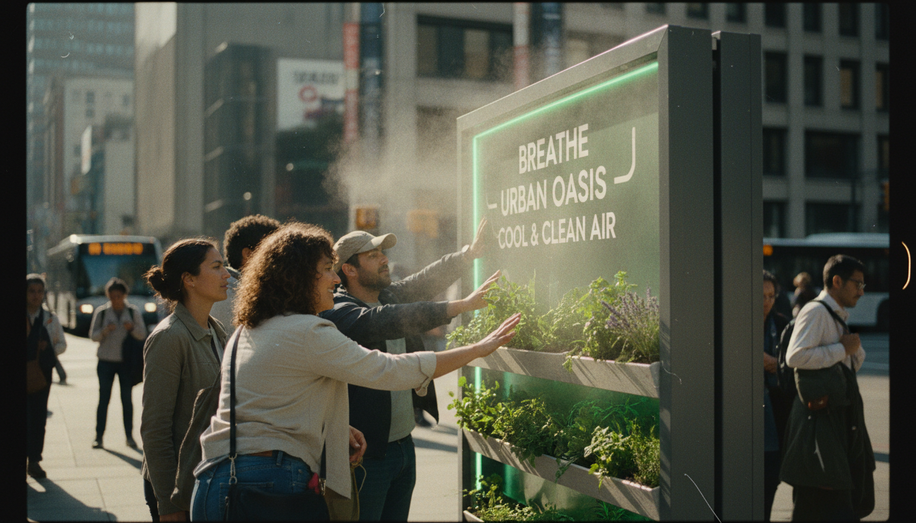

In the bustling streets of global cities, where visual billboards have long dominated the out-of-home (OOH) landscape, a new wave of campaigns is rewriting the rules by engaging the senses beyond sight alone. Smell, touch, and even temperature are emerging as powerful tools to forge deeper connections with audiences, turning fleeting glances into lasting memories. These multisensory experiences prove that OOH advertising can transcend passive observation, creating immersive encounters that amplify brand recall and emotional resonance.
Consider the tactile innovation of KitKat’s “Have a Break” campaign in Colombia, where billboards were engineered with built-in massage mechanisms. Passersby could lean back against the structure, receiving a gentle rubdown that embodied the brand’s promise of relaxation. This hands-on element not only aligned seamlessly with KitKat’s messaging but also left participants with a physical sensation tied directly to the product, enhancing its memorability far beyond a static image. Similarly, a deodorant billboard invited interaction through a scratch-and-sniff panel, releasing a tropical scent upon contact. Once scratched, the fragrance evoked sun-soaked beaches, transforming a simple poster into a sensory portal that extended its buzz through social shares and word-of-mouth.
Scent has proven particularly potent in OOH, as demonstrated by Baileys’ holiday campaign, which paired digital displays with diffused aromas of creamy liqueur and festive spices. Positioned in high-traffic urban areas, these installations wafted enticing smells that drew crowds, blending nostalgia with indulgence to boost seasonal brand affinity. The combination of visuals and olfaction created a multi-layered holiday vibe, making the ads feel less like advertisements and more like immersive brand moments. Such olfactory tactics tap into the brain’s primal responses; research underscores that scents can trigger stronger emotional and memory associations than visuals alone, giving marketers a competitive edge in crowded environments.
Temperature adds another dimension, pushing immersion into experiential territory. HOKA’s launch of the Mafate X trail shoe turned a Manhattan block into a simulated Joshua Tree desert for 48 hours, complete with rising heat, wind, rocky paths, and ambient sounds. Runners stepping onto the installation felt the warmth build underfoot, mirroring the shoe’s rugged performance, while an Unreal Engine backdrop shifted in real time with their strides. This temporary oasis amid New York’s concrete jungle not only highlighted product benefits through physical sensation but also generated organic foot traffic and social media frenzy, proving temperature’s role in making OOH feel alive and participatory.
These examples build on earlier pioneers like British Airways’ “Magic of Flying” billboard in London, which used real-time plane data to animate a child’s pointing gesture skyward, evoking wonder through synchronized motion and implied auditory thrill. While not purely tactile or thermal, it hints at the emotional pull of sensory synergy. Critics might argue that such campaigns demand higher upfront costs and technical expertise, yet their ROI shines through metrics like enhanced recall—studies show multisensory ads are up to 65% more memorable—and viral amplification via user-generated content. Brands like Pepsi Max, with its AR-enhanced bus shelter illusions of tigers and UFOs, have shown how layering senses sparks shares, while McDonald’s “Pick n’ Play” game rewarded smartphone interactions with free treats, blending touchscreens with anticipation.
Challenges remain, including regulatory hurdles for scents or sounds in public spaces and ensuring accessibility for all passersby. Weather can dilute aromas or thermal effects, and over-reliance on tech risks alienating non-digital natives. Yet advancements in durable materials, like weatherproof scent diffusers and modular tactile panels, are addressing these. JCDecaux notes that adding sound to visuals already transforms ads into immersive experiences, suggesting temperature and touch integrations are the next frontier.
Looking ahead, multisensory OOH is poised for explosive growth. With AR murals from Verizon in Miami—where smartphone scans unleashed 3D creatures and cityscapes—and festivals like Electrifly Detroit’s 15 interactive artworks, the canvas is expanding. Imagine billboards that warm on sunny days to mimic a coffee brand’s steam or chill to evoke minty freshness, all synced with dynamic scents. As urban dwellers crave authenticity amid digital fatigue, these sense-ational billboards offer a tangible escape, redefining OOH as a full-body dialogue between brand and audience. In an era of ad saturation, the power lies not just in being seen, but in being felt.