
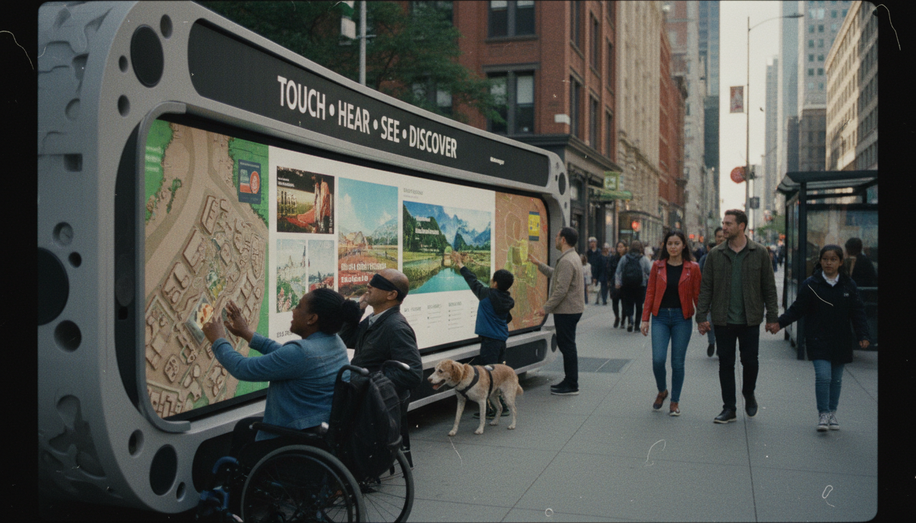

In the bustling urban landscapes where out-of-home (OOH) advertising captures fleeting glances from millions daily, inclusivity has emerged as a critical imperative. Advertisers are increasingly recognizing that designing campaigns for accessibility not only complies with evolving regulations but also expands reach to diverse audiences, including the estimated one billion people worldwide living with disabilities. By prioritizing text legibility, color contrast, and multi-sensory elements, OOH campaigns can transform passive billboards into equitable communication tools that engage everyone, from sighted pedestrians to those relying on tactile or auditory cues.
Text legibility stands as the cornerstone of accessible OOH design, demanding simplicity amid the chaos of motion and distraction. Industry experts recommend fonts no smaller than 15 inches tall for digital billboards, ensuring readability from at least 500 feet away—a standard honed for drivers and walkers alike. Sans-serif typefaces, with bold weights and ample letter spacing, cut through visual noise, while limiting text to seven words or fewer per message prevents cognitive overload. For those with low vision, this approach aligns with ADA guidelines, which emphasize displays positioned no higher than 44 inches above the ground for seated viewers, adapting static signage to real-world sightlines. In practice, campaigns like public health announcements have swapped dense paragraphs for oversized, high-contrast slogans, boosting comprehension rates across demographics.
Color contrast amplifies this foundation, creating a visual hierarchy that defies environmental variables like glare or twilight. A minimum ratio of 4.5:1 between text and background—verifiable via tools like WebAIM’s Contrast Checker—ensures elements pop against any backdrop, benefiting users with color vision deficiencies or partial sight. OOH regulations in many jurisdictions now echo these standards, mandating that signage avoids hazards to pedestrians, including poor visibility that could endanger those with disabilities. Vibrant yet compliant palettes, such as white text on navy backgrounds or yellow on black, have proven effective in high-traffic zones. Digital screens take it further by auto-adjusting brightness, sidestepping issues like flashing content prohibited in areas like Indiana’s roadways, where messages must hold steady for at least eight seconds. This not only meets safety rules but fosters broader engagement, as inclusive visuals draw in families, seniors, and neurodiverse viewers who might otherwise tune out.
Yet true inclusivity extends beyond the visual, incorporating multi-sensory elements to reach those with profound impairments. Tactile overlays on bus shelter posters or QR codes linking to audio descriptions open doors for blind individuals, mirroring best practices in outdoor content where alt text and image narratives enhance digital extensions. Audio integration via nearby smart speakers or Bluetooth beacons delivers narrated campaigns, while haptic feedback on interactive kiosks vibrates key messages for deaf-blind audiences. Regulations reinforce this shift: zoning laws require OOH placements to uphold accessibility, prohibiting obstructions and enforcing minimum heights that accommodate wheelchair users. In temporary event setups akin to pop-up OOH installations, accessible routes—36 inches wide with passing spaces every 200 feet—ensure physical approachability, complete with symbols signaling features like sign language availability.
These adaptations yield tangible benefits, from regulatory compliance to amplified impact. In regions with stringent OOH controls, such as those near schools or scenic byways, accessible designs sidestep moratoriums by promoting safety and community standards. Environmentally sustainable materials, like recyclable substrates or solar-powered displays, dovetail with accessibility mandates, as cities increasingly demand non-toxic, eco-friendly builds. Brands embracing this ethos report higher engagement; a beverage campaign with braille-enhanced cans and high-contrast DOOH boards saw a 20 percent uptick in diverse consumer recall. Moreover, inclusivity counters exclusionary pitfalls—think flashing animations banned near residences or low-contrast ads that alienate colorblind viewers—turning potential liabilities into strengths.
Challenges persist, particularly in reconciling artistic flair with technical rigor. Creative directors must navigate varying local ordinances, from Indiana’s spacing rules (150 to 350 feet based on sign size) to broader ADA principles for public spaces. Yet tools like simulation software preview legibility under diverse conditions, while partnerships with disability advocacy groups refine prototypes. Forward-thinking agencies are piloting AI-driven audits that flag contrast failures pre-launch, streamlining production.
Ultimately, inclusive OOH design redefines advertising as a public good. By weaving legibility, contrast, and sensory depth into campaigns, advertisers not only honor legal imperatives but cultivate loyalty across an untapped audience spectrum. In a world where every glance counts, accessibility ensures no one is left in the shadows, driving engagement that resonates universally.